This learning resource is available in interactive and printable formats. The interactive worksheet can be played online and assigned to students. The Printable PDF version can be downloaded and printed for completion by hand.
This comprehensive middle school science reading passage explores air pollution and its impact on Earth's atmosphere. Aligned with NGSS standard MS-ESS3-3, students discover how air pollution consists of harmful substances released from both human activities and natural sources. The passage examines three major categories of air pollutants: particulates (tiny solid particles), gases (including carbon monoxide and nitrogen oxides), and chemicals (such as volatile organic compounds). Students investigate primary pollution sources including transportation vehicles, industrial facilities, and agricultural operations. Through real-world examples and clear explanations, learners understand how these pollutants enter the atmosphere and affect air quality. The passage includes audio integration for enhanced accessibility, differentiated versions for diverse learners, Spanish translations, interactive activities, and graphic organizers. Students engage with multiple-choice questions, writing prompts, and hands-on learning activities that reinforce understanding of air pollution concepts and environmental science principles essential for middle school curriculum.
CONTENT PREVIEW
Expand content preview
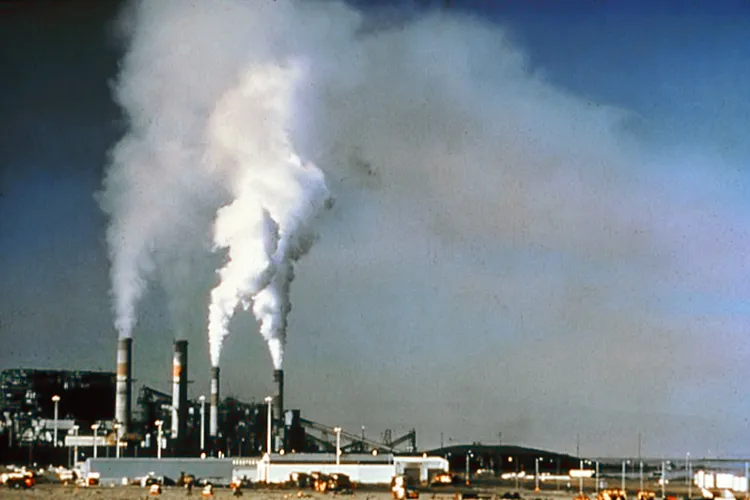
Air pollutants fall into three major categories: particulates, gases, and chemicals. "Air pollution by industrial chimneys" by NPS / Wikimedia Commons
Air pollution is the presence of harmful substances in Earth's atmosphere. These substances can come from human activities or natural sources. When pollutants build up in the air, they can harm living things and damage the environment. Understanding air pollution helps us protect our health and planet.
Air pollutants fall into three major categories: particulates, gases, and chemicals. Particulates are tiny solid or liquid particles suspended in the air. These particles are so small that you often cannot see individual ones, but they make the air look hazy. Dust, smoke, and soot are common examples of particulates. The second category includes gases like carbon monoxide, sulfur dioxide, and nitrogen oxides. These invisible gases mix with the air we breathe. The third category consists of chemicals such as volatile organic compounds, which easily evaporate into the air from products like paint and gasoline.
Transportation is one of the largest sources of air pollution in most communities. Cars, trucks, buses, and airplanes burn fossil fuels like gasoline and diesel. When these fuels burn, they release carbon monoxide, nitrogen oxides, and particulates into the atmosphere. A single car might not seem like a major polluter, but millions of vehicles on the road each day create significant emissions. Heavy traffic in cities leads to poor air quality that affects everyone who lives and works there.
Industry represents another major source of air pollution. Factories and power plants burn coal, oil, and natural gas to generate electricity and manufacture products. This burning process releases large amounts of sulfur dioxide, nitrogen oxides, and particulates. Some industrial processes also release chemicals and metals into the air. For example, cement factories produce dust and carbon dioxide, while metal smelters can release lead and mercury. These industrial emissions often affect communities located near manufacturing areas.
Agriculture contributes to air pollution in ways many people do not expect. Livestock animals produce methane, a powerful greenhouse gas, during digestion. Farm equipment burns diesel fuel, releasing emissions similar to other vehicles. Farmers also use fertilizers containing nitrogen compounds that can evaporate into the air. When farmers burn crop waste, the smoke adds particulates and gases to the atmosphere. Dust from plowing dry soil becomes airborne particulates that can travel long distances.
Natural sources also contribute to air pollution, though humans cannot control these. Volcanoes release ash, sulfur dioxide, and other gases during eruptions. Wildfires produce massive amounts of smoke and particulates. Dust storms lift soil particles into the atmosphere. Even plants release volatile organic compounds naturally. However, human activities produce far more air pollution than natural sources in most areas. Scientists use the term anthropogenic to describe pollution caused by human activities.
Reducing air pollution requires understanding where it comes from and taking action. Governments create regulations limiting emissions from vehicles and factories. Individuals can reduce pollution by driving less, using energy efficiently, and choosing cleaner products. Scientists continue developing new technologies to monitor air quality and reduce pollutant releases. Everyone shares responsibility for keeping our atmosphere clean and healthy.
Interesting Fact: The Great Smog of London in 1952 was so severe that visibility dropped to less than one foot in some areas, and the pollution event contributed to approximately 12,000 deaths, leading to the world's first Clean Air Act.
What is air pollution?
The presence of harmful substances in Earth's atmosphereNatural gases found in the airClean air in citiesWater vapor in the atmosphere
Which of the following is an example of particulates?
Carbon monoxideOxygenDust and smokeNitrogen gas
What does the term 'volatile organic compounds' mean in the passage?
Solid particles that settle quicklyChemicals that easily evaporate into the airGases produced by plantsNatural substances in soil
According to the passage, what is one reason transportation causes air pollution?
Vehicles are painted with toxic chemicalsCars and trucks burn fossil fuels that release pollutantsRoads are made from harmful materialsTransportation only occurs in cities
Why do factories contribute to air pollution?
They only operate at nightThey use too much waterThey burn fuels and release chemicals during manufacturingThey are located in rural areas
How does agriculture contribute to air pollution?
Livestock produce methane, equipment burns fuel, and crop burning creates smokeFarms only grow organic vegetablesAgriculture reduces air pollutionFarms do not use any machinery
What does 'anthropogenic' mean?
Caused by natural eventsCaused by human activitiesRelated to animal behaviorDescribing plant processes
Based on the passage, which statement about natural sources of air pollution is correct?
Natural sources produce more pollution than human activitiesVolcanoes and wildfires are examples of natural pollution sourcesNatural pollution can be completely controlled by humansPlants do not contribute to air pollution
True or False: A single car produces so little pollution that it does not contribute to air quality problems.
TrueFalse
True or False: The Great Smog of London in 1952 led to the creation of the world's first Clean Air Act.
TrueFalse
Perfect For:
👩🏫 Teachers
• Reading comprehension practice
• Auto-graded assessments
• Literacy skill development
👨👩👧👦 Parents
• Reading practice at home
• Comprehension improvement
• Educational reading time
🏠 Homeschoolers
• Reading curriculum support
• Independent reading practice
• Progress monitoring
Reading Features:
📖
Reading Passage
Engaging fiction or nonfiction text
❓
Comprehension Quiz
Auto-graded questions
📊
Instant Feedback
Immediate results and scoring
📄
Printable Version
Download for offline reading
🔊
Read Aloud
Voice-over with word highlighting
Reviews & Ratings
No reviews yet. Be the first to share your experience!
Related Content
Natural Disaster: Volcanic Eruptions
Volcanoes can erupt with lava and ash, changing the landscape. While dangerous, they also create fertile land and new la...
RI.3.1RI.4.4RI.4.2RI.5.2
Human Impacts: Pollution
This middle school science reading passage, aligned with NGSS standards MS-LS2-4 and MS-ESS3-3, examines the mechanisms ...
MS-LS2-4MS-ESS3-3
Human Impacts: Habitat Destruction
This grade 6-8 science passage explores human impacts on ecosystems, focusing on habitat destruction as the leading caus...
MS-LS2-4MS-LS2-5MS-ESS3-3
Ecosystem Services
This engaging middle school science passage introduces students to the concept of ecosystem services, the vital benefits...
MS-LS2-5MS-ESS3-3
Environmental Problems and Solutions
This passage for grades 6-8 introduces major environmental problems such as habitat loss, pollution, climate change, inv...
MS-LS2-4MS-ESS3-3MS-ESS3-4
Remote Sensing
This middle school science passage introduces students to the concept of remote sensing—the collection of information ab...
MS-ESS3-3MS-PS4-2MS-ETS1-1MS-ETS1-3
Geographic Information Systems (GIS)
This engaging middle school science passage introduces students to Geographic Information Systems (GIS), aligning with N...
MS-ESS3-3MS-ETS1-1MS-ETS1-2MS-ETS1-3
Renewable vs. Nonrenewable Energy
This engaging passage, aligned with NGSS standards MS-PS3-4, MS-ESS3-3, and MS-ESS3-4, helps middle school students diff...
MS-PS3-4MS-ESS3-3MS-ESS3-4
Fossil Fuels: Coal
This middle school science reading passage explores the science behind coal, a major fossil fuel. Students will learn ho...
MS-PS3-4MS-ESS3-3MS-ESS3-4
Solar Energy
This engaging passage for grades 6-8 explores the science of solar energy, focusing on how sunlight is converted into el...
MS-PS3-4MS-ESS3-3MS-ESS3-4
Wind Energy
This comprehensive middle school science passage explores the scientific principles behind wind energy and how wind turb...
MS-PS3-4MS-ESS3-3MS-ESS3-4
Hydroelectric Energy
This comprehensive passage introduces middle school students to the science behind hydroelectric energy, directly aligni...
MS-PS3-4MS-ESS3-3MS-ESS3-4
Geothermal Energy
This comprehensive science passage introduces middle school students to the mechanisms and applications of geothermal en...
MS-PS3-4MS-ESS3-3MS-ESS3-4
Biomass and Biofuels
This NGSS-aligned passage introduces grades 6-8 students to the science of biomass and biofuels, explaining how organic ...
MS-PS3-4MS-ESS3-3MS-ESS3-4
Nuclear Energy as a Resource
This NGSS-aligned informational science passage, designed for grades 6-8, explores nuclear energy as a resource in the c...
MS-PS3-4MS-ESS3-3MS-ESS3-4
Water Quality
This middle school science reading passage covers the topic of water quality, aligned with NGSS standards MS-ESS3-1 and ...
MS-ESS3-1MS-ESS3-3
Florida Everglades
This comprehensive passage introduces middle school students to the Florida Everglades, a distinctive wetland ecosystem ...
MS-LS2-1MS-LS2-4MS-ESS3-3MS-ESS3-4
Congo Rainforest
This middle school science passage explores the Congo Rainforest—Earth’s second-largest rainforest, located in Central A...
MS-LS2-1MS-ESS3-3
Nuclear Power Plants
This comprehensive reading passage introduces middle school students (grades 6-8) to the science of nuclear power plants...
MS-PS3-4MS-ESS3-3
Nuclear Safety and Waste
This middle school science passage explores the critical topic of nuclear safety and waste management, aligned with NGSS...