What is Infrasound
Interactive passage with audio narration, comprehension questions, and printable PDF.
What's included
What is Infrasound preview and details
About this printable What is Infrasound science reading passage, NGSS-aligned (Grades 3-8)
Sample passage and quiz from What is Infrasound
Reading passage and comprehension quiz preview
What is Infrasound
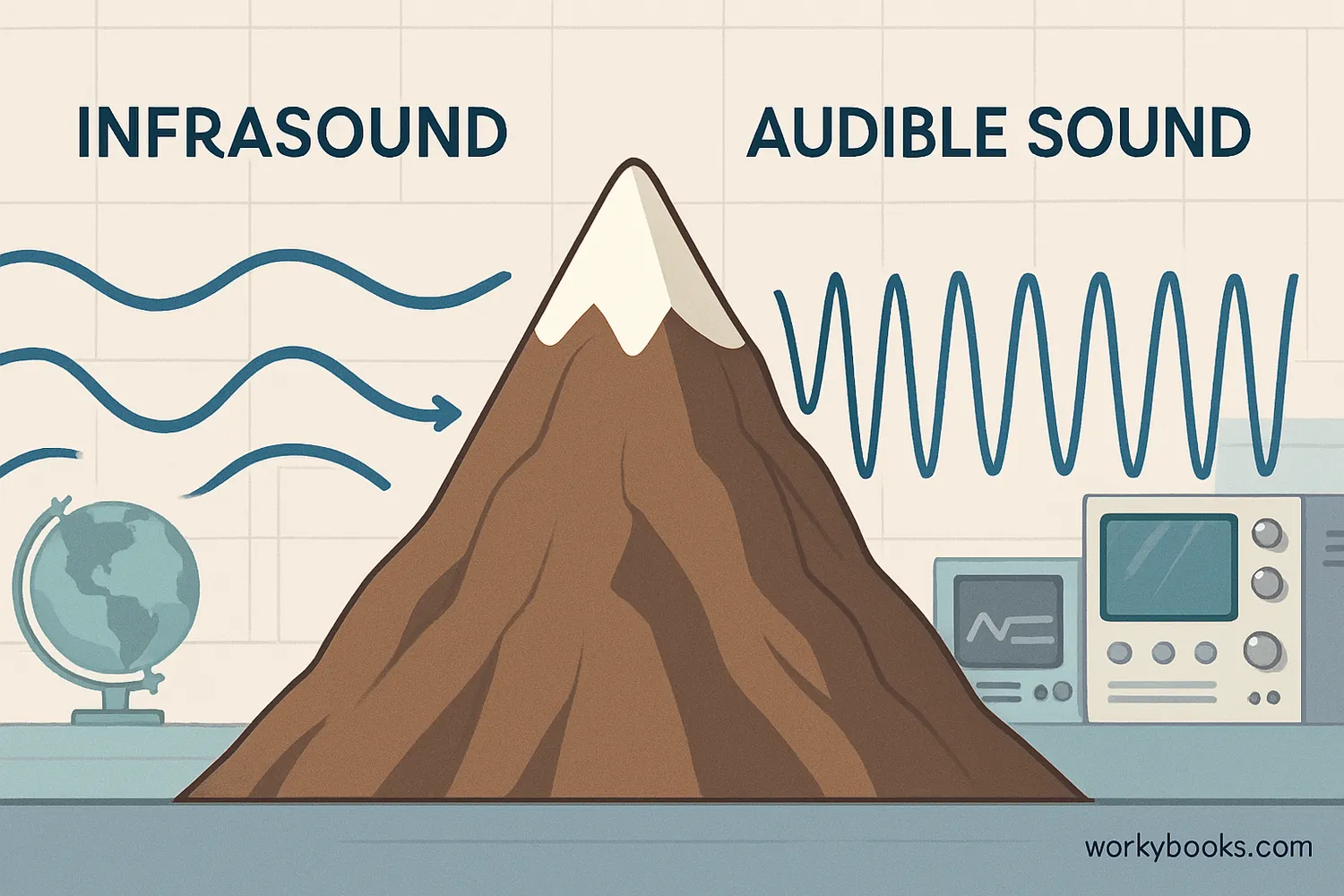
Sound is created by vibrations that travel through a medium like air or water as waves. The frequency of these waves, measured in hertz (Hz), determines the sound's pitch. Humans can hear sounds within a specific range, typically from 20 Hz to 20,000 Hz. Sounds with frequencies below this range, less than 20 Hz, are known as infrasound. These low-frequency sound waves are too low-pitched for the human ear to detect, making them "unheard" by us. Although we cannot hear infrasound, it is a powerful force that constantly surrounds us, carrying energy over vast distances.
One of the most fascinating aspects of infrasound is its ability to travel great distances with very little loss of energy. This is due to its long wavelengths, which allow the sound waves to bend around large obstacles without being blocked. Many animals, particularly large ones like elephants and whales, use infrasound to communicate. Elephants can produce low-frequency rumbles that travel through the ground for miles, allowing them to coordinate herd movements or find mates across large territories. Similarly, whales use infrasound to communicate with other whales over hundreds of miles in the ocean.
Scientists utilize specialized equipment to detect and study infrasound from both natural and human-made sources. For example, the Comprehensive Nuclear-Test-Ban Treaty Organization (CTBTO) has a global network of infrasound sensors to monitor for nuclear explosions, which produce distinct infrasonic signatures. This same technology is used in seismology and meteorology to detect natural events. Scientists can use infrasound to monitor volcanic eruptions, track severe weather like tornadoes and hurricanes, and even detect meteors as they enter the atmosphere. These applications demonstrate how infrasound provides a hidden layer of information about our planet and atmosphere.
Fun Fact: A tiger's roar contains infrasound frequencies so low that it can temporarily paralyze its prey, making them unable to move for a few seconds.
Comprehension quiz (8 questions)
1. What is the frequency range of sound that humans can typically hear?
2. What is infrasound?
3. What characteristic allows infrasound to travel long distances?
4. According to the passage, which animals use infrasound for communication?
5. How do scientists use infrasound technology?
6. Why is it useful for scientists to monitor infrasound from volcanic eruptions?
7. Based on the passage, what is the main idea?
8. A scientist places an infrasound sensor on a remote island. If the sensor detects a strong infrasound signal, what is a likely cause based on the passage?
Perfect for the way you teach
- Build comprehension skills
- Auto-graded quiz
- Differentiated reading
- Read together at home
- Improve fluency
- Quiet reading time
- Reading curriculum support
- Independent practice
- Track Lexile growth