What Is Sustainable Resource Management — Reading Comprehension
Rate this
Premium Resource
Present
Present in classroom. No work saved
Assign
Classroom with student accounts, Track progress
Quick Play
No student accounts, assign with a link
Grades
6
7
8
Standards
MS-ESS3-3
PRINT+DIGITAL RESOURCE
This learning resource is available in interactive and printable formats. The interactive worksheet can be played online and assigned to students. The Printable PDF version can be downloaded and printed for completion by hand.
This middle school science passage explores sustainable resource management, aligned with NGSS standard MS-ESS3-3. Students learn how sustainable resource management means using natural resources at rates that allow them to replenish naturally. The passage examines sustainable agriculture practices like crop rotation and organic farming, sustainable forestry methods including selective logging, sustainable fisheries management through catch limits, and water management strategies for long-term availability. Real-world examples help students understand how these practices balance human needs with ecosystem health. The content includes audio integration for enhanced accessibility, along with differentiated versions for English Language Learners and struggling readers. Activities include comprehension questions, writing prompts, and graphic organizers to reinforce understanding of how sustainable practices protect resources for future generations while meeting current needs.
CONTENT PREVIEW
Expand content preview
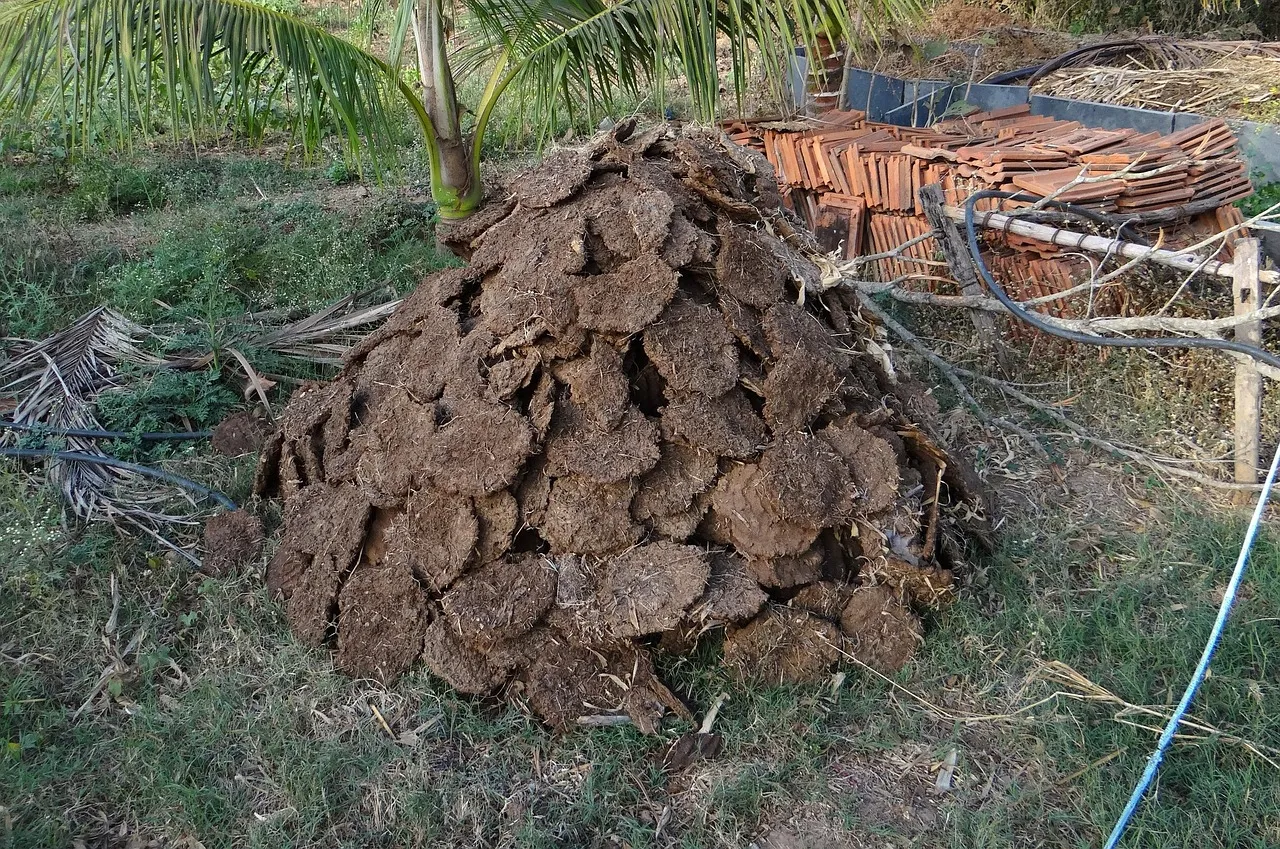
"A large pile of dried cow dung cakes." Image by sarangib / Pixabay.
Sustainable resource management is the practice of using natural resources at rates that allow them to replenish naturally over time. This means taking only what nature can replace, ensuring that resources remain available for future generations. When we manage resources sustainably, we balance what humans need today with the health of ecosystems that provide these resources.
Natural resources include everything from forests and fish to fresh water and fertile soil. These resources can renew themselves if given enough time and proper conditions. For example, trees grow back after being cut down, fish populations increase through reproduction, and rainfall refills rivers and lakes. However, if we use these resources faster than they can replenish, they become depleted or damaged. Sustainable agriculture demonstrates this balance by using farming methods that maintain soil health and productivity. Farmers practice crop rotation, which means planting different crops in the same field across different seasons. This prevents soil nutrients from being exhausted and reduces pest problems naturally. Other sustainable farming practices include using organic fertilizers made from natural materials instead of synthetic chemicals, and planting cover crops that protect and enrich the soil between growing seasons.
Sustainable forestry applies similar principles to managing forests. Instead of clear-cutting entire forest areas, sustainable forestry uses selective logging, where only certain trees are harvested while younger trees continue growing. This maintains forest ecosystems, protects wildlife habitats, and ensures continuous wood production. Forest managers also plant new trees to replace those harvested, maintaining the forest's ability to provide timber, clean air, and homes for countless species.
In our oceans and waterways, sustainable fisheries management prevents overfishing by setting catch limits based on scientific data about fish populations. These limits ensure that enough adult fish remain to reproduce and maintain healthy population levels. Fishing regulations also protect young fish by requiring specific net sizes and establishing protected breeding areas. Some fisheries use seasonal closures during spawning periods, giving fish populations time to recover and reproduce.
Water management focuses on using freshwater resources wisely because clean water is essential for all life. Sustainable water practices include reducing waste through efficient irrigation systems in agriculture, treating and reusing wastewater, and protecting watersheds that naturally filter and store water. Communities that manage water sustainably ensure adequate supplies during droughts while maintaining healthy rivers and wetlands that support diverse ecosystems.
All these sustainable practices share a common goal: meeting human needs without compromising the ability of natural systems to function and regenerate. This approach recognizes that healthy ecosystems provide services humans depend on, from pollinating crops to purifying water. By managing resources sustainably, we protect both nature and our own long-term well-being.
Interesting Fact: A single acre of healthy forest soil contains more living organisms than there are people on Earth, and sustainable forestry practices help protect these vital underground ecosystems that support tree growth.
What does sustainable resource management mean?
Using resources as quickly as possibleUsing resources at rates that allow natural replenishmentAvoiding the use of all natural resourcesOnly using synthetic materials instead of natural ones
What is crop rotation?
Turning the soil over with machinesMoving crops from one farm to anotherPlanting different crops in the same field across different seasonsRotating workers between different fields
How does sustainable forestry differ from clear-cutting?
It uses selective logging instead of cutting all trees in an areaIt only cuts trees in winterIt uses machines instead of hand toolsIt plants trees but never cuts them
Why do sustainable fisheries set catch limits?
To make fish more expensiveTo ensure enough adult fish remain to reproduce and maintain populationsTo give fishers more vacation timeTo protect fishing boats from damage
According to the passage, organic fertilizers are made from:
What is one benefit of crop rotation mentioned in the passage?
It makes crops grow fasterIt prevents soil nutrients from being exhaustedIt eliminates the need for waterIt makes farms larger
Which sustainable practice helps protect fish during spawning periods?
Using larger boatsFishing only at nightSeasonal closures of fishing areasCatching only large fish
What do all sustainable practices have in common according to the passage?
They all use the same technologyThey all cost less moneyThey all meet human needs without compromising natural systems' ability to regenerateThey all require government permission
True or False: Sustainable water management includes treating and reusing wastewater.
TrueFalse
True or False: If we use natural resources faster than they can replenish, they will last forever.
TrueFalse
Perfect For:
👩🏫 Teachers
• Reading comprehension practice
• Auto-graded assessments
• Literacy skill development
👨👩👧👦 Parents
• Reading practice at home
• Comprehension improvement
• Educational reading time
🏠 Homeschoolers
• Reading curriculum support
• Independent reading practice
• Progress monitoring
Reading Features:
📖
Reading Passage
Engaging fiction or nonfiction text
❓
Comprehension Quiz
Auto-graded questions
📊
Instant Feedback
Immediate results and scoring
📄
Printable Version
Download for offline reading
🔊
Read Aloud
Voice-over with word highlighting
Reviews & Ratings
No reviews yet. Be the first to share your experience!
Related Content
Natural Disaster: Volcanic Eruptions
Volcanoes can erupt with lava and ash, changing the landscape. While dangerous, they also create fertile land and new la...
RI.3.1RI.4.4RI.4.2RI.5.2
Human Impacts: Pollution
This middle school science reading passage, aligned with NGSS standards MS-LS2-4 and MS-ESS3-3, examines the mechanisms ...
MS-LS2-4MS-ESS3-3
Human Impacts: Habitat Destruction
This grade 6-8 science passage explores human impacts on ecosystems, focusing on habitat destruction as the leading caus...
MS-LS2-4MS-LS2-5MS-ESS3-3
Ecosystem Services
This engaging middle school science passage introduces students to the concept of ecosystem services, the vital benefits...
MS-LS2-5MS-ESS3-3
Environmental Problems and Solutions
This passage for grades 6-8 introduces major environmental problems such as habitat loss, pollution, climate change, inv...
MS-LS2-4MS-ESS3-3MS-ESS3-4
Remote Sensing
This middle school science passage introduces students to the concept of remote sensing—the collection of information ab...
MS-ESS3-3MS-PS4-2MS-ETS1-1MS-ETS1-3
Geographic Information Systems (GIS)
This engaging middle school science passage introduces students to Geographic Information Systems (GIS), aligning with N...
MS-ESS3-3MS-ETS1-1MS-ETS1-2MS-ETS1-3
Renewable vs. Nonrenewable Energy
This engaging passage, aligned with NGSS standards MS-PS3-4, MS-ESS3-3, and MS-ESS3-4, helps middle school students diff...
MS-PS3-4MS-ESS3-3MS-ESS3-4
Fossil Fuels: Coal
This middle school science reading passage explores the science behind coal, a major fossil fuel. Students will learn ho...
MS-PS3-4MS-ESS3-3MS-ESS3-4
Solar Energy
This engaging passage for grades 6-8 explores the science of solar energy, focusing on how sunlight is converted into el...
MS-PS3-4MS-ESS3-3MS-ESS3-4
Wind Energy
This comprehensive middle school science passage explores the scientific principles behind wind energy and how wind turb...
MS-PS3-4MS-ESS3-3MS-ESS3-4
Hydroelectric Energy
This comprehensive passage introduces middle school students to the science behind hydroelectric energy, directly aligni...
MS-PS3-4MS-ESS3-3MS-ESS3-4
Geothermal Energy
This comprehensive science passage introduces middle school students to the mechanisms and applications of geothermal en...
MS-PS3-4MS-ESS3-3MS-ESS3-4
Biomass and Biofuels
This NGSS-aligned passage introduces grades 6-8 students to the science of biomass and biofuels, explaining how organic ...
MS-PS3-4MS-ESS3-3MS-ESS3-4
Nuclear Energy as a Resource
This NGSS-aligned informational science passage, designed for grades 6-8, explores nuclear energy as a resource in the c...
MS-PS3-4MS-ESS3-3MS-ESS3-4
Water Quality
This middle school science reading passage covers the topic of water quality, aligned with NGSS standards MS-ESS3-1 and ...
MS-ESS3-1MS-ESS3-3
Florida Everglades
This comprehensive passage introduces middle school students to the Florida Everglades, a distinctive wetland ecosystem ...
MS-LS2-1MS-LS2-4MS-ESS3-3MS-ESS3-4
Congo Rainforest
This middle school science passage explores the Congo Rainforest—Earth’s second-largest rainforest, located in Central A...
MS-LS2-1MS-ESS3-3
Nuclear Power Plants
This comprehensive reading passage introduces middle school students (grades 6-8) to the science of nuclear power plants...
MS-PS3-4MS-ESS3-3
Nuclear Safety and Waste
This middle school science passage explores the critical topic of nuclear safety and waste management, aligned with NGSS...