What Is Weightlessness
Interactive passage with audio narration, comprehension questions, and printable PDF.
By completing this purchase you agree to our Terms of Use and Privacy Policy. Your subscription renews automatically until you cancel. You can cancel anytime from your account settings. All sales are final and non-refundable. Digital content is available for download in your account immediately upon purchase.
What's included
What Is Weightlessness preview and details
About this printable What Is Weightlessness science reading passage, NGSS-aligned (Grades 5-8)
Sample passage and quiz from What Is Weightlessness
Reading passage and comprehension quiz preview
What Is Weightlessness
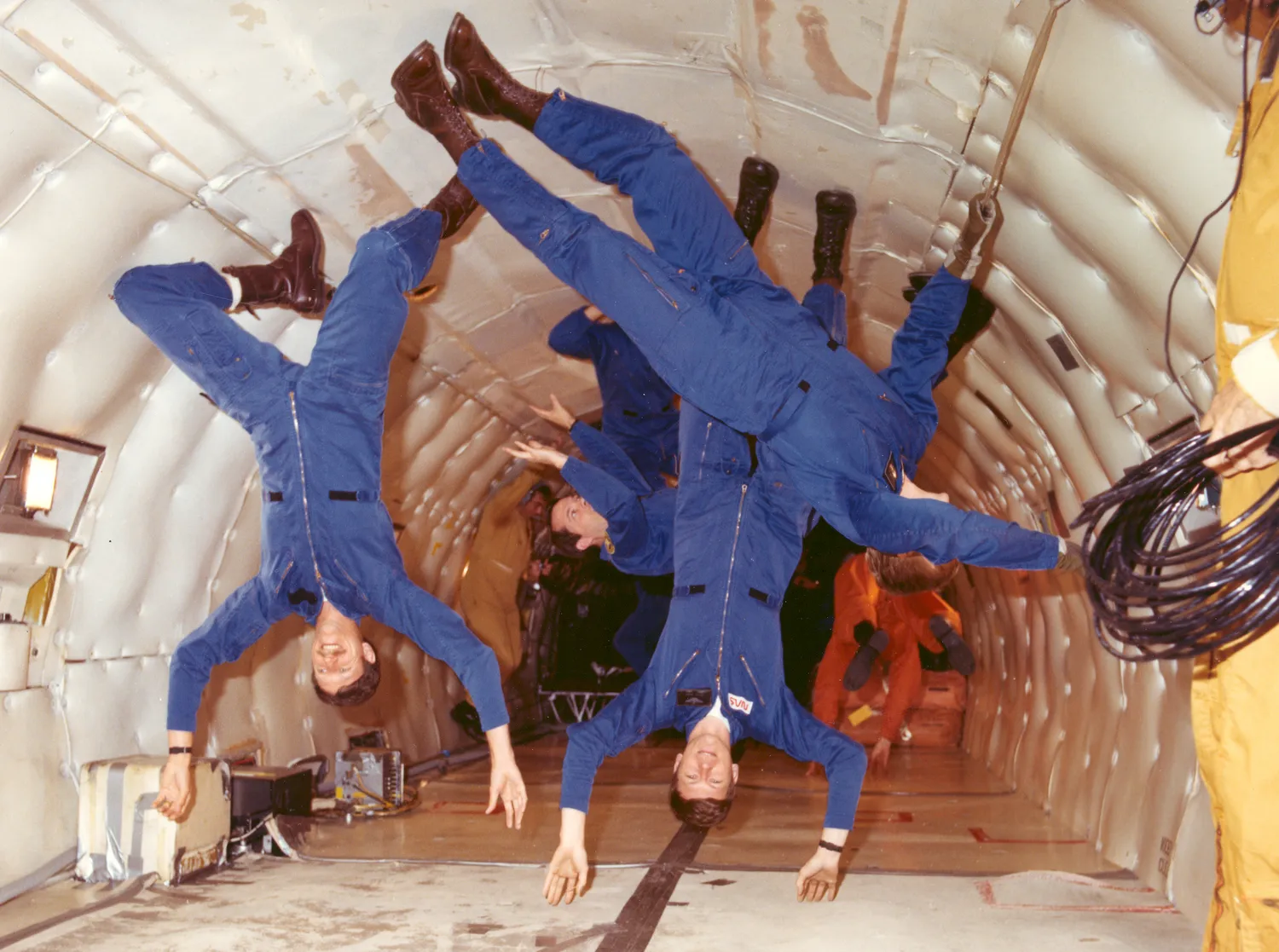
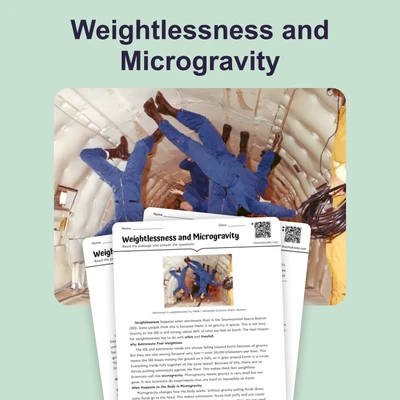
"Astronauts in weightlessness" by NASA / Wikimedia Commons
Weightlessness is the feeling of having no weight. Astronauts experience this sensation when they orbit Earth in spacecraft. Videos show astronauts floating freely inside space stations, and objects drift without falling. However, the term "weightlessness" can be misleading. Scientists explain that gravity is still very much present in space. A more accurate term is microgravity, which describes the true conditions astronauts experience.
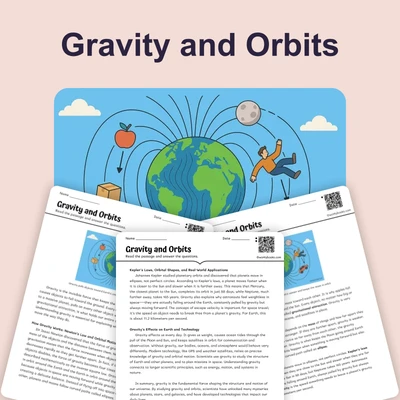
Understanding why astronauts feel weightless requires examining how orbit works. Gravity pulls on everything, including spacecraft and astronauts. At the altitude of the International Space Station, about 400 kilometers above Earth, gravity is only slightly weaker than on the surface. Evidence shows that gravity there is about 90 percent as strong as on Earth. So why do astronauts float? The answer involves free fall. When a spacecraft orbits Earth, it moves forward very fast while gravity pulls it downward. These two motions combine to create a curved path around Earth. Both the spacecraft and everything inside it fall toward Earth at the same rate. This continuous falling creates the sensation of weightlessness.
Scientists observe similar effects in other situations. When an elevator cable breaks, passengers briefly experience weightlessness as they fall. Airplanes can create short periods of microgravity by flying in curved paths. NASA uses these flights to train astronauts and test equipment. The International Space Station provides a unique environment for research. Experiments in microgravity can reveal how flames behave, how plants grow, and how materials form without the influence of strong gravity. These studies may lead to new discoveries in medicine and manufacturing.
Understanding microgravity matters for future space exploration. As humans plan missions to the Moon and Mars, scientists must consider how microgravity affects the human body. Bones can weaken and muscles can shrink during long periods in space. Astronauts exercise daily to maintain their health. Engineers also design spacecraft systems that work properly in microgravity conditions. Water does not pour from a cup in space, so drinking requires special containers. These challenges show why accurate scientific understanding of microgravity is essential for space travel.
Interesting Fact: Astronauts on the International Space Station experience about 16 sunrises and sunsets every day because they orbit Earth once every 90 minutes!
Comprehension quiz (10 questions)
1. What is weightlessness?
2. Why is 'microgravity' a more accurate term than 'weightlessness'?
3. At the altitude of the International Space Station, gravity is about _____ as strong as on Earth's surface.
4. What does 'free fall' mean in the context of the passage?
5. Why do astronauts float inside a spacecraft that is orbiting Earth?
6. According to the passage, how does NASA train astronauts for microgravity conditions?
7. What happens to astronauts' bones and muscles during long periods in space?
8. Which of the following is a challenge of living in microgravity mentioned in the passage?
9. True or False: Gravity is completely absent at the altitude of the International Space Station.
10. True or False: Understanding microgravity is important for planning future missions to the Moon and Mars.
Perfect for the way you teach
- Build comprehension skills
- Auto-graded quiz
- Differentiated reading
- Read together at home
- Improve fluency
- Quiet reading time
- Reading curriculum support
- Independent practice
- Track Lexile growth