What Minerals Power Modern Technology
Interactive passage with audio narration, comprehension questions, and printable PDF.
By completing this purchase you agree to our Terms of Use and Privacy Policy. Your subscription renews automatically until you cancel. You can cancel anytime from your account settings. All sales are final and non-refundable. Digital content is available for download in your account immediately upon purchase.
What's included
What Minerals Power Modern Technology preview and details
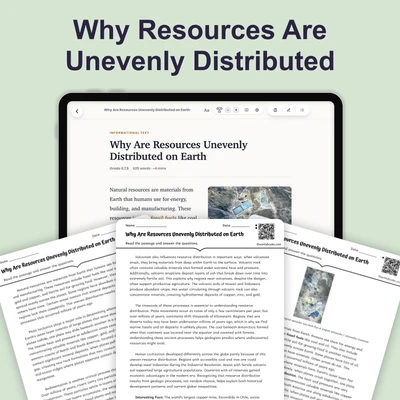
About this printable What Minerals Power Modern Technology science reading passage, NGSS-aligned (Grades 6-8)
Sample passage and quiz from What Minerals Power Modern Technology
Reading passage and comprehension quiz preview
How Technology Depends on Minerals
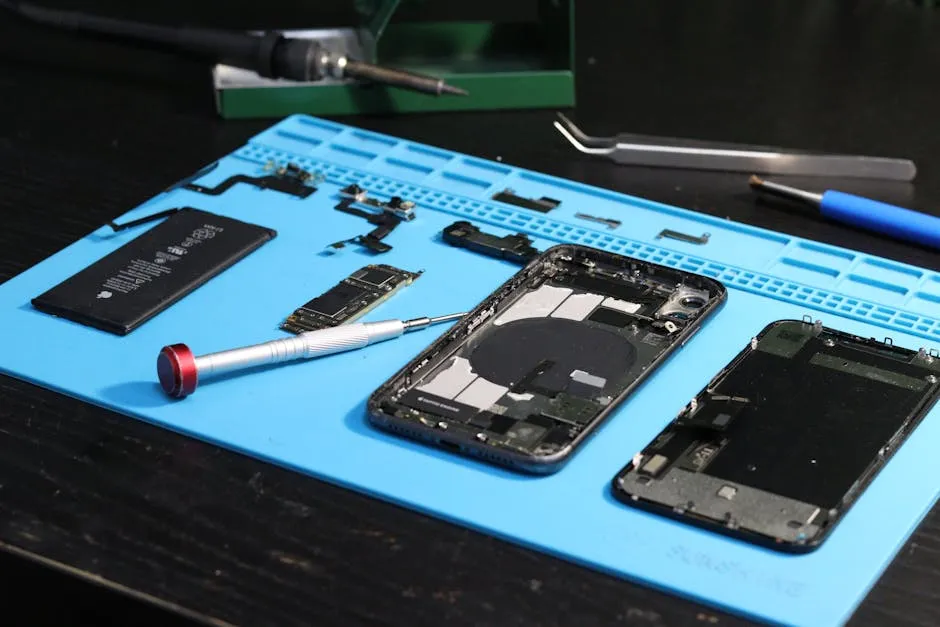
"Disassembled smartphone illustrating the rare minerals inside modern technology." Image by Fotografia Lui Vlad / Pexels.
Every smartphone, computer, and electric vehicle contains dozens of different minerals extracted from Earth's crust. These natural resources are not evenly distributed around the world, which creates challenges for technology companies and countries that depend on them. Understanding which minerals power our devices helps explain why some technologies cost more than others and why global supply chains matter so much.
The lithium-ion batteries that power smartphones, laptops, and electric vehicles require several specific minerals. Lithium, a soft silver-white metal, stores electrical energy efficiently in rechargeable batteries. Cobalt, another critical battery component, helps batteries last longer and prevents overheating. Most of the world's cobalt comes from the Democratic Republic of Congo, while lithium is primarily mined in Australia, Chile, and Argentina. This concentrated production means that problems in one country can affect technology manufacturing worldwide.
Computers and smartphones also depend on a group of seventeen metallic elements called rare earth elements. Despite their name, these elements are relatively common in Earth's crust, but they rarely occur in concentrated deposits that make mining economical. Rare earth elements like neodymium and dysprosium create the powerful magnets in smartphone speakers, computer hard drives, and electric vehicle motors. China currently produces about 60% of the world's rare earth elements and processes nearly 90% of them, giving that country significant influence over global technology production.
Copper serves as the primary material for electrical wiring in nearly all electronic devices because it conducts electricity exceptionally well. A typical smartphone contains about 15 grams of copper, while an electric vehicle requires approximately 80 kilograms. Solar panels also use copper extensively in their wiring systems. As the world transitions to renewable energy and electric transportation, demand for copper continues to increase faster than new mines can be developed.
The uneven distribution of these minerals creates economic and political challenges. Countries without their own mineral deposits must import them, making their technology industries vulnerable to supply disruptions. Trade disputes, mining accidents, or political instability in mineral-producing regions can slow down manufacturing and increase costs. Some technology companies are now investing in recycling programs to recover valuable minerals from old electronics, reducing dependence on newly mined materials.
Scientists and engineers are also developing alternative technologies that use more abundant materials. Researchers are testing sodium-ion batteries as a potential replacement for lithium-ion batteries, since sodium is far more common and widely distributed. Other teams are working on motors that use fewer rare earth elements or replace them with more available materials. These innovations could reduce the vulnerability of technology manufacturing to mineral scarcity and supply chain problems.
The connection between minerals and technology affects decisions about resource management and environmental protection. Mining operations can damage ecosystems and require significant energy and water. As global demand for minerals increases, countries must balance the need for these resources with environmental conservation. Understanding how technology depends on specific minerals helps us make informed choices about device consumption, recycling, and supporting sustainable mining practices.
Interesting Fact: Recycling one million smartphones can recover approximately 16,000 kilograms of copper, 350 kilograms of silver, 34 kilograms of gold, and 15 kilograms of palladium—enough precious metals to make the recycling economically worthwhile.
Comprehension quiz (10 questions)
1. What is the primary reason lithium is used in rechargeable batteries?
2. Which country produces and processes the majority of rare earth elements?
3. What does the term 'supply chain' mean in the context of this passage?
4. Based on the passage, why are rare earth elements difficult to mine even though they are relatively common?
5. How much copper does a typical electric vehicle require compared to a smartphone?
6. What alternative material are researchers testing as a potential replacement for lithium in batteries?
7. Why does the uneven distribution of minerals create economic and political challenges?
8. According to the passage, what is one environmental concern related to mining minerals?
9. True or False: Rare earth elements are actually very rare in Earth's crust.
10. True or False: Recycling old electronics can help reduce dependence on newly mined minerals.
Perfect for the way you teach
- Build comprehension skills
- Auto-graded quiz
- Differentiated reading
- Read together at home
- Improve fluency
- Quiet reading time
- Reading curriculum support
- Independent practice
- Track Lexile growth