Where Does Tap Water Come From
Interactive passage with audio narration, comprehension questions, and printable PDF.
By completing this purchase you agree to our Terms of Use and Privacy Policy. Your subscription renews automatically until you cancel. You can cancel anytime from your account settings. All sales are final and non-refundable. Digital content is available for download in your account immediately upon purchase.
What's included
Where Does Tap Water Come From preview and details
About this printable Where Does Tap Water Come From science reading passage, NGSS-aligned (Grades 5-8)
Sample passage and quiz from Where Does Tap Water Come From
Reading passage and comprehension quiz preview
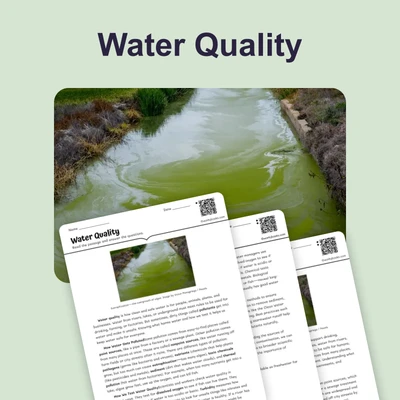
Where Does Tap Water Come From
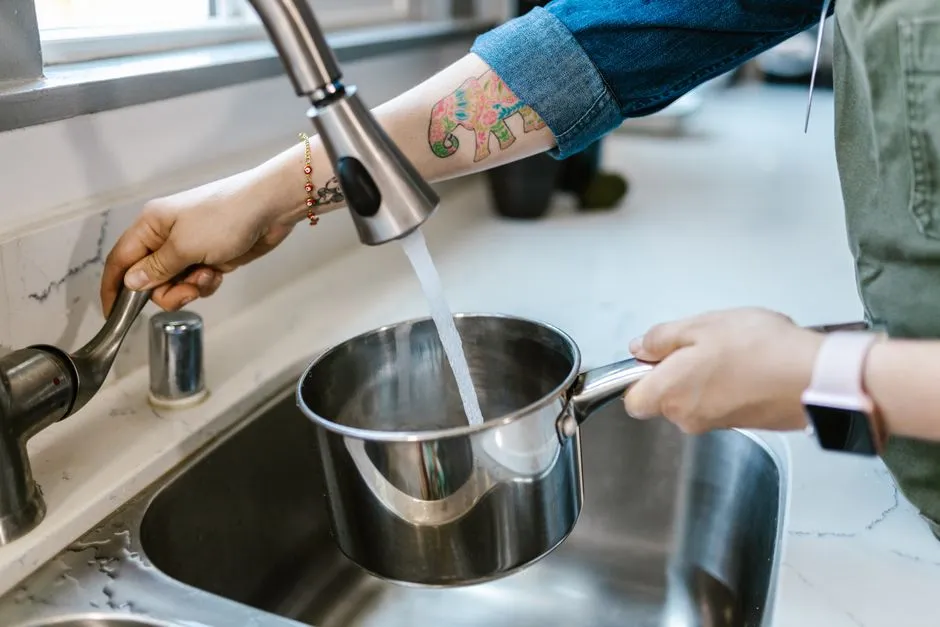
The water in your home begins its journey from natural sources like rivers, lakes, reservoirs, and underground aquifers. Image by RDNE Stock project / Pexels.
Every time you turn on a faucet, clean water flows out instantly. But where does this tap water actually come from? The water in your home begins its journey from natural sources far away. These sources include rivers, lakes, reservoirs, and underground aquifers. Some cities transport water more than 200 miles to reach homes and businesses.
Water from natural sources cannot go directly to your faucet. First, it travels to a treatment plant through large pipes or tunnels. At the treatment plant, workers use several processes to make water safe. Filtration removes dirt, sand, and other solid particles from the water. The water passes through layers of sand, gravel, and sometimes charcoal. Next, disinfection kills harmful bacteria and other microorganisms. Scientists add chemicals like chlorine to eliminate disease-causing germs. Some plants also adjust the water's pH level to prevent pipe damage.
After treatment, the clean water enters a distribution system. This system includes thousands of miles of underground pipes. Pumps push water through these pipes to reach every neighborhood. Water towers store extra water and help maintain steady pressure in the pipes. Evidence shows that cities like Los Angeles import water from sources over 200 miles north. New York City's water travels 125 miles through massive tunnels carved through rock. These tunnels can be 24 feet wide and carry billions of gallons daily.
Understanding where tap water comes from helps us appreciate this vital resource. Cities depend on reliable water sources and well-maintained infrastructure. Climate changes can affect water availability in rivers and aquifers. Growing populations increase demand for clean water. Engineers and scientists work to protect water sources and improve treatment methods. The journey from source to faucet represents a complex system that supports human health and modern life.
Interesting Fact: The average American uses about 82 gallons of water per day at home. A single dripping faucet can waste more than 3,000 gallons of water each year.
Comprehension quiz (10 questions)
1. What are the three main natural sources of tap water mentioned in the passage?
2. What is the primary purpose of filtration in water treatment?
3. Based on the passage, what does the term 'disinfection' mean in water treatment?
4. How far does New York City's water travel through tunnels to reach the city?
5. What can you infer about why cities need water towers in their distribution systems?
6. Why might climate changes affect tap water availability according to the passage?
7. If a city's population grows significantly, what challenge would the water system likely face?
8. Which process happens first after water leaves its natural source?
9. True or False: Water from natural sources can go directly to home faucets without any treatment.
10. True or False: A single dripping faucet can waste more than 3,000 gallons of water each year.
Perfect for the way you teach
- Build comprehension skills
- Auto-graded quiz
- Differentiated reading
- Read together at home
- Improve fluency
- Quiet reading time
- Reading curriculum support
- Independent practice
- Track Lexile growth