Why Are Renewable Resources Unevenly Available
Interactive passage with audio narration, comprehension questions, and printable PDF.
By completing this purchase you agree to our Terms of Use and Privacy Policy. Your subscription renews automatically until you cancel. You can cancel anytime from your account settings. All sales are final and non-refundable. Digital content is available for download in your account immediately upon purchase.
What's included
Why Are Renewable Resources Unevenly Available preview and details
About this printable Why Are Renewable Resources Unevenly Available science reading passage, NGSS-aligned (Grades 6-8)
Sample passage and quiz from Why Are Renewable Resources Unevenly Available
Reading passage and comprehension quiz preview
Why Are Renewable Resources Unevenly Available
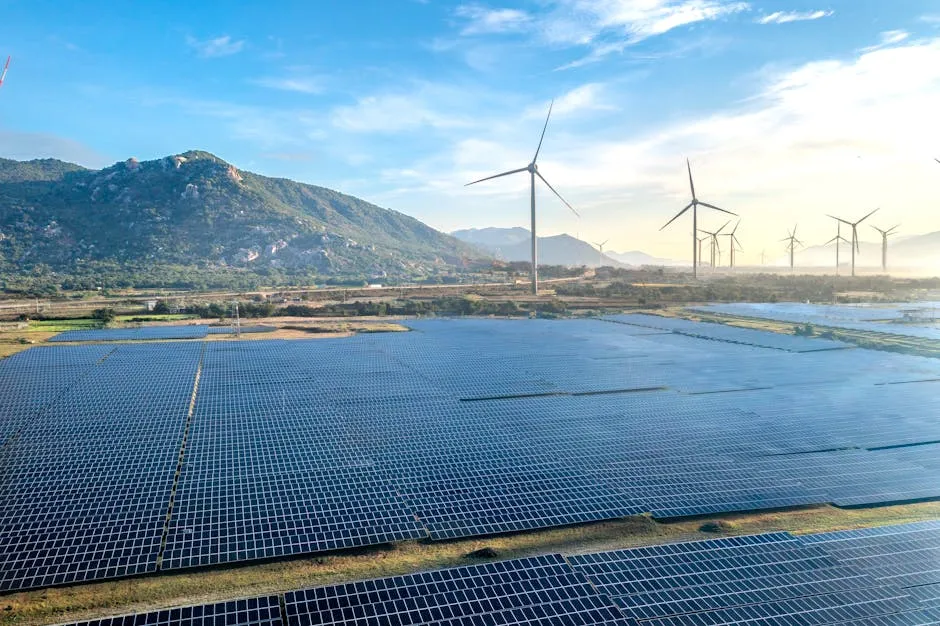
"Aerial view of a solar and wind energy farm set against Vietnam's scenic landscape." by Quang Nguyen Vinh / Pexels.
Renewable energy sources are forms of energy that can be replenished naturally over short periods of time. Unlike nonrenewable resources such as coal, oil, and natural gas, which took millions of years to form and exist in limited quantities, renewable energy sources include solar, wind, hydroelectric, and geothermal power. These energy sources offer important environmental benefits, but they also present significant challenges that scientists and engineers must address.
The most important benefit of renewable energy is reduced greenhouse gas emissions. When we burn fossil fuels to generate electricity or power vehicles, we release carbon dioxide and other gases that trap heat in Earth's atmosphere. Solar panels convert sunlight directly into electricity without producing any emissions. Wind turbines harness moving air to generate power without burning fuel. Hydroelectric dams use flowing water to create electricity. All of these methods produce energy without releasing the pollution that contributes to climate change. This shift away from fossil fuels represents a crucial step in protecting our planet's atmosphere and reducing environmental damage.
Another key advantage of renewables is sustainability, which means these resources will not run out. The sun will continue to shine, wind will keep blowing, and rivers will keep flowing for billions of years. In contrast, Earth's supply of coal, oil, and natural gas is finite. Scientists estimate that at current consumption rates, easily accessible fossil fuel reserves may become depleted within the next century. By developing renewable energy technologies, we reduce our dependence on geologically limited resources and create energy systems that can support human civilization indefinitely.
Despite these benefits, renewable energy faces several important challenges. The most significant is intermittency, which means the energy supply is not constant or predictable. Solar panels only generate electricity when the sun is shining, not at night or during cloudy weather. Wind turbines require steady breezes and cannot produce power on calm days. This variability creates problems for electricity grids, which must provide consistent power to homes and businesses. Engineers are developing energy storage systems, such as large batteries, to save excess energy for later use, but these technologies are still expensive and not widely available.
Land use presents another challenge for renewable energy development. Solar farms and wind turbine arrays require large areas of land to generate significant amounts of electricity. A coal power plant might occupy just a few acres, while a solar farm producing the same amount of energy could require hundreds of acres. This raises questions about competing uses for land, especially in areas where space is limited or where development might disrupt natural habitats. Careful planning is necessary to balance energy needs with environmental conservation and other land uses.
Infrastructure costs represent a third major challenge. Building renewable energy systems requires substantial upfront investment. Solar panels, wind turbines, and the transmission lines to connect them to the power grid are expensive to manufacture and install. While these systems have lower operating costs than fossil fuel plants because they don't require fuel purchases, the initial expense can be a barrier. Additionally, many existing power grids were designed for centralized fossil fuel plants and need expensive upgrades to accommodate distributed renewable energy sources.
Evaluating renewable energy requires weighing these benefits against challenges. The environmental advantages of reduced emissions and sustainability are substantial, particularly as climate change impacts become more severe. However, addressing intermittency, land use concerns, and infrastructure costs demands continued innovation and investment. As technology improves and costs decrease, renewable energy becomes increasingly competitive with traditional sources. The transition to renewables represents not just an environmental choice, but also an engineering challenge that requires creative solutions to ensure reliable, affordable energy for future generations.
Interesting Fact: Denmark generates more than 40% of its electricity from wind power, demonstrating that high levels of renewable energy integration are achievable with proper planning and infrastructure.
Comprehension quiz (10 questions)
1. What is the main difference between renewable and nonrenewable energy sources?
2. Which of the following is NOT mentioned as a renewable energy source in the passage?
3. What does 'intermittency' mean in the context of renewable energy?
4. According to the passage, what is the most important benefit of renewable energy?
5. Why do solar farms require more land than coal power plants to produce the same amount of energy?
6. What solution are engineers developing to address the intermittency problem?
7. Based on the passage, which statement best describes sustainability?
8. Why might existing power grids need expensive upgrades for renewable energy?
9. Renewable energy sources will eventually run out just like fossil fuels.
10. According to the passage, Denmark generates more than 40% of its electricity from wind power.
Perfect for the way you teach
- Build comprehension skills
- Auto-graded quiz
- Differentiated reading
- Read together at home
- Improve fluency
- Quiet reading time
- Reading curriculum support
- Independent practice
- Track Lexile growth