William Shakespeare
Interactive passage with audio narration, comprehension questions, and printable PDF.
By completing this purchase you agree to our Terms of Use and Privacy Policy. Your subscription renews automatically until you cancel. You can cancel anytime from your account settings. All sales are final and non-refundable. Digital content is available for download in your account immediately upon purchase.
What's included
William Shakespeare preview and details
About this printable William Shakespeare reading passage (Grades 5-8)
Sample passage and quiz from William Shakespeare
Reading passage and comprehension quiz preview
William Shakespeare Biography
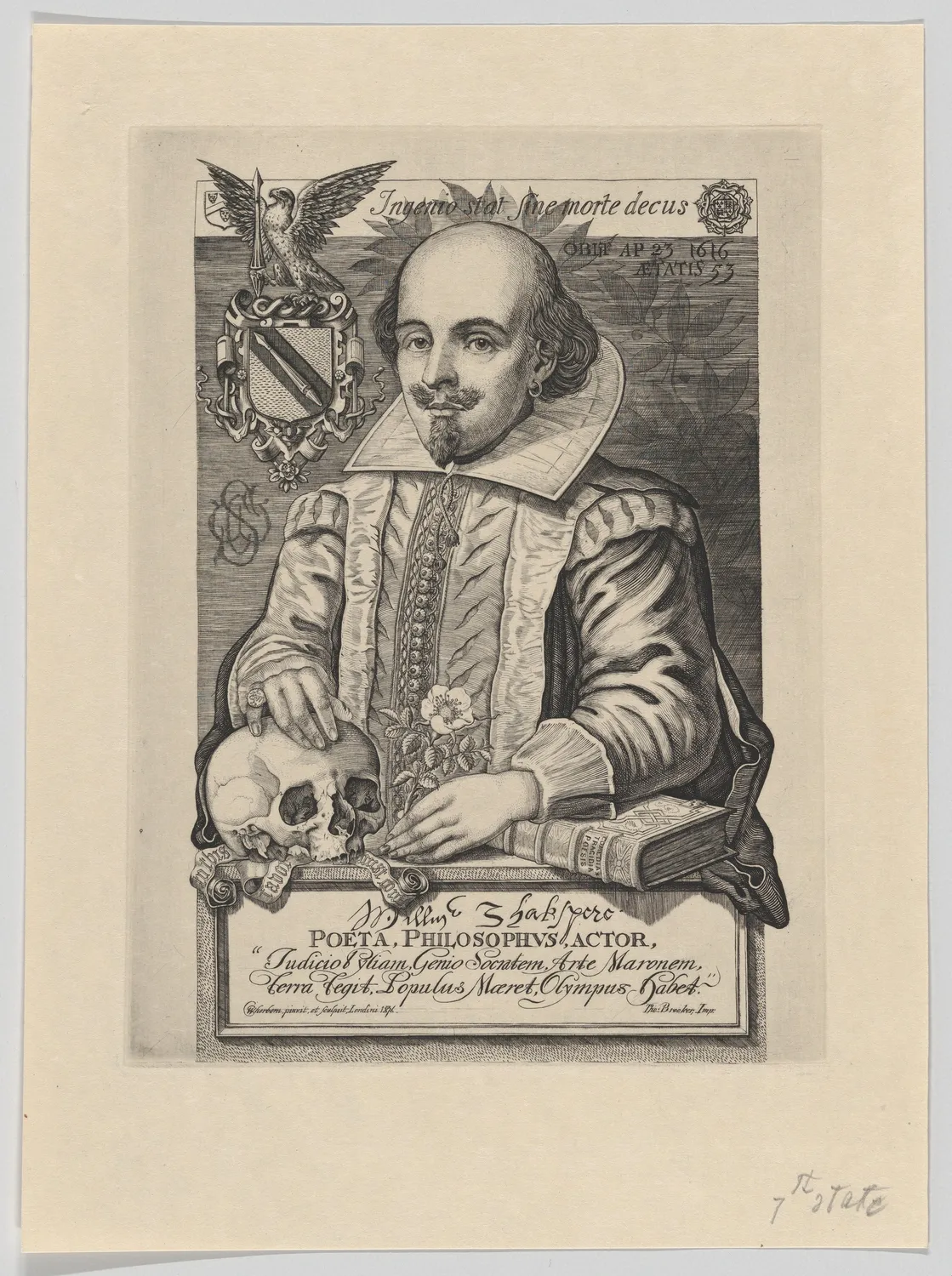
"William Shakespeare MET DP858186" by William Shakespeare / Charles William Sherborn / Wikimedia Commons
William Shakespeare was born in April 1564 in Stratford-upon-Avon, a small market town in England. He is widely recognized as England’s national poet and the most influential playwright in world history. Shakespeare lived during the Renaissance, a period of cultural rebirth in Europe that celebrated art, literature, and new ideas. His writing helped shape the English language and inspired countless generations.
Shakespeare’s early life remains somewhat mysterious. Official records show he was baptized on April 26, 1564, and historians believe he was born a few days earlier. His father, John Shakespeare, was a glove maker and town official, while his mother, Mary Arden, came from a respected family. Shakespeare likely attended the local grammar school, where he studied Latin, literature, and rhetoric. In 1582, at age eighteen, he married Anne Hathaway. By the early 1590s, Shakespeare had moved to London, where he became active in the city’s vibrant theater scene.
Shakespeare joined a group of actors called the Lord Chamberlain’s Men, later known as the King’s Men. He wrote and performed plays at the Globe Theatre, a famous open-air theater on the banks of the River Thames. Between 1590 and 1613, Shakespeare wrote at least 37 plays and 154 sonnets, or fourteen-line poems. Notable works include tragedies like Hamlet and Romeo and Juliet, comedies such as A Midsummer Night’s Dream, and histories like Henry V. Shakespeare often explored themes like love, power, jealousy, and betrayal. For example, a primary source, the First Folio published in 1623, collected most of his plays and preserved them for future readers.
Shakespeare’s work had a lasting influence on language and theater. He introduced over 1,700 new words to English, including lonely and majestic. His plays were performed before both commoners and royalty, reflecting the social hierarchy of England. The Globe Theatre itself demonstrates how geography shaped culture—its location in London made it accessible to large, diverse audiences. Today, Shakespeare’s plays are studied and performed worldwide, showing the continuity of his impact across centuries and cultures.
Shakespeare died in 1616, but his legacy endures. His stories, characters, and creative language continue to shape literature, theater, and the way we communicate. By examining his life and works, we gain insight into the Renaissance and the development of modern society.
Interesting Fact: Shakespeare invented many common phrases we use today, such as "break the ice" and "heart of gold."
Shakespeare’s contributions connect to broader themes in world history, including the spread of new ideas during the Renaissance and the power of art to influence society.
Comprehension quiz (8 questions)
1. Where was Shakespeare born?
2. What year did Shakespeare die?
3. Which theater was linked to Shakespeare?
4. Why was the First Folio important?
5. How did the Globe Theatre's location affect Shakespeare's work?
6. What is a sonnet?
7. Shakespeare wrote only comedies. True or false?
8. What does 'legacy' mean?
Perfect for the way you teach
- Build comprehension skills
- Auto-graded quiz
- Differentiated reading
- Read together at home
- Improve fluency
- Quiet reading time
- Reading curriculum support
- Independent practice
- Track Lexile growth