This learning resource is available in interactive and printable formats. The interactive worksheet can be played online and assigned to students. The Printable PDF version can be downloaded and printed for completion by hand.
This world history reading passage explores the life and legacy of William Tyndale, a key figure of the Renaissance who risked his life to translate the Bible into English. Students will examine Tyndale's motivations, the dangers he faced, his execution for heresy, and his lasting influence on the English language and religious thought. The text addresses change over time, cause-and-effect relationships, and social context, providing multiple perspectives and primary source references. Activities include a glossary, reading assessment, writing prompts, graphic organizers, and timeline. Spanish translation and read aloud audio support diverse learners. The passage aligns to CA HSS 7.8 and CCSS RH.6-8.2 standards, making it ideal for history classrooms seeking rigorous, engaging content.
CONTENT PREVIEW
Expand content preview
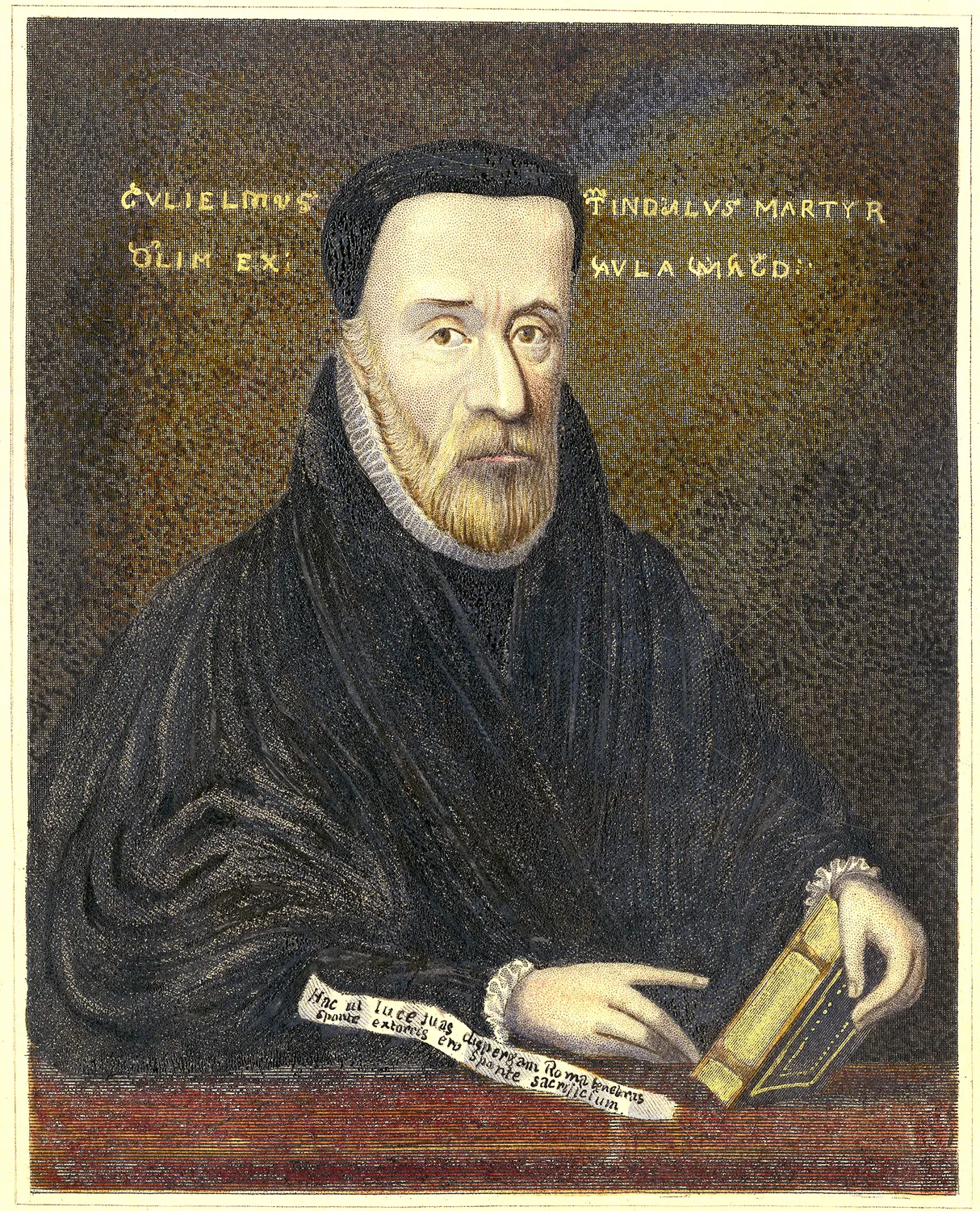
A portrait of William Tyndale (c.1494-1536) who translated the Bible from the original Hebrew and Greek into English. Wikimedia Commons
William Tyndale was an English scholar during the Renaissance, a period of cultural and intellectual growth across Europe in the 1400s and 1500s. In the early 16th century, most people in England could not read the Bible in their own language. The official Bibles were written in Latin, a language only the educated elite and clergy understood. Tyndale believed that every ordinary person should be able to read and understand the Bible without relying on priests or scholars for interpretation.
In 1524, Tyndale traveled from England to the city of Worms in Germany. He wanted to escape the strict English laws that banned translating the Bible into English. At that time, the Catholic Church controlled religious texts and saw unauthorized Bible translations as a threat to its authority. Tyndale used the latest advances in printing press technology to produce thousands of English New Testaments. He based his translation on original Hebrew and Greek texts, not just the Latin version. This dedication to accuracy made his work revolutionary.
Tyndale’s translation quickly spread through England, often smuggled in bales of cloth. English authorities saw his work as dangerous. In 1535, Tyndale was arrested near Brussels, accused of heresy—the crime of holding beliefs that challenged the official church. He was imprisoned for over a year and then executed in 1536. According to a letter from prison, Tyndale asked for a warmer cap and a Hebrew Bible, showing his dedication even in captivity. His final words reportedly were, “Lord, open the King of England’s eyes.” The king soon allowed English Bibles, though not without restrictions.
Tyndale’s translation had a huge impact on English society and language. Many phrases he created, like “let there be light,” remain in modern English. About 80% of his text was used in the later King James Bible of 1611. His work helped ordinary people read and interpret religious texts themselves, weakening church control and encouraging new ideas during the Reformation. Despite being condemned by leaders, Tyndale’s Bible paved the way for religious freedom and literacy in England.
The story of William Tyndale connects to broader themes in world history, including the spread of new ideas, the power of technology like the printing press, and struggles for religious and individual rights.
Interesting Fact: Tyndale’s Bible was the first printed English New Testament, and copies were so rare that only three of the original 1526 editions are known to survive today.
Who was William Tyndale?
English Bible translatorKing of EnglandGerman printerSpanish explorer
What did Tyndale translate?
The BibleA science bookA law codeA history novel
Where was Tyndale arrested?
Near BrusselsLondonRomeWorms
Why did Tyndale leave England?
Escape strict lawsVisit familyStudy LatinBecome a king
How did the printing press help Tyndale?
Mass produced BiblesBuilt churchesTaught LatinHid Bibles
What was the effect of Tyndale’s work?
More people read the BibleChurch grew strongerNo change at allLatin replaced English
Tyndale was executed for heresy.
TrueFalse
What does 'heresy' mean?
Belief against church teachingsA type of bookOld English lawA church leader
Perfect For:
👩🏫 Teachers
• Reading comprehension practice
• Auto-graded assessments
• Literacy skill development
👨👩👧👦 Parents
• Reading practice at home
• Comprehension improvement
• Educational reading time
🏠 Homeschoolers
• Reading curriculum support
• Independent reading practice
• Progress monitoring
Reading Features:
📖
Reading Passage
Engaging fiction or nonfiction text
❓
Comprehension Quiz
Auto-graded questions
📊
Instant Feedback
Immediate results and scoring
📄
Printable Version
Download for offline reading
🔊
Read Aloud
Voice-over with word highlighting
Reviews & Ratings
No reviews yet. Be the first to share your experience!
Related Content
Renaissance Clothing
This passage explores the fascinating world of Renaissance fashion clothing in Europe, focusing on how clothing reflecte...
Renaissance Poetry
This engaging world history reading passage introduces students to the Renaissance sonnet, focusing on the influential w...
Renaissance Philosophy
This passage explores the main ideas of Renaissance philosophy, which emerged in Europe during the 14th to 16th centurie...
Renaissance Art
This reading passage examines the enduring legacy of Renaissance art in world history, focusing on key techniques such a...
CA HSS 7.8.3CCSS RH.6-8.2CCSS W.6.2
Renaissance Anatomy Art
This engaging passage explores the intersection of art, science, and society during the Renaissance through the lens of ...
French Renaissance
This passage explores the rich culture of the French Renaissance, focusing on the influence of Italian art and architect...
Northern Renaissance
This passage examines the development and significance of Northern Renaissance art, focusing on how Renaissance ideas sp...
Renaissance Art and Artists
This history reading passage delves into the world of Renaissance art, focusing on the revolutionary works and lives of ...
Florence Renaissance
This history reading passage examines Florence during the Renaissance, highlighting its cultural richness, the influence...
Renaissance Humanism
This passage introduces students to the transformative concept of Renaissance Humanism, a philosophical movement that em...
Renaissance Oil Painting
This passage explores the development of oil painting techniques during the Renaissance, focusing on the comparison betw...
Renaissance Impact Today
This engaging world history passage examines the enduring impact of the Renaissance on modern society, focusing on how R...
English Renaissance
This comprehensive passage explores the English Renaissance, a transformative period in England marked by a flourishing ...
Renaissance Education
This engaging history reading passage examines the transformation of education during the Renaissance and its impact on ...
Renaissance Medicine
This engaging world history reading passage explores medical advances during the Renaissance in Europe, focusing on chan...
Renaissance Music
This world history reading passage examines the development of music during the Renaissance, a period of profound cultur...
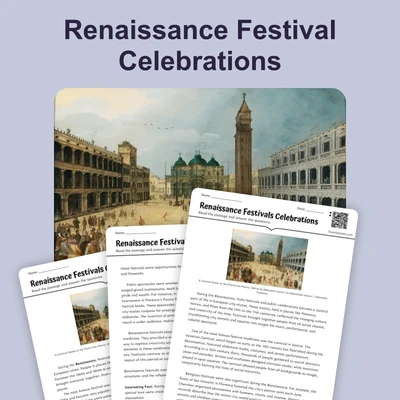
Renaissance Festivals Celebrations
This passage explores the vibrant role of festivals and celebrations during the Renaissance, focusing on how public spec...
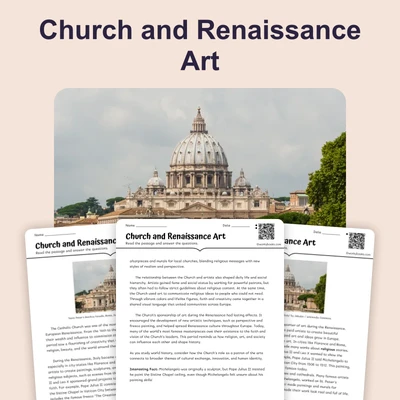
Catholic Church and Renaissance
This passage explores the major role the Catholic Church played as a patron of Renaissance art in Europe. It examines ho...
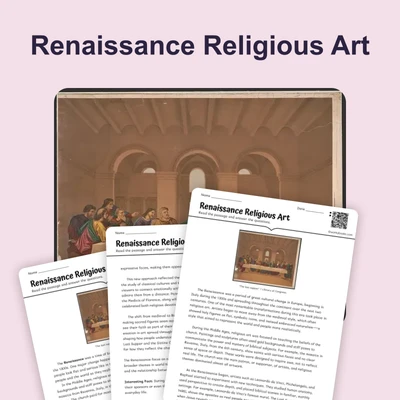
Renaissance Religious Art
This passage explores the dramatic changes in religious art during the Renaissance, focusing on the shift from medieval ...
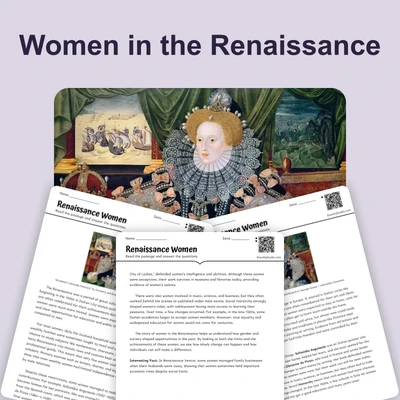
Renaissance Women
This reading passage explores the lives and contributions of women during the Renaissance period in Europe. Students wil...