
Passage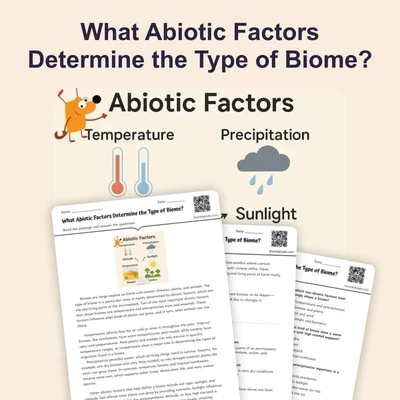
Grades 3–7
What Abiotic Factors Determine the Type of Biome?
Reading Passage · MS-LS1-5
Free

Explore our collection of Habitats and Ecosystems curriculum resources for grades K-5. From printable worksheets and reading passages to interactive games and graphic organizers, this hub offers no-prep, standards-aligned materials that build understanding across the grade span.
Reading Passage · MS-LS1-5
Reading Passage · MS-LS1-3
Reading Passage · MS-LS1-4
Reading Passage
Reading Passage
Reading Passage · MS-LS2-1
40% off until Aug 1
Reading Passage · MS-LS2-1
Reading Passage · MS-LS2-1
Reading Passage · MS-LS2-1
Reading Passage · MS-LS2-1
Reading Passage
Reading Passage
Reading Passage
40% off until Aug 1
Reading Passage
Reading Passage
Reading Passage
Reading Passage
Reading Passage
Three ways to use Workybooks — pick what fits.
In the earliest grades, students explore basic habitats like forests, ponds, and deserts, learning what animals and plants need to survive. As they progress through upper elementary, they examine food chains, energy flow, adaptations, and the interdependence of organisms within ecosystems. This progression helps students connect concrete examples to abstract concepts such as biodiversity, conservation, and human impact.
Related concepts include biomes, food webs, life cycles, camouflage, migration, and symbiosis. Our resources include leveled reading passages, sorting activities, vocabulary cards, and hands-on experiments. Whether you need scaffolded worksheets for struggling learners or enrichment projects for advanced students, each resource is teacher-authored and classroom-ready.
Teachers can use this hub to differentiate across a mixed-ability room. For whole-group instruction, project a digital game or read a passage aloud. In small groups, students can sort organism cards or complete a food web activity. For independent practice, assign printable worksheets or digital drag-and-drop tasks. Use the materials for homework, literacy centers, intervention, or review. The variety of formats lets you assess understanding through observation, discussion, or written responses. All resources are printable and digital, with some free and most available through a paid membership.
These resources align with grade-level Common Core standards for reading informational text and with Next Generation Science Standards for life science. Specific expectations vary by grade, but each resource is designed to support the progression from basic habitat identification to ecosystem analysis.
Yes, many of our Habitats and Ecosystems worksheets printable versions are available. You can download and print them for classroom use. Some resources are free, while others require a paid membership.
Absolutely. These Habitats and Ecosystems worksheets for kids are designed for grades K-5. Activities include matching, sorting, reading comprehension, and hands-on projects that build science vocabulary and critical thinking.
We cover kindergarten through fifth grade. Resources are leveled so you can find materials appropriate for your students, from basic habitat identification in K-1 to food webs and ecosystem interactions in grades 4-5.
Yes. Many worksheets and activities work well as formative assessments, exit tickets, or review games. The variety allows you to check understanding in different ways, from multiple-choice quizzes to open-ended writing prompts.