This learning resource is available in interactive and printable formats. The interactive worksheet can be played online and assigned to students. The Printable PDF version can be downloaded and printed for completion by hand.
This engaging history reading passage explores the arrival of the Anglo-Saxons—Angles, Saxons, and Jutes—in Britain after the end of Roman rule. Students will learn about the causes of these migrations, such as the withdrawal of Roman soldiers and the resulting vulnerability of the British Isles, as well as the establishment of new kingdoms and the significant cultural changes that followed. The passage includes references to archaeological sources, such as burial sites and artifacts, providing concrete evidence of these historical events. The resource features read aloud audio, a Spanish translation, and is designed to support analysis of cause and effect, change over time, and social hierarchy. Activities and graphic organizers develop deeper understanding and historical thinking skills. Aligned with CA HSS 6.6 and TEKS 113.18 standards.
CONTENT PREVIEW
Expand content preview
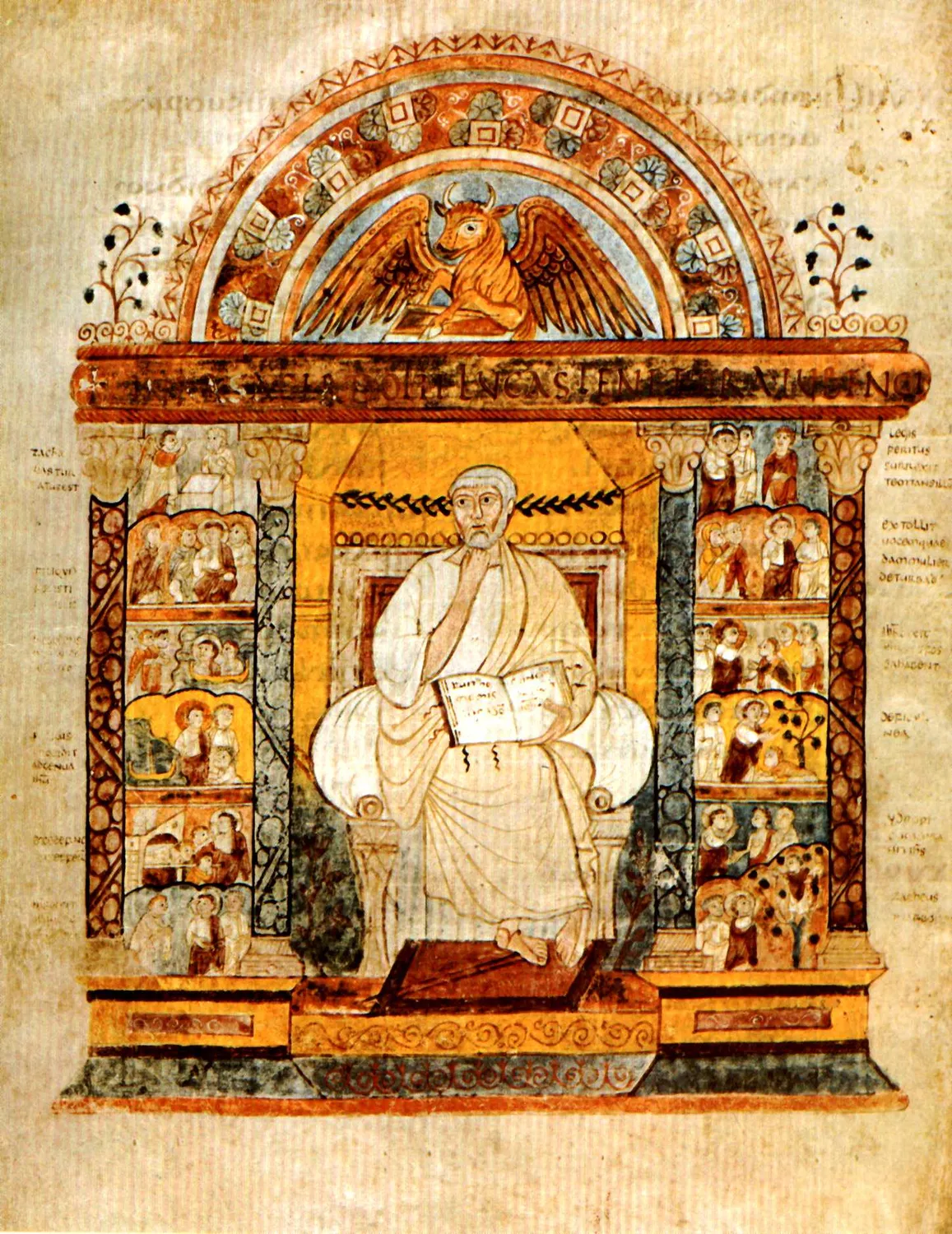
"St. Augustine Gospels, Portrait of Luke" / Wikimedia Commons.
The end of Roman rule in Britain around 410 CE created a power vacuum that changed the island’s history. With the Roman army gone, Britain’s towns and countryside were left without protection. Into this uncertain world came groups known as the Angles, Saxons, and Jutes—peoples from what is now Denmark, Germany, and the Netherlands. Their arrival marked the beginning of a new era in Britain known as the Anglo-Saxon period.
The Angles, Saxons, and Jutes crossed the North Sea in wooden boats, seeking land, resources, and security. Archaeological discoveries, like the famous burial ship at Sutton Hoo, show evidence of their arrival and the richness of their culture. These groups did not invade all at once. Instead, they came in waves over several decades, starting in the early 400s and continuing into the 500s CE. Some settled peacefully, making agreements with local Britons. Others fought fierce battles to control new territories. Key places like Kent, Wessex, and Mercia became centers for early Anglo-Saxon kingdoms. Written sources, such as the Anglo-Saxon Chronicle, describe conflicts and alliances, though exact details are sometimes debated by historians.
As the Anglo-Saxons established themselves, the landscape and daily life in Britain changed dramatically. They built wooden villages and halls, cleared forests for farming, and organized society around small kingdoms. Social structure was based on warrior leaders, families, and chieftains. The newcomers brought their own languages, religious beliefs, and traditions, blending with local customs. Over time, Christianity—reintroduced by missionaries like St. Augustine in 597 CE—became increasingly important, transforming culture and laws. Archaeological finds, such as jewelry and household items, provide clues about their daily lives and social hierarchy.
Over the centuries, the different groups united into larger kingdoms, setting the foundations for modern England. The Anglo-Saxon period saw both continuity with the past and significant change. While some Roman towns fell into ruin, others survived and adapted. The influence of the Angles, Saxons, and Jutes can still be seen today in English place names, language, and traditions.
The arrival of the Anglo-Saxons was a turning point for Britain. Their migrations reshaped the island’s population, culture, and political landscape. This era connects to broader themes in world history, such as migration, cultural blending, and the rise and fall of civilizations.
Interesting Fact: The name "England" comes from the Angles, one of the main groups who settled there. Their name became "Englaland," meaning "land of the Angles."
When did Roman rule in Britain end?
Around 410 CE597 CE900 CE1066 CE
Where did the Angles, Saxons, and Jutes come from?
Northern EuropeItalyAfricaAsia
What is Sutton Hoo?
A burial ship siteA city in KentA Roman fortA Saxon king
Why did the Anglo-Saxons come to Britain?
For land and safetyTo trade onlyTo escape RomansTo find gold
How did their arrival change Britain?
New kingdoms and cultureNo changes at allRoman cities rebuiltBritons left Britain
What was one effect of Christianity's return?
Changed culture and lawsAnglo-Saxons leftRoman army returnedBritain became pagan
The name 'England' comes from the Angles. True or False?
TrueFalse
What does 'hierarchy' mean in the passage?
Ranked levels in societyA type of shipA new kingdomA farm tool
Perfect For:
👩🏫 Teachers
• Reading comprehension practice
• Auto-graded assessments
• Literacy skill development
👨👩👧👦 Parents
• Reading practice at home
• Comprehension improvement
• Educational reading time
🏠 Homeschoolers
• Reading curriculum support
• Independent reading practice
• Progress monitoring
Reading Features:
📖
Reading Passage
Engaging fiction or nonfiction text
❓
Comprehension Quiz
Auto-graded questions
📊
Instant Feedback
Immediate results and scoring
📄
Printable Version
Download for offline reading
🔊
Read Aloud
Voice-over with word highlighting
Reviews & Ratings
No reviews yet. Be the first to share your experience!
Related Content
Middle Ages Legacy
This history reading passage examines the lasting legacy of the Middle Ages, including the development of universities, ...
Early Middle Ages
This comprehensive reading passage explores the Early Middle Ages (500-1000 CE), a transformative period in European his...
High Middle Ages
This detailed world history reading passage explores the High Middle Ages (1000-1300 CE), a transformative era in Europe...
What Were the Middle Ages?
This engaging world history reading passage introduces students to the Middle Ages, the period in European history betwe...
Late Middle Ages
This rigorous world history reading passage explores the Late Middle Ages (1300-1500 CE), a time marked by the devastati...
Dark Ages
This passage offers a rigorous, engaging examination of why the early Middle Ages are often called the 'Dark Ages.' Stud...
Life in Middle Ages
This rigorous history reading passage explores life in Europe during the Middle Ages, focusing on the structure of feuda...
Medieval Islamic World
This rigorous reading passage delves into the Medieval Islamic World's golden age, when a vast civilization stretched fr...
Islamic Golden Age
This history reading passage explores the Islamic Golden Age, a period from the 8th to 14th centuries marked by outstand...
Medieval to Modern Transition
This engaging world history reading passage explores the dramatic transformation from the Middle Ages to the modern era,...
Medieval Words in English
This engaging history reading passage examines the evolution of the English language during the Middle Ages, focusing on...
Age of Exploration Begins
This engaging history reading passage explores the Age of Exploration, a turning point in world history when European po...
Italian City-States
This passage explores the rise and significance of the Italian city-states—Venice, Florence, and Genoa—during the Middle...
Attila the Hun
This engaging world history reading passage examines Attila the Hun, a powerful and feared ruler during the Middle Ages....
Medieval Guilds
This engaging world history reading passage explores the important role of guilds—worker groups that shaped the economy ...
Medieval Christian Worship
This detailed passage examines how people worshiped during the Middle Ages, focusing on essential religious practices su...
Power of the Pope
This history reading passage examines the power of the pope during the Middle Ages, focusing on his role as spiritual le...
Carolingian Renaissance
This engaging world history passage explores how Charlemagne, ruler of the Franks, transformed education and learning in...
Islamic Golden Age Inventions
This world history reading passage explores the remarkable inventions and scientific advances made in the medieval Islam...
Medieval Agricultural Innovations
This history reading passage explores how farming inventions like the heavy plow, three-field system, and horse collar r...