Battle of Tours 732
Interactive passage with audio narration, comprehension questions, and printable PDF.
By completing this purchase you agree to our Terms of Use and Privacy Policy. Your subscription renews automatically until you cancel. You can cancel anytime from your account settings. All sales are final and non-refundable. Digital content is available for download in your account immediately upon purchase.
What's included
Battle of Tours 732 preview and details
About this printable Battle of Tours 732 reading passage (Grades 5-8)
Sample passage and quiz from Battle of Tours 732
Reading passage and comprehension quiz preview
Battle of Tours
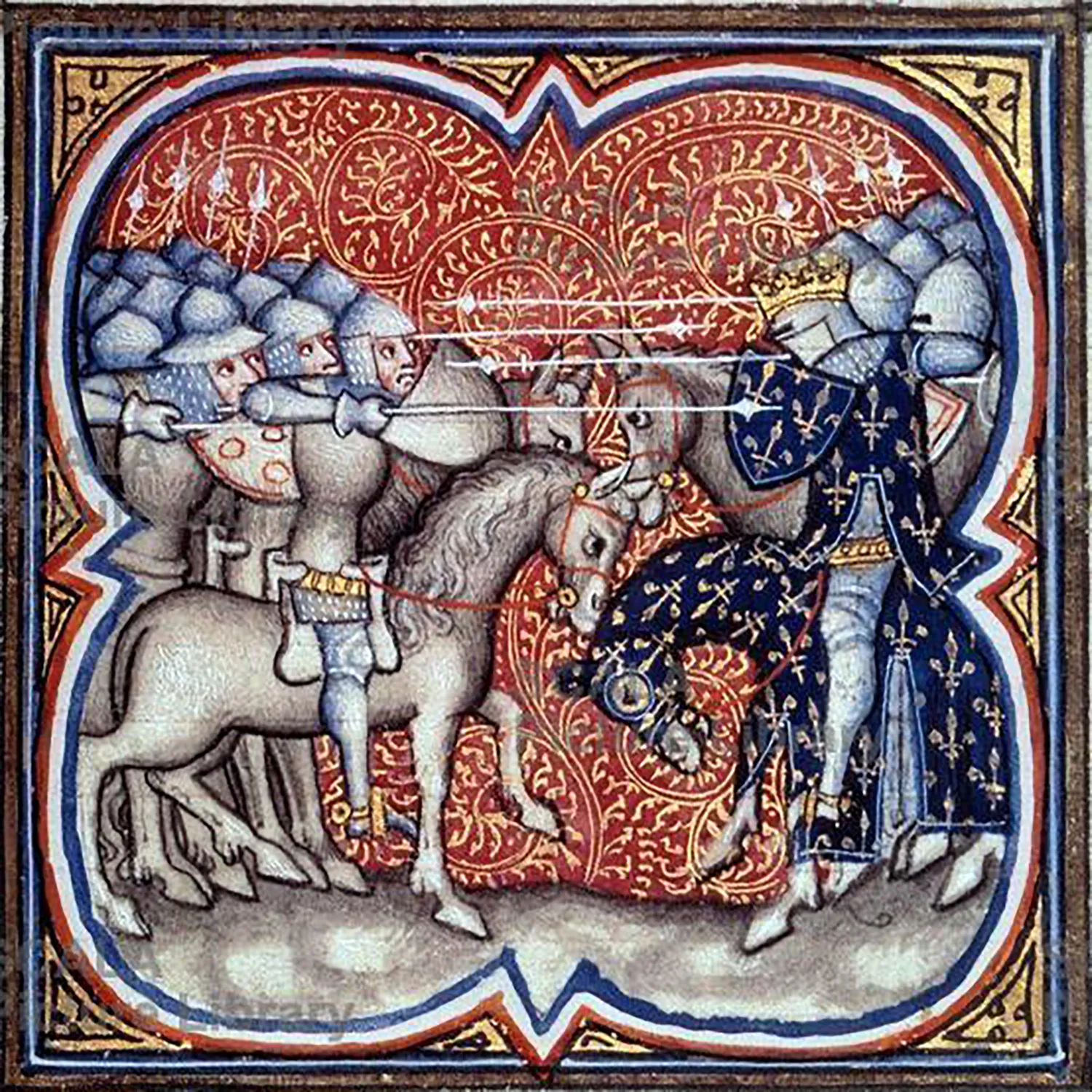
"Charles Martel fighting the Saracens at Tours-Poitiers in 732, Great Chronicles of France" by Levan Ramishvili from Tbilisi, Georgia / Wikimedia Commons
The Battle of Tours took place in October 732 CE, near the city of Tours in what is now France. Led by Charles Martel, the Frankish army stopped the northward expansion of Muslim forces from the Umayyad Caliphate. This event is considered one of the most important military engagements in European history because it influenced the future shape of Western Europe.
In the early 700s, the Umayyad Caliphate controlled much of Spain and aimed to expand further into Europe. Their army, under the command of Abd al-Rahman, crossed the Pyrenees Mountains and moved into the Frankish kingdom. Charles Martel, known as "The Hammer," was the mayor of the palace for the Franks and the real power behind the king. Recognizing the threat, he quickly gathered a force of Frankish soldiers, including both professional warriors and local farmers, to defend their land.
The two armies met near Tours in central France. According to the chronicler Paul the Deacon, the battle lasted several days, with both sides waiting for the other to attack. The Franks formed a tight defensive formation, which allowed them to withstand repeated cavalry charges from the Umayyad army. An important primary source, the Chronicle of 754, describes how Charles Martel's disciplined troops held their ground and caused confusion among their enemies. In the heat of battle, Abd al-Rahman was killed, and the Umayyad forces retreated, leaving many weapons and supplies behind.
Historians have debated the exact size of the armies and the number of casualties, but most agree that the Franks were outnumbered. Archaeological evidence, such as weapons and armor found near Tours, supports accounts of a large and fierce battle. The Frankish victory was a turning point. It stopped further Muslim expansion into Western Europe and strengthened Charles Martel’s reputation as a strong leader. After the battle, the Franks continued to build a powerful kingdom that would become the foundation for modern France and Germany.
The significance of the Battle of Tours extends beyond the military victory. It marked a change in the balance of power between Christian and Muslim territories in Europe. The victory gave the Franks prestige and encouraged the development of feudalism, a system where land was exchanged for military service. It also helped secure the future of Christianity in Western Europe.
This battle connects to broader themes in world history, such as the rise and fall of empires, the impact of geography on conflict, and the ways leaders shape the destiny of their societies.
Interesting Fact: Charles Martel’s grandson, Charlemagne, would later become one of Europe’s most famous rulers, creating an empire that covered much of Western Europe.
Comprehension quiz (8 questions)
1. Who led the Frankish army?
2. Where did the Battle of Tours occur?
3. In what year did the battle take place?
4. Why was the Frankish victory important?
5. What happened after Abd al-Rahman died?
6. How did the battle affect Europe?
7. The Umayyad Caliphate controlled Spain. True or false?
8. What does 'prestige' mean in the passage?
Perfect for the way you teach
- Build comprehension skills
- Auto-graded quiz
- Differentiated reading
- Read together at home
- Improve fluency
- Quiet reading time
- Reading curriculum support
- Independent practice
- Track Lexile growth