Charlemagne Crowned Emperor
Interactive passage with audio narration, comprehension questions, and printable PDF.
By completing this purchase you agree to our Terms of Use and Privacy Policy. Your subscription renews automatically until you cancel. You can cancel anytime from your account settings. All sales are final and non-refundable. Digital content is available for download in your account immediately upon purchase.
What's included
Charlemagne Crowned Emperor preview and details
About this printable Charlemagne Crowned Emperor reading passage (Grades 5-8)
Sample passage and quiz from Charlemagne Crowned Emperor
Reading passage and comprehension quiz preview
Charlemagne Crowned Emperor
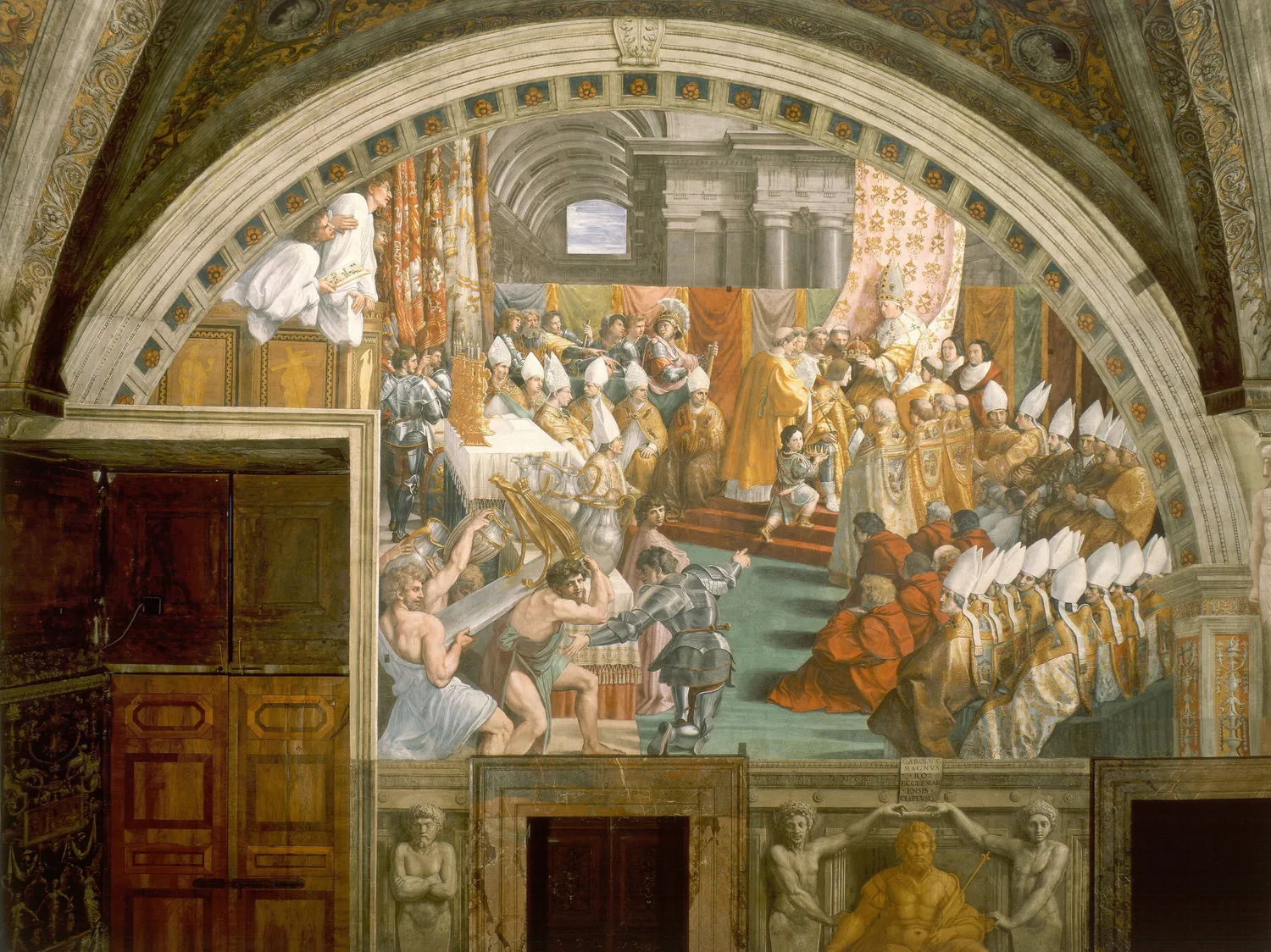
"Raphael- Coronation of Charlemagne" by Raphael / Wikimedia Commons.
On December 25, 800 CE, a dramatic event took place in St. Peter’s Basilica in Rome. Charlemagne, the king of the Franks, knelt before Pope Leo III and was crowned as the first Holy Roman Emperor. This moment marked a turning point in medieval European history, blending political power with religious authority and reviving the idea of a Western empire.
Charlemagne’s rise to power began in the region called Frankia (modern-day France and Germany). He became king in 768 CE and soon expanded his rule through a series of military campaigns. Charlemagne conquered lands across Western Europe, including parts of Italy, Spain, and Central Europe, uniting much of the continent under his control. He also supported Christianity, building churches and encouraging learning. The Annals of Lorsch, a primary source from Charlemagne’s court, describe his construction of the magnificent palace at Aachen, which became his capital and a center for art and scholarship.
By 799 CE, Pope Leo III faced threats in Rome from rival nobles and needed protection. Charlemagne’s armies helped restore order, strengthening the alliance between the Frankish king and the Roman Catholic Church. On Christmas morning in 800 CE, during a solemn church ceremony, Leo III crowned Charlemagne and declared him Emperor of the Romans. Some sources, like Einhard’s biography of Charlemagne, suggest Charlemagne was surprised by the coronation, though historians debate whether he knew in advance. The coronation revived the ancient Roman tradition of emperors, but with a Christian focus. It also established a precedent for future European rulers to seek approval from the Pope.
This event had lasting effects. The Holy Roman Empire became a powerful force in Europe for centuries. Charlemagne’s rule encouraged the spread of learning, art, and law, often called the “Carolingian Renaissance.” The coronation also deepened the connection between the Church and European monarchs, influencing social hierarchy and daily life. Archaeological finds from Aachen, such as Charlemagne’s throne and chapel, reveal the empire’s wealth and ambition. Over time, the idea of a united Christian empire would shape European politics, even as the real power of emperors rose and fell.
The crowning of Charlemagne on Christmas Day reflected both change and continuity. It linked the legacy of ancient Rome with medieval Europe and showed how religious and political leaders shaped history together. This event highlights how geography, religion, and leadership influenced the development of European civilization.
Interesting Fact: Charlemagne could not read or write as a child, but he valued education so much that he learned to read in adulthood and surrounded himself with scholars from across Europe.
Comprehension quiz (8 questions)
1. Who crowned Charlemagne emperor?
2. When did the coronation occur?
3. Where did the coronation take place?
4. Why did Pope Leo III need Charlemagne?
5. What was a major result of the coronation?
6. How did the coronation affect Europe?
7. Charlemagne could read as a child. True or false?
8. What does 'hierarchy' mean?
Perfect for the way you teach
- Build comprehension skills
- Auto-graded quiz
- Differentiated reading
- Read together at home
- Improve fluency
- Quiet reading time
- Reading curriculum support
- Independent practice
- Track Lexile growth