Constantinople: The Greatest City
Interactive passage with audio narration, comprehension questions, and printable PDF.
By completing this purchase you agree to our Terms of Use and Privacy Policy. Your subscription renews automatically until you cancel. You can cancel anytime from your account settings. All sales are final and non-refundable. Digital content is available for download in your account immediately upon purchase.
What's included
Constantinople: The Greatest City preview and details
About this printable Constantinople: The Greatest City reading passage (Grades 5-8)
Sample passage and quiz from Constantinople: The Greatest City
Reading passage and comprehension quiz preview
Constantinople
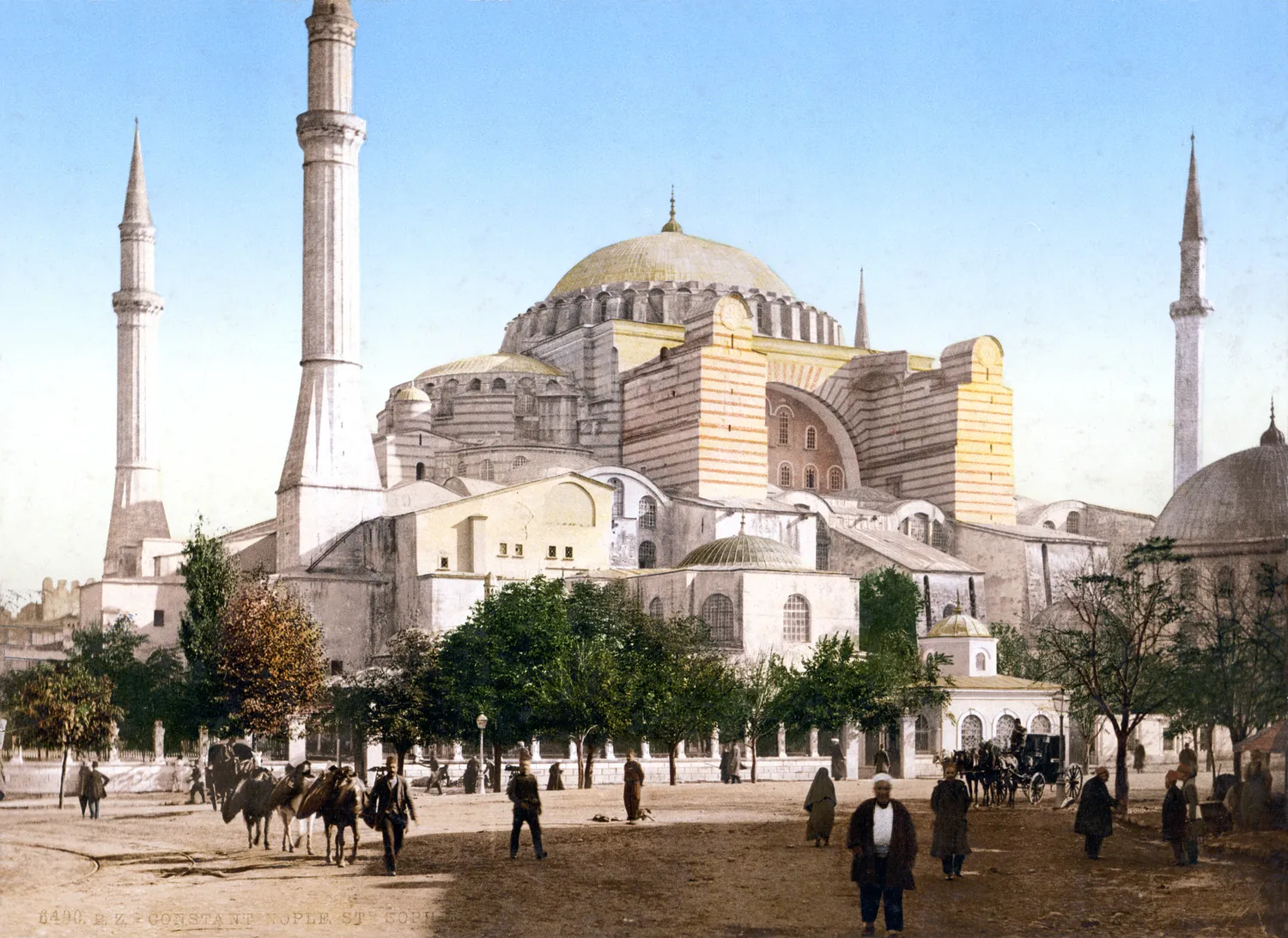
"Hagia Sophia, Constantinople, Turkey, ca. 1897" / Wikimedia Commons.
Constantinople was the capital of the Byzantine Empire and one of the most important cities in world history. Located on a narrow strait called the Bosporus, it connected Europe and Asia. Founded in 330 CE by Emperor Constantine I, the city became a center for trade, culture, and religion during the Middle Ages.
The city’s powerful fortifications made it nearly impossible to conquer. The Theodosian Walls, built in the 5th century CE, were made of stone and brick and stretched over 5 kilometers. These massive walls protected the city from many attacks, including the Avars, Persians, and Arabs. Archaeological evidence shows the walls had multiple layers, towers, and even a moat, making them an advanced defensive system. According to the historian Procopius, only a few attackers ever breached the walls before 1453.
Constantinople was at the heart of major trade routes that linked the Mediterranean, Black Sea, Silk Road, and beyond. Merchants brought silk from China, spices from India, and grain from Egypt. The city’s marketplaces were filled with goods from around the world. This wealth supported grand buildings and a lively urban life. The city also used a sophisticated gold coin called the solidus, which became a trusted currency across Europe and Asia for centuries.
At the center of Constantinople stood the Hagia Sophia, a masterpiece of Byzantine architecture. Built under Emperor Justinian in 537 CE, it was the largest church in the world for nearly 1,000 years. Its enormous dome, mosaics, and marble columns awed visitors. The Hagia Sophia was a symbol of the city’s religious and cultural power and has served as both a church and a mosque. The city was home to people from many backgrounds, including Greeks, Armenians, Jews, and Italians. This diversity made it a true cultural crossroads where ideas, languages, and beliefs mixed.
Constantinople’s strategic location, strong defenses, and vibrant culture made it a beacon of the medieval world. Over centuries, it influenced art, religion, and law far beyond its walls. The city’s fall to the Ottoman Turks in 1453 marked the end of the Byzantine Empire, but its legacy continues to shape world history.
Constantinople’s story connects to broader themes of geography, trade, and cultural exchange in world history.
Interesting Fact: The Hagia Sophia’s dome is over 100 feet across and was considered an engineering wonder of its time.
Comprehension quiz (8 questions)
1. Who founded Constantinople?
2. What protected Constantinople from attacks?
3. When did the Ottoman Turks conquer the city?
4. Why was Constantinople important for trade?
5. How did the city's location affect its culture?
6. What was the Hagia Sophia's main purpose?
7. The solidus was a gold coin.
8. What does "cultural crossroads" mean?
Perfect for the way you teach
- Build comprehension skills
- Auto-graded quiz
- Differentiated reading
- Read together at home
- Improve fluency
- Quiet reading time
- Reading curriculum support
- Independent practice
- Track Lexile growth