Disaster Relief and Recovery — Reading Comprehension
Rate this
Premium Resource
Present
Present in classroom. No work saved
Assign
Classroom with student accounts, Track progress
Quick Play
No student accounts, assign with a link
Grades
3
4
5
Standards
NGSS 4-ESS3-2
PRINT+DIGITAL RESOURCE
This learning resource is available in interactive and printable formats. The interactive worksheet can be played online and assigned to students. The Printable PDF version can be downloaded and printed for completion by hand.
This 250-word reading passage introduces fourth-grade students to the critical concept of disaster relief and recovery following natural hazards. Aligned with NGSS standard 4-ESS3-2, the passage explains how emergency responders like firefighters, paramedics, and search-and-rescue teams work immediately after a disaster to save lives and help injured people. Students learn about the role of government agencies and organizations like the Red Cross in providing essential services including shelter, food, water, and medical care. The passage describes how communities collaborate to clear debris, repair infrastructure, and rebuild damaged structures. Students discover that recovery can take months or even years after major disasters and that lessons learned help communities build back stronger and prepare better for future events. The audio-integrated passage uses age-appropriate language and real-world examples to help students understand the complex process of disaster response and recovery. Accompanying activities include comprehension questions, writing prompts, and graphic organizers that reinforce understanding of cause-and-effect relationships and sequential processes in disaster management.
CONTENT PREVIEW
Expand content preview
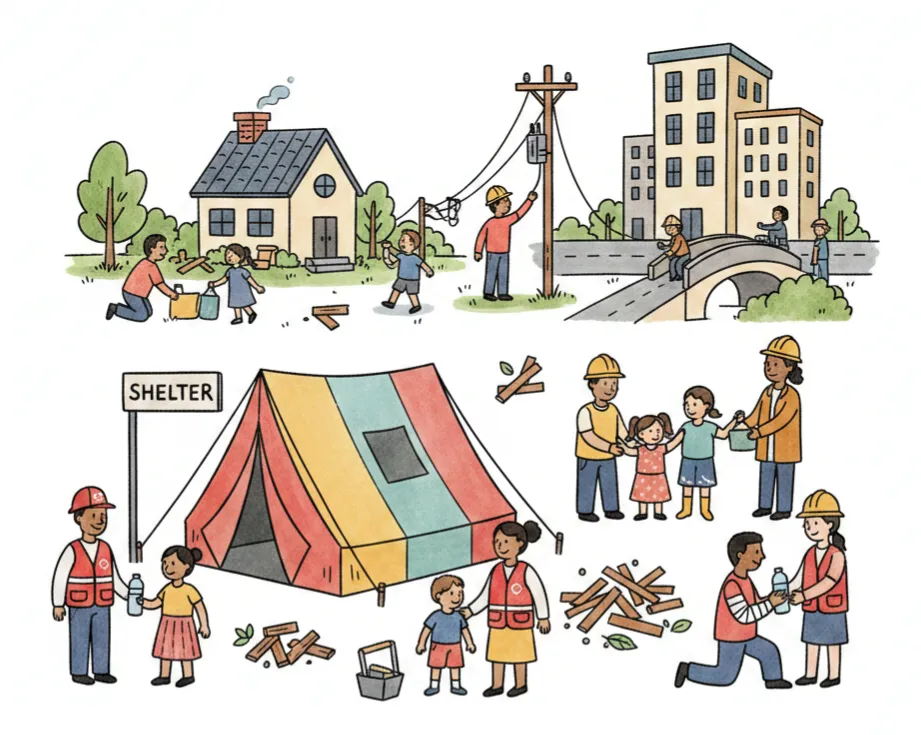
Relief workers and neighbors work together to rebuild and recover.
When a natural hazard like a hurricane, earthquake, or wildfire strikes, communities need help recovering. Disaster relief is the immediate help people receive after a natural disaster. Right after a disaster happens, emergency responders—people trained to help in emergencies—rush to the scene. Firefighters, paramedics, and search-and-rescue teams work quickly to save lives and help injured people.
Government agencies and organizations like the Red Cross provide important services. They set up shelters—safe places where people can stay if they lost their homes. These organizations also provide food, clean water, and medical care. Think of relief workers like a first-aid kit for a whole community—they bring exactly what people need most urgently.
Recovery is the longer process of rebuilding after a disaster. Communities work together to clear debris—broken pieces of buildings, trees, and other materials scattered by the disaster. Workers repair damaged roads, bridges, and power lines. Families and construction teams rebuild homes and schools. Recovery can take months or even years after a major disaster.
Each disaster teaches important lessons. Communities study what happened and use that information to prepare better for the next disaster. They might build stronger buildings, create better evacuation plans, or improve warning systems. This helps communities build back stronger than before.
Interesting Fact: After Hurricane Katrina hit New Orleans in 2005, the Red Cross served over 68 million meals and snacks to survivors, making it one of the largest disaster relief operations in U.S. history!
What is disaster relief?
Building new schools after disastersImmediate help after natural disastersWarning systems for future disastersStudying what caused the disaster
Who are emergency responders?
People who predict natural disastersPeople who build stronger buildingsPeople trained to help in emergenciesPeople who provide shelter only
What do shelters provide after disasters?
Permanent housing for familiesSafe places for people temporarilyConstruction materials for rebuildingWarning systems for future disasters
Why does recovery take a long time?
Emergency responders work very slowlyRebuilding roads, homes, and schools takes timePeople don't want to rebuildRelief organizations don't help with recovery
How do communities use disaster lessons?
They avoid building anything newThey move to different locationsThey build stronger and prepare betterThey stop studying natural disasters
What happens during the recovery process?
Only emergency responders workCommunities clear debris and rebuildPeople wait for disasters to endOrganizations only provide food
Recovery can take years after major disasters.
TrueFalse
What are debris?
Emergency responders who help peopleSafe places to stay during disastersBroken pieces scattered by disastersOrganizations that provide relief
Perfect For:
👩🏫 Teachers
• Reading comprehension practice
• Auto-graded assessments
• Literacy skill development
👨👩👧👦 Parents
• Reading practice at home
• Comprehension improvement
• Educational reading time
🏠 Homeschoolers
• Reading curriculum support
• Independent reading practice
• Progress monitoring
Reading Features:
📖
Reading Passage
Engaging fiction or nonfiction text
❓
Comprehension Quiz
Auto-graded questions
📊
Instant Feedback
Immediate results and scoring
📄
Printable Version
Download for offline reading
🔊
Read Aloud
Voice-over with word highlighting
Reviews & Ratings
No reviews yet. Be the first to share your experience!
Related Content
What Are Tsunamis
This Grade 4 science reading passage introduces students to tsunamis, aligning with NGSS standard 4-ESS3-2. Students lea...
NGSS 4-ESS3-2
How Tsunamis Affect People
This engaging 250-word reading passage introduces fourth-grade students to the devastating impacts of tsunamis on coasta...
NGSS 4-ESS3-2
What Are Avalanches
This engaging 250-word reading passage introduces fourth-grade students to avalanches and their impact on mountain commu...
NGSS 4-ESS3-2
Landslides
This engaging 350-word reading passage introduces Grade 4-5 students to landslides as powerful natural events where soil...
NGSS 4-ESS3-2
What Are Earthquakes
This engaging 250-word reading passage introduces fourth-grade students to the concept of earthquakes as natural hazards...
NGSS 4-ESS3-2
How Earthquakes Affect People
This 250-word informational reading passage introduces Grade 4 students to the ways earthquakes affect people and commun...
NGSS 4-ESS3-2ESS3.B
What Are Volcanoes
This engaging 250-word reading passage introduces fourth-grade students to volcanoes and volcanic activity, aligned with...
NGSS 4-ESS3-2
How Volcanoes Affect People
This 250-word reading passage introduces fourth-grade students to the ways volcanic eruptions affect people and communit...
NGSS 4-ESS3-2
What Are Weather Hazards
This Grade 4 science reading passage introduces students to weather hazards as part of the NGSS 4-ESS3-2 standard focusi...
NGSS 4-ESS3-2ESS3.B
What Are Tornadoes
This engaging Grade 4 science reading passage introduces students to tornadoes, one of nature's most powerful and danger...
NGSS 4-ESS3-2
What Are Hurricanes
This Grade 4 science reading passage introduces students to hurricanes and their impact on coastal communities, aligned ...
NGSS 4-ESS3-2
What Are Floods
This engaging 250-word reading passage introduces fourth-grade students to floods as natural hazards, aligned with NGSS ...
NGSS 4-ESS3-2
What Are Wildfires
This 250-word reading passage explains what wildfires are and introduces Grade 4 students to key concepts about these na...
NGSS 4-ESS3-2
What Are Droughts
This 250-word reading passage introduces fourth-grade students to the concept of droughts as defined in NGSS 4-ESS3-2. S...
NGSS 4-ESS3-2
What Are Natural Hazards
This audio-integrated reading passage introduces fourth-grade students to natural hazards as part of the NGSS 4-ESS3-2 s...
NGSS 4-ESS3-2ESS3.B
Why We Cannot Stop Natural Hazards
This 250-word reading passage introduces fourth-grade students to the concept that natural hazards are caused by natural...
NGSS 4-ESS3-2
Reducing Natural Hazard Impacts
This Grade 4 science reading passage introduces students to the concept of reducing natural hazard impacts, aligned with...
NGSS 4-ESS3-2
How Buildings Resist Earthquakes
This 250-word reading passage introduces fourth-grade students to earthquake-resistant building design, aligned with NGS...
NGSS 4-ESS3-2
How Scientists Monitor Volcanoes
This engaging 250-word reading passage introduces fourth-grade students to the important work of volcano monitoring, ali...
NGSS 4-ESS3-2
How Tsunami Warnings Work
This engaging 250-word reading passage introduces fourth-grade students to tsunami warning systems and how they protect ...