Electric Circuits
Interactive passage with audio narration, comprehension questions, and printable PDF.
By completing this purchase you agree to our Terms of Use and Privacy Policy. Your subscription renews automatically until you cancel. You can cancel anytime from your account settings. All sales are final and non-refundable. Digital content is available for download in your account immediately upon purchase.
What's included
Electric Circuits preview and details
About this printable Electric Circuits science reading passage, NGSS-aligned (Grades 5-8)
Sample passage and quiz from Electric Circuits
Reading passage and comprehension quiz preview
Electric Circuits
Electric circuits are the foundation of almost every technological device that uses electricity. When you turn on a light or use a computer, you are using a system made up of several parts working together. Each part of a circuit plays a specific role, and understanding these interactions helps explain why devices work—or why they sometimes fail. The study of circuits is essential for understanding how we power homes, schools, and modern society.
How Circuits Work: Closed Loops and Flow
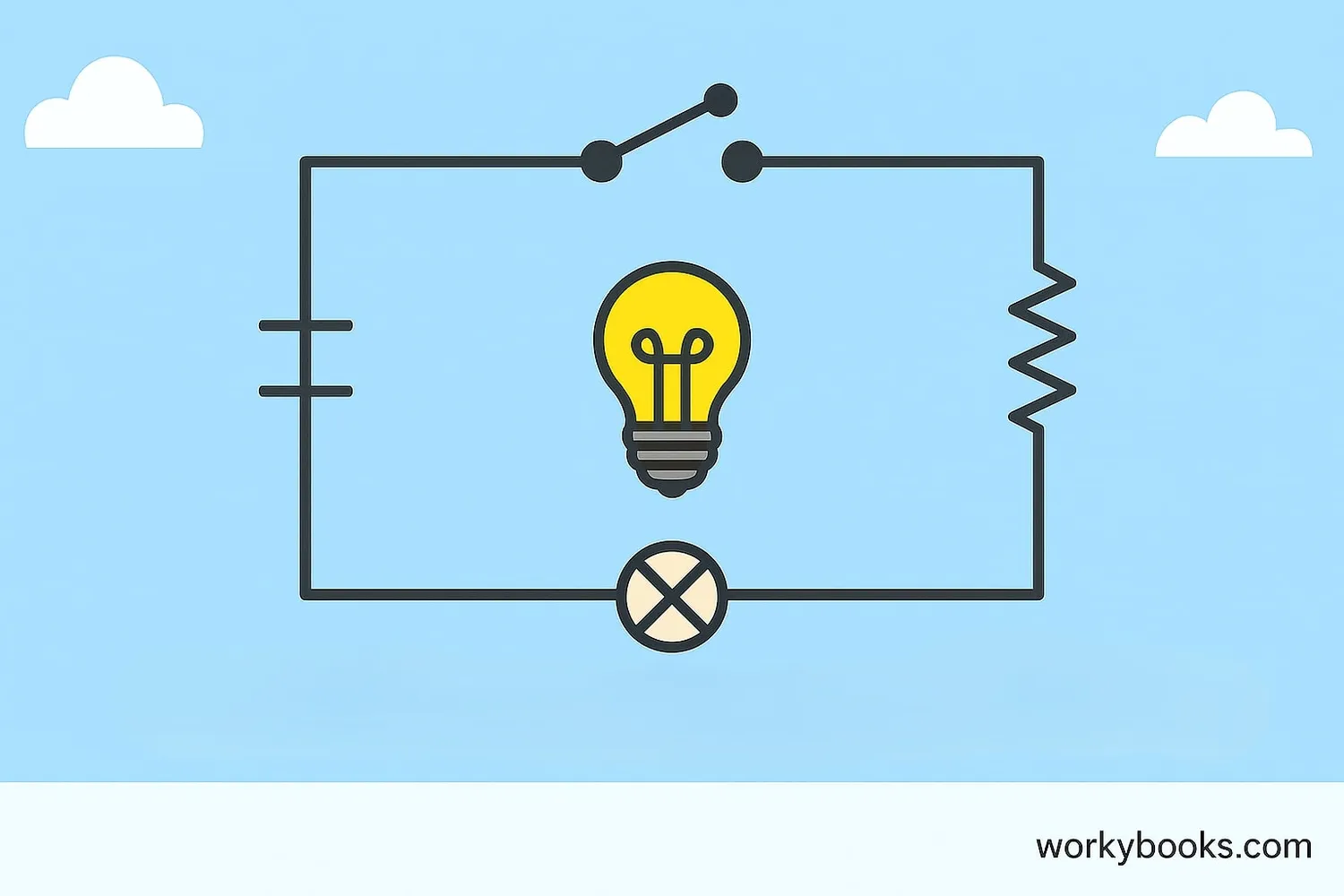
A circuit is a closed loop that allows electric current—the flow of tiny charged particles called electrons—to move continuously. For a circuit to function, it needs a power source (such as a battery or electrical outlet), conducting wires to carry the current, a load (like a light bulb or motor), and often a switch to control when the circuit is open or closed. When the switch is closed, the path is complete, and current flows from the power source, through the wires, into the load, and back to the source. If any part of the loop is broken (an open circuit), current cannot flow, and the device will not work. Circuit diagrams use symbols to represent these components, making it easier to design and troubleshoot electrical systems.
Applications and Variations: Everyday Circuits
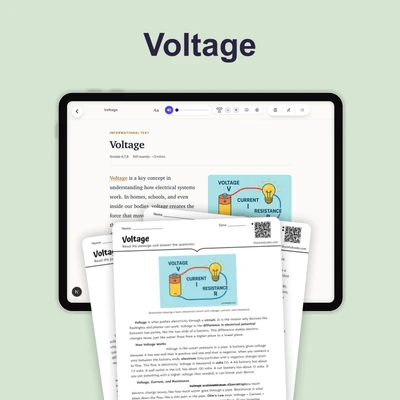
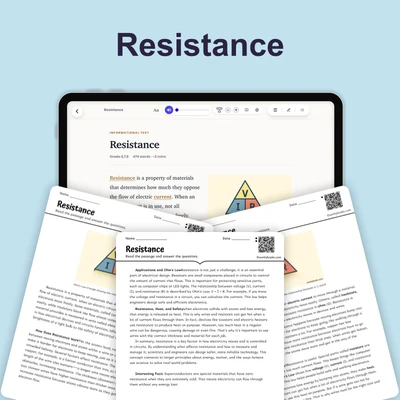
In a flashlight, a simple electric circuit includes a battery (power source), metal wires, a small bulb (load), and a switch. When you press the switch, the circuit closes and the bulb lights up. In a lamp plugged into a wall outlet, the principle is the same, but the power source is the electrical grid instead of a battery. Engineers use circuit diagrams to map out these systems. A key measurement in circuits is voltage, which is the force that pushes current through the circuit, and resistance, which limits how much current can flow. For example, the resistance of a light bulb's filament determines how bright the bulb will be at a given voltage.
Open vs. Closed Circuits and System Behavior
Open circuits occur when the loop is broken—by a switch, a loose wire, or a burnt-out bulb. In this state, the current cannot complete its path, so the device turns off. Closed circuits, on the other hand, allow current to flow smoothly. Some devices, like safety switches, are designed to create an open circuit to prevent overheating or danger. Understanding the difference between open and closed circuits helps us diagnose problems and build safer devices. The relationship between voltage, resistance, and current in circuits is described by Ohm’s Law, a principle that helps engineers design efficient electrical systems.
Electric circuits are essential to technology, from powering simple toys to running entire cities. By mastering how circuits operate, we connect scientific principles to real-world innovations in transportation, communication, medicine, and more.
Interesting Fact:
The world’s longest electric circuit is the global power grid, which connects millions of homes and businesses across continents!
Comprehension quiz (10 questions)
1. What is the main function of a switch in an electric circuit?
2. Which component supplies energy to a circuit?
3. What happens in a circuit when the loop is broken?
4. In a flashlight, which part is the load?
5. What is a circuit diagram?
6. What does resistance do in an electric circuit?
7. Which best describes a closed circuit?
8. Why do engineers use circuit diagrams?
9. True or False: An open circuit lets current flow through all parts.
10. True or False: The global power grid is an example of a very large electric circuit.
Perfect for the way you teach
- Build comprehension skills
- Auto-graded quiz
- Differentiated reading
- Read together at home
- Improve fluency
- Quiet reading time
- Reading curriculum support
- Independent practice
- Track Lexile growth