What Is Electricity
Interactive passage with audio narration, comprehension questions, and printable PDF.
By completing this purchase you agree to our Terms of Use and Privacy Policy. Your subscription renews automatically until you cancel. You can cancel anytime from your account settings. All sales are final and non-refundable. Digital content is available for download in your account immediately upon purchase.
What's included
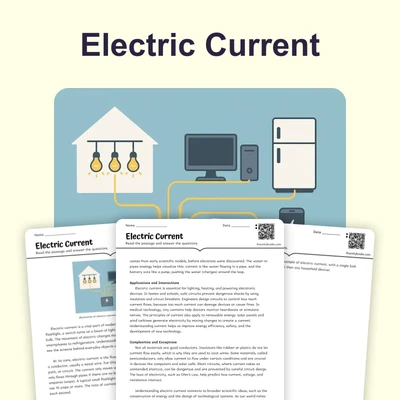
What Is Electricity preview and details
About this printable What Is Electricity science reading passage, NGSS-aligned (Grades 5-8)
Sample passage and quiz from What Is Electricity
Reading passage and comprehension quiz preview
What Is Electricity?
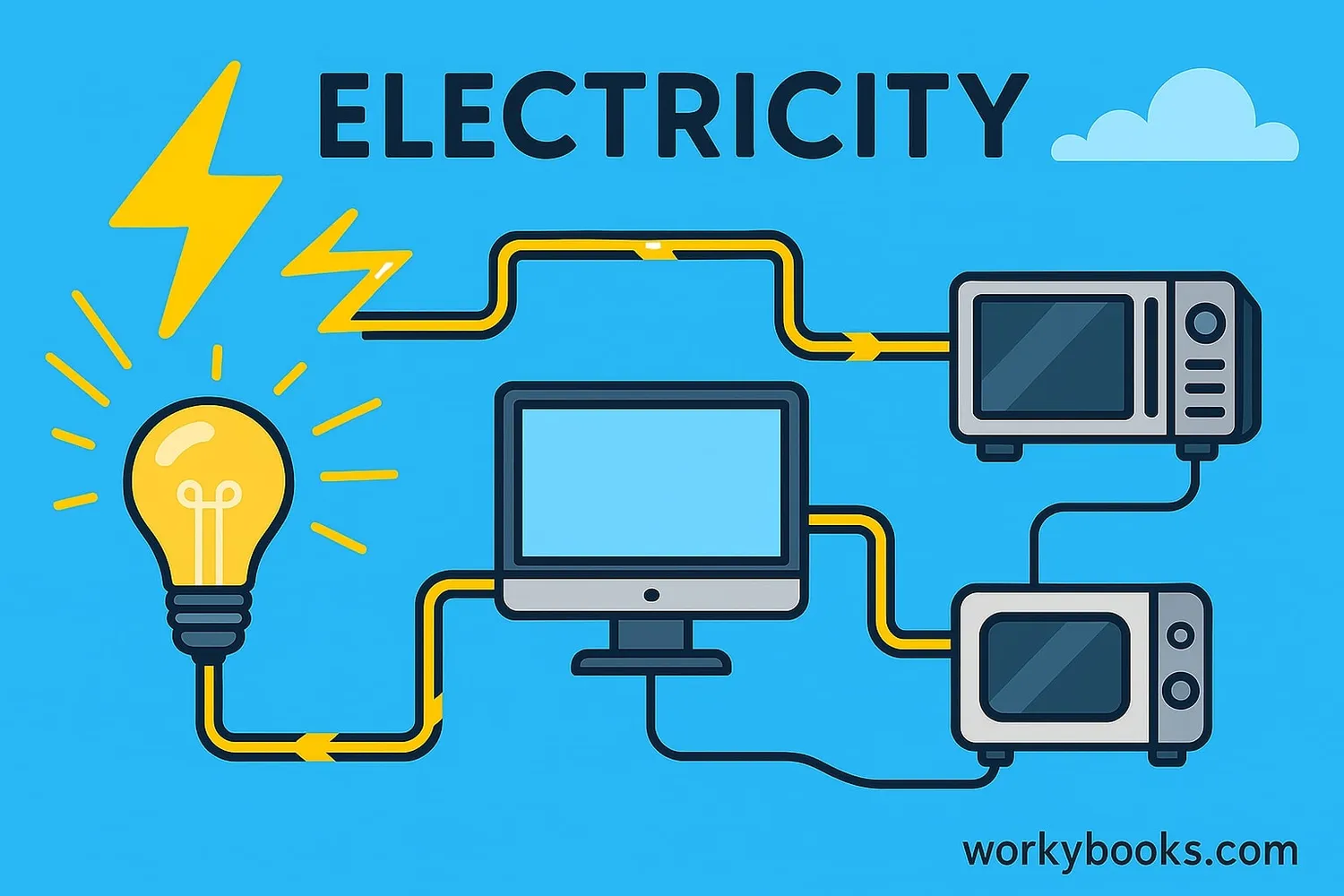
Electricity is a fundamental force that shapes the modern world, from lighting our homes to powering our devices. The movement of electric charge, usually carried by electrons, is what makes electricity possible. Understanding how electricity works helps us explain why lights turn on, how phones charge, and even how public transportation runs. Scientists have spent centuries exploring the mysteries of electricity, leading to inventions and discoveries that changed society forever.
How Electricity Works
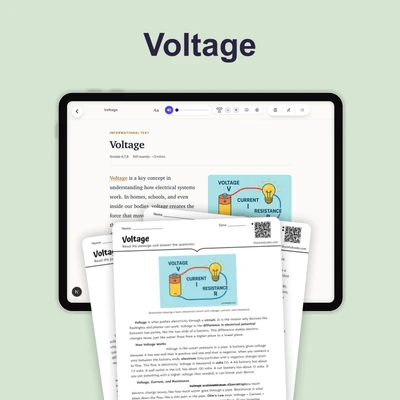
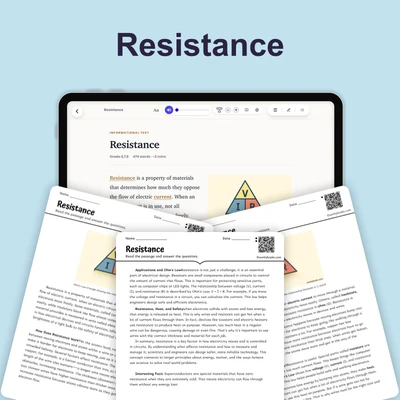
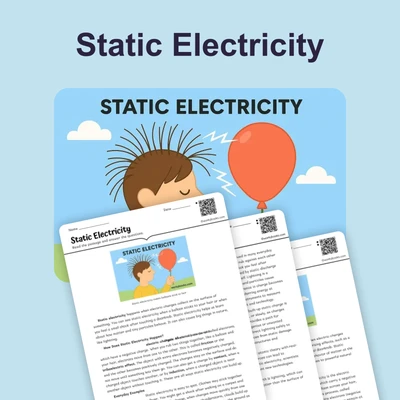
Electricity is the flow of electric charge through a material, typically a conductor like copper wire. At the atomic level, electrons are tiny particles with a negative charge. When electrons move from one atom to another, this movement creates an electric current. The rate at which this current flows is called amperage (measured in amperes or amps). The force pushing electrons through a circuit is called voltage. A simple example is a battery connected to a light bulb: the chemical energy in the battery pushes electrons through the wire, causing the bulb to light up. There are two main types of electricity: static electricity and current electricity. Static electricity is a buildup of charges in one place, like when you get a shock after walking on carpet. Current electricity involves a continuous flow of electrons in a circuit, which is how most household and industrial electricity works.
Electricity in Everyday Life
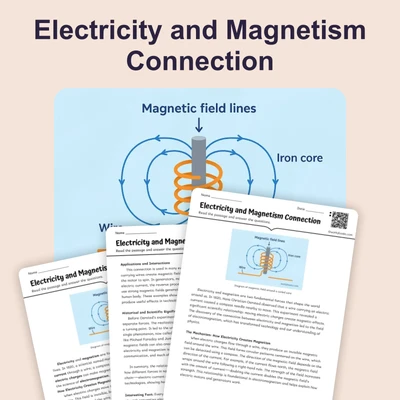
Electricity is essential in modern society. It powers over 85% of household devices in the United States, from refrigerators to computers. Electric power plants generate vast amounts of current electricity, which is transmitted across hundreds of miles through power lines. This energy is used for lighting, heating, transportation, and operating technology. For example, electric trains use high-voltage electricity to move quickly and efficiently. Hospitals rely on electricity for life-saving equipment, while schools use it to power computers and projectors. The interaction of electricity with other forms of energy, such as heat and magnetism, leads to advances in technology like electric motors and wireless communication. Understanding these connections is crucial for innovation and solving real-world problems.
Historical Discoveries and Scientific Thinking
Our knowledge of electricity grew through experiments and observations. In 1752, Benjamin Franklin proved that lightning is a form of electricity by flying a kite during a thunderstorm. Later, Thomas Edison invented the practical electric light bulb, making electric lighting available in homes and cities. Nikola Tesla developed alternating current (AC) systems, which allowed electricity to be transmitted over long distances. These scientists used the scientific method—asking questions, forming hypotheses, and testing their ideas—to expand our understanding. Their discoveries showed that electricity is not just a mysterious force, but a predictable, measurable phenomenon governed by natural laws.
Electricity remains central to scientific and technological progress. By studying its mechanisms and effects, we continue to develop safer, cleaner, and more efficient ways to use energy. This unit will explore how electricity works, its role in systems, and the science behind its amazing applications.
Interesting Fact: A single bolt of lightning can carry over one billion volts of electricity—enough to power a small town for a short time!
Comprehension quiz (10 questions)
1. What is electricity?
2. Which particle usually carries electric charge in a wire?
3. What is the main difference between static electricity and current electricity?
4. Who invented the practical electric light bulb?
5. What does the term 'conductor' mean in the passage?
6. In context, what does 'amperage' measure?
7. Why is electricity important in hospitals, according to the passage?
8. If a train uses high-voltage electricity, what is likely true about its operation?
9. Electricity can only be produced by batteries. True or false?
10. A circuit must be a closed loop for current electricity to flow. True or false?
Perfect for the way you teach
- Build comprehension skills
- Auto-graded quiz
- Differentiated reading
- Read together at home
- Improve fluency
- Quiet reading time
- Reading curriculum support
- Independent practice
- Track Lexile growth