This learning resource is available in interactive and printable formats. The interactive worksheet can be played online and assigned to students. The Printable PDF version can be downloaded and printed for completion by hand.
This engaging middle school science passage explores the uses of electromagnets, aligned with NGSS standard MS-PS2-3. Students learn how electromagnets transform electric current into magnetic force and see how this principle powers devices such as junkyard cranes, doorbells, MRI machines, headphones, and maglev trains. The passage explains the system interactions and mechanisms behind electromagnets, provides real-world quantitative details, and connects the topic to broader scientific principles of forces and energy. With direct, student-friendly language, the passage encourages scientific thinking by explaining cause-and-effect chains and integrating evidence from multiple applications. Activities include comprehension questions, writing prompts, and graphic organizers. All materials are audio integrated for accessibility, and both English and Spanish versions are provided for differentiated instruction.
CONTENT PREVIEW
Expand content preview
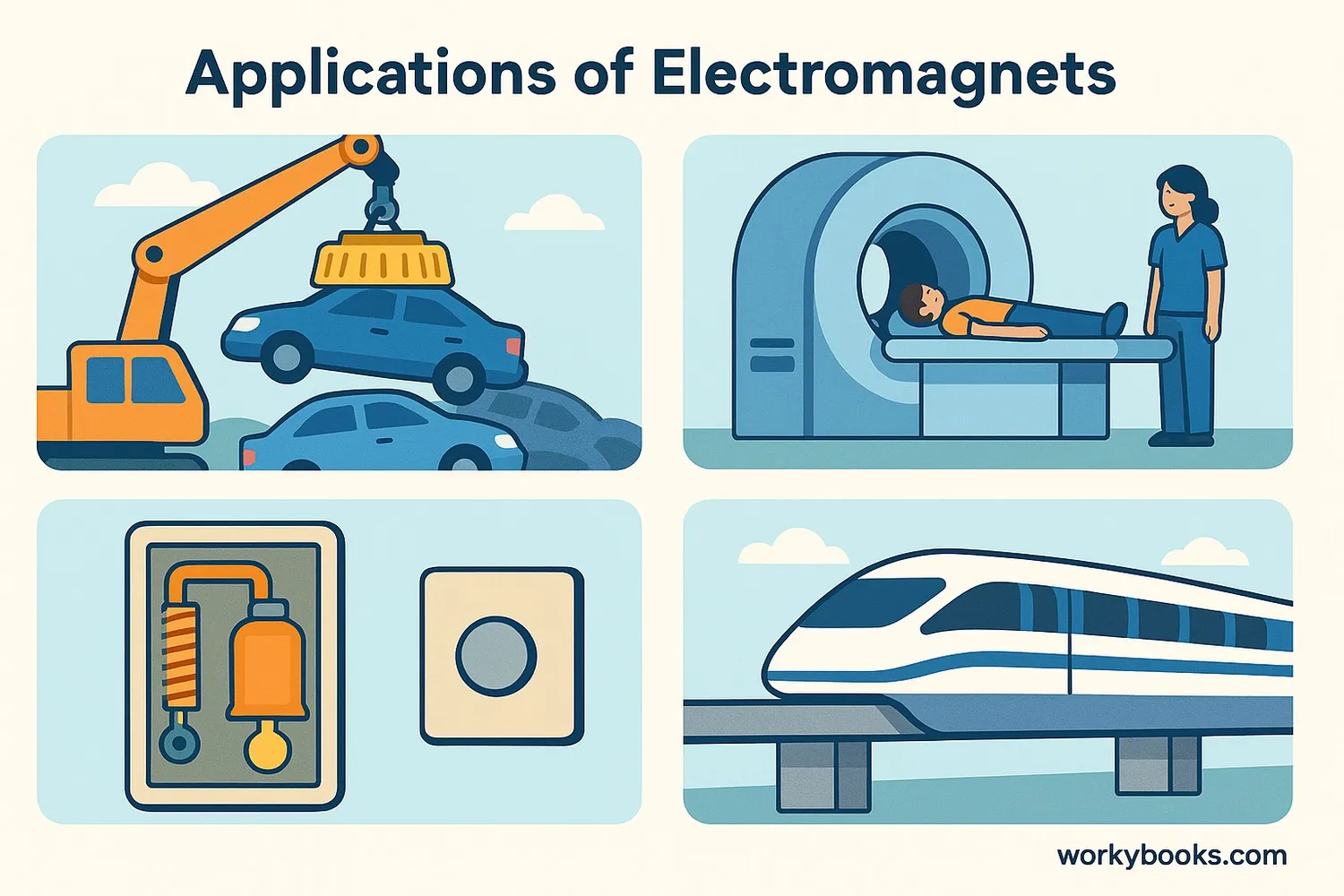
Illustration of electromagnet applications in daily life
Electromagnets are essential components in modern technology, providing powerful and controllable magnetic forces for a variety of applications. In many junkyards, massive cranes use electromagnets to lift, move, and drop heavy pieces of scrap metal with precision. This ability to turn magnetism on and off is crucial to sorting and transporting materials efficiently. Understanding how electromagnets work reveals the science behind many devices we use every day.
How Electromagnets Work
A magnet is an object that produces a magnetic field, attracting certain metals like iron. An electromagnet is made by passing an electric current through a coil of wire, usually wrapped around a piece of iron. When current flows, it generates a magnetic field, which can be made stronger by increasing the number of coils or the amount of current. Unlike permanent magnets, electromagnets can be switched on and off by controlling the flow of electricity. This mechanism allows for precise control over magnetic forces, which is essential for many machines. For example, a junkyard crane operator can activate the electromagnet to pick up metal and then deactivate it to drop the load exactly where needed.
Applications of Electromagnets
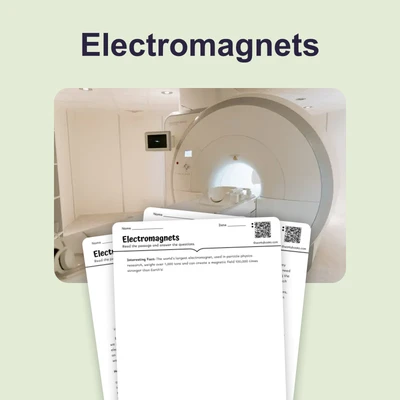
Electromagnets are found in many devices that convert electrical energy into motion, sound, or other forms of work. In doorbells and buzzers, small electromagnets pull a metal arm to create sound when someone presses the button. Speakers and headphones use electromagnets to turn electrical signals into vibrations, producing sound waves that we can hear. In MRI machines, extremely strong electromagnets create magnetic fields up to 60,000 times stronger than Earth's field, allowing doctors to image the inside of the human body without surgery. Maglev trains use large electromagnets to levitate above the tracks and move at speeds over 300 km/h, reducing friction and allowing for fast, smooth travel. These examples show how controlling magnetism through electricity has transformed transportation, medicine, and communication.
Systems and Interactions
Electromagnets are often parts of larger systems, interacting with other components for specific purposes. In computer hard drives, tiny electromagnets help store and retrieve data by changing the magnetization of small regions on spinning disks. Electric locks use electromagnets to secure doors until an authorized signal is received, increasing safety in buildings. In particle accelerators, powerful electromagnets steer beams of particles at nearly the speed of light for experiments in physics. All these systems rely on the relationship between electricity and magnetism, a principle called electromagnetic induction. This scientific understanding drives ongoing innovations in fields from transportation to healthcare.
By studying electromagnets, scientists and engineers have developed technologies that shape our world. The ability to control magnetic forces with electricity connects to broader scientific ideas about energy transfer, forces, and the structure of matter. As new discoveries are made, electromagnets will continue to play a key role in solving problems and advancing modern life.
Interesting Fact: Some maglev trains in Japan use electromagnets to reach speeds of over 600 km/h, making them among the fastest trains in the world!
What is the main advantage of an electromagnet compared to a permanent magnet?
It can be turned on and off with electricity.It is always magnetic.It is made only from iron.It cannot attract metal.
Which device uses electromagnets to produce sound?
Hard driveSpeakerMaglev trainElectric lock
According to the passage, what happens when the electric current stops flowing in an electromagnet?
The magnet becomes even stronger.The electromagnet turns off.It attracts more metal.It starts to make sound.
In the context of the passage, what does 'electromagnetic induction' mean?
Creating electricity by moving a magnet.Making a magnet by winding wire around plastic.Turning on a lightbulb with a switch.Producing sound from a speaker.
What is the function of electromagnets in MRI machines?
To produce strong magnetic fields for medical imaging.To play music in the hospital.To keep doors locked.To power maglev trains.
Why do maglev trains use electromagnets?
To float above the tracks and travel quickly.To make announcements to passengers.To store computer data.To open electric locks.
Which of the following best describes the relationship between electricity and magnetism in electromagnets?
Electricity creates magnetism in the coil.Magnetism creates new metals.Electricity removes magnetism from iron.Magnetism and electricity are not related.
How do electromagnets help make computers work, according to the passage?
They store and retrieve data in hard drives.They play loud music.They open computer screens.They control electric locks.
True or False: Electromagnets are used only in junkyard cranes.
TrueFalse
True or False: Increasing the number of coils in an electromagnet makes its magnetic field stronger.
TrueFalse
Perfect For:
👩🏫 Teachers
• Reading comprehension practice
• Auto-graded assessments
• Literacy skill development
👨👩👧👦 Parents
• Reading practice at home
• Comprehension improvement
• Educational reading time
🏠 Homeschoolers
• Reading curriculum support
• Independent reading practice
• Progress monitoring
Reading Features:
📖
Reading Passage
Engaging fiction or nonfiction text
❓
Comprehension Quiz
Auto-graded questions
📊
Instant Feedback
Immediate results and scoring
📄
Printable Version
Download for offline reading
🔊
Read Aloud
Voice-over with word highlighting
Reviews & Ratings
No reviews yet. Be the first to share your experience!
Related Content
Types of Magnets
This science passage for grades 6-8 explains the types of magnets—permanent, temporary, natural, and briefly electromagn...
MS-PS2-3
Magnetic Materials
This passage, aligned to NGSS standard MS-PS2-3, explores the science behind magnetic materials and their importance in ...
MS-PS2-3
What Is Electricity?
This middle school science passage introduces the concept of electricity, aligned with NGSS standard MS-PS2-3. Students ...
MS-PS2-3
Electric Charge
This comprehensive middle school science passage introduces the concept of electric charge as a fundamental property of ...
MS-PS2-3
How Charges Interact
This standards-aligned passage for grades 6-8 introduces students to how electric charges interact, focusing on the fund...
MS-PS2-3MS-PS2-5
Electric Current
This comprehensive middle school science passage, aligned with NGSS standard MS-PS2-3, introduces students to the concep...
MS-PS2-3
Electrical Conductors and Insulators
This comprehensive science passage for grades 6-8 delves into the concepts of electrical conductors and insulators, alig...
MS-PS2-3
Electric Circuits
This middle school science passage explores electric circuits in depth, aligning with NGSS standard MS-PS2-3. Students w...
MS-PS2-3
Series and Parallel Circuits
This informative passage for grades 6-8 explains the scientific mechanisms behind series and parallel electrical circuit...
MS-PS2-3
Electrical Safety
This comprehensive informational passage for grades 6-8 explores the science behind electrical safety, focusing on the m...
MS-PS2-3
Voltage
This comprehensive passage for grades 6-8 explores the concept of voltage, defined as the electrical potential differenc...
MS-PS2-3
Resistance
This engaging middle school science passage explores the concept of resistance, a fundamental idea in the study of elect...
MS-PS2-3
Static Electricity
This passage provides a comprehensive exploration of static electricity, aimed at students in grades 6-8 and aligned wit...
MS-PS2-3MS-PS2-5
Electricity and Magnetism Connection
This comprehensive science passage for grades 6-8 explores the deep connection between electricity and magnetism, beginn...
MS-PS2-3MS-PS2-5
Electromagnets
This middle school science passage introduces students to electromagnets, aligning with NGSS standard MS-PS2-3. It cover...
MS-PS2-3
Electromagnetic Induction
This middle school science reading passage explores the concept of electromagnetic induction, focusing on Faraday's grou...
MS-PS2-3MS-PS3-5
Electric Motors
This comprehensive middle school science passage explores the science of electric motors, aligning with NGSS standards M...
MS-PS2-3MS-PS3-5
Transformers
This middle school science passage explores the science of transformers—devices that change the voltage of electricity u...
MS-PS2-3
Strength of Electromagnets
This middle school science passage explores the factors that affect the strength of electromagnets, including the number...