Magnetic Materials
Interactive passage with audio narration, comprehension questions, and printable PDF.
By completing this purchase you agree to our Terms of Use and Privacy Policy. Your subscription renews automatically until you cancel. You can cancel anytime from your account settings. All sales are final and non-refundable. Digital content is available for download in your account immediately upon purchase.
What's included
Magnetic Materials preview and details
About this printable Magnetic Materials science reading passage, NGSS-aligned (Grades 5-8)
Sample passage and quiz from Magnetic Materials
Reading passage and comprehension quiz preview
Magnetic Materials
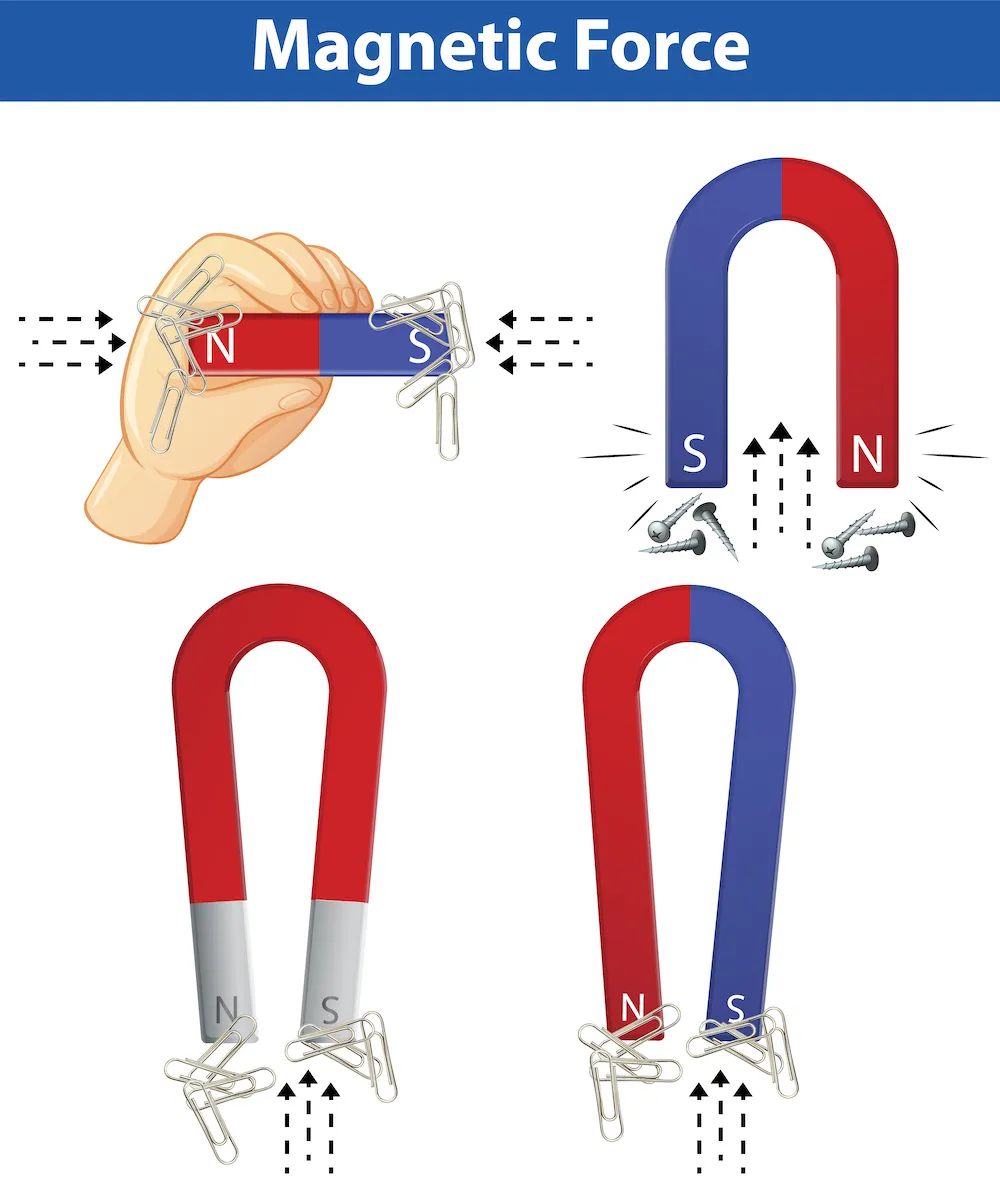
Magnetism is a physical phenomenon that allows certain materials to attract or repel each other. When a magnet pulls a paperclip made of iron toward it, this demonstrates a property unique to specific substances. Not all materials are affected by magnets. The study of which materials respond to magnetic forces, and why, has led scientists to understand the importance of magnetic materials in technology and nature.
How Magnetic Materials Work
Most materials do not respond to magnets because their internal structure is different from those that do. Only a few elements, such as iron, nickel, and cobalt, and their alloys (such as steel), are considered ferromagnetic. This means they are strongly attracted to magnets. Inside these materials, tiny regions called magnetic domains exist. Each domain acts like a miniature magnet with a north and south pole. When the domains are randomly oriented, the material is not magnetized. When most domains line up in the same direction, the object becomes magnetized and can attract other magnetic materials. Scientists have discovered this by examining the atomic structure and using special instruments to detect domain alignment.
Magnetizing and Demagnetizing Materials
Magnetic domains can be aligned by different methods. Rubbing a piece of iron with a strong magnet in one direction causes many domains to line up, creating a magnet. This process is known as magnetization. The opposite can also happen: if a magnet is heated or dropped, the energy causes the domains to become disordered, and the material loses its magnetism. This is called demagnetization. For example, heating a bar magnet above a certain temperature (called the Curie point) causes it to lose its magnetic properties. This understanding helps engineers create magnets for specific uses and also design ways to erase magnetic information safely.
Applications and Broader Connections
Ferromagnetic materials are essential in many modern technologies. Electric motors, generators, and data storage devices all rely on the properties of magnetic materials. For example, hard drives use tiny magnetic domains to store billions of bits of information. The ability to control magnetization and demagnetization has allowed scientists and engineers to create more efficient machines and new environmental technologies, such as magnetic separation for recycling. The study of magnetic materials connects to broader scientific principles, such as the structure of matter and the role of forces in nature. It demonstrates how the arrangement of atoms and their interactions at a microscopic level can have large-scale effects on technology and society.
Understanding magnetic materials is not only important for science, but also for solving real-world problems and advancing future technologies.
Interesting Fact: The Earth's core contains iron and nickel, which create our planet's magnetic field. This field protects us from harmful solar radiation!
Comprehension quiz (10 questions)
1. Which three elements are known to be strongly attracted to magnets?
2. What happens to magnetic domains when a material is magnetized?
3. What is the term for the process of making a material magnetic?
4. According to the passage, what can cause a magnet to lose its magnetism?
5. What does the word 'ferromagnetic' mean in the passage?
6. What does 'alloy' mean as used in the passage?
7. Why are most materials not magnetic?
8. How do hard drives use magnetic materials?
9. Magnetic domains are tiny regions inside materials where the magnetic directions of atoms are grouped together. (True/False)
10. Heating a magnet can cause it to become magnetized. (True/False)
Perfect for the way you teach
- Build comprehension skills
- Auto-graded quiz
- Differentiated reading
- Read together at home
- Improve fluency
- Quiet reading time
- Reading curriculum support
- Independent practice
- Track Lexile growth