How Charges Interact
Interactive passage with audio narration, comprehension questions, and printable PDF.
By completing this purchase you agree to our Terms of Use and Privacy Policy. Your subscription renews automatically until you cancel. You can cancel anytime from your account settings. All sales are final and non-refundable. Digital content is available for download in your account immediately upon purchase.
What's included
How Charges Interact preview and details
About this printable How Charges Interact science reading passage, NGSS-aligned (Grades 5-8)
Sample passage and quiz from How Charges Interact
Reading passage and comprehension quiz preview
How Charges Interact
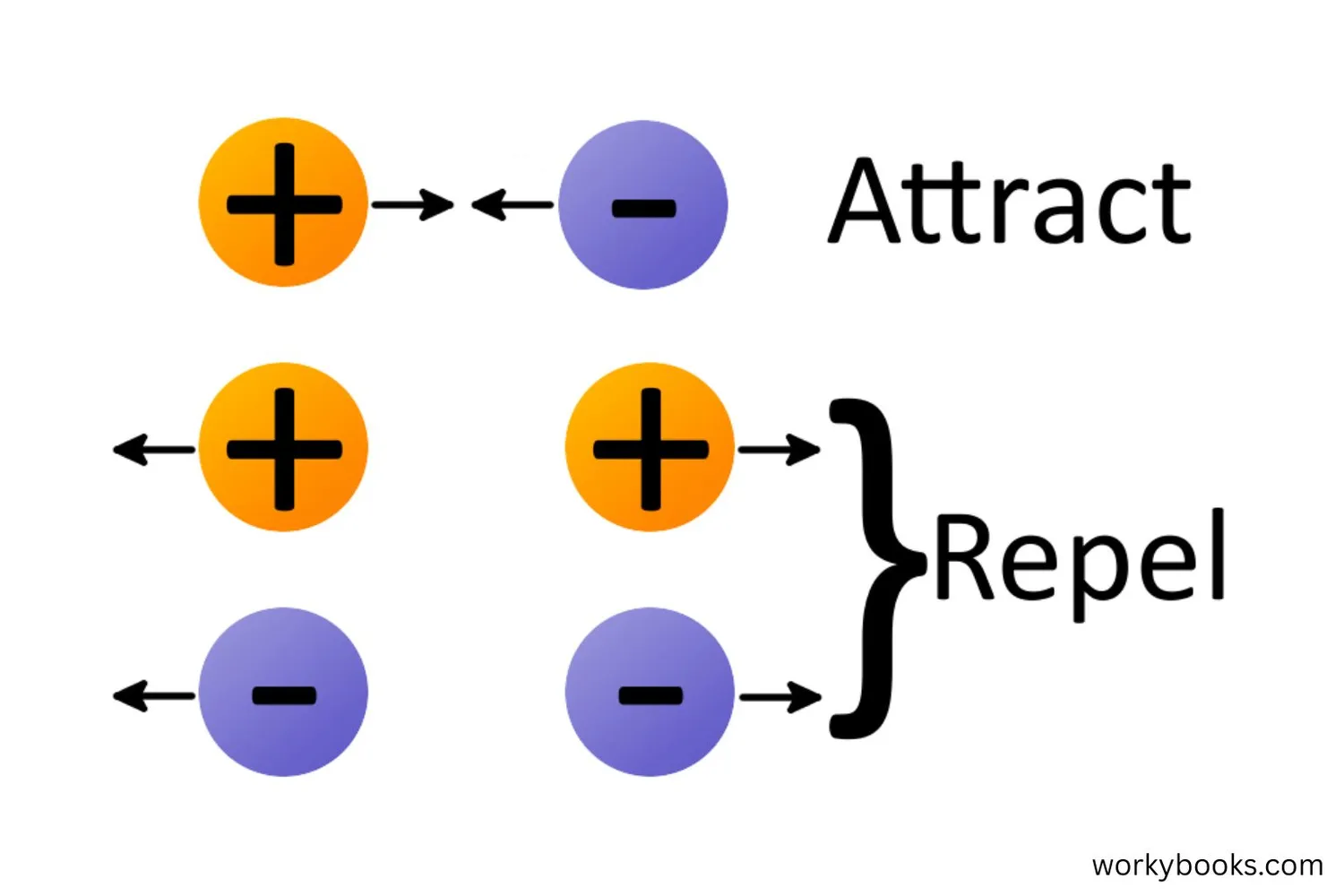
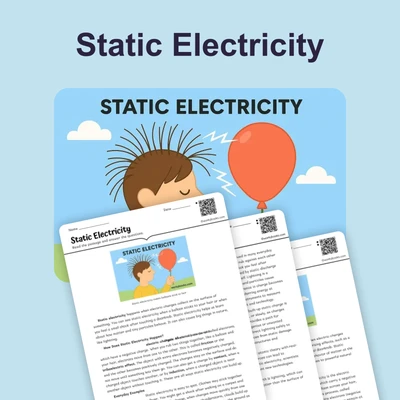
Static electricity creates visible effects, such as a comb picking up small pieces of paper after being run through hair. These effects are the result of the way electric charges interact. The fundamental law of electricity states that like charges repel each other, while opposite charges attract. Understanding how and why these charges interact is essential to the study of physical science, and it forms the basis for much of our modern technology.
How Electric Charges Interact
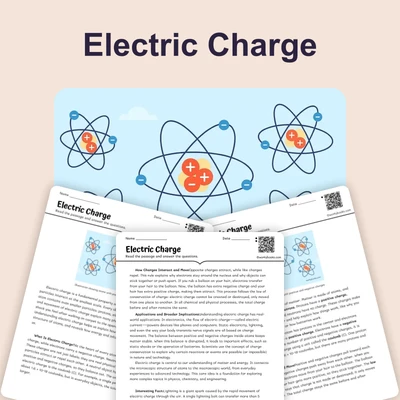
At the core of electricity is the electric force, which is a type of non-contact force. This means it can act at a distance, without the objects having to touch. Every object is made up of atoms, and atoms contain charged particles—positively charged protons and negatively charged electrons. When two objects have net electric charges, they exert forces on each other. If both objects are positively charged or both are negatively charged, the force between them is repulsive and pushes them apart. However, if one object is positively charged and the other is negatively charged, the force is attractive, pulling them together. This behavior is summarized in the law: like charges repel, opposite charges attract.
The Electric Field and Factors Affecting Force Strength
Electric force acts through an electric field, which surrounds any charged object. The field is strongest close to the object and gets weaker with distance. The strength of the electric force depends on two main factors: the amount of charge and the distance between the charges. More charge produces a stronger force. The effect of distance follows an inverse square relationship—as the distance doubles, the force becomes four times weaker. This concept is important for understanding phenomena like why a charged comb can only pick up paper pieces when they are close enough or why lightning can travel through air.
Real-World Examples and Applications
Everyday examples make these ideas visible. When you rub a balloon on your hair, electrons transfer from your hair to the balloon, making the balloon negatively charged and your hair positively charged. The balloon then sticks to a wall because of the attraction between opposite charges. Another device, the electroscope, demonstrates charge interaction: when a charged object touches or comes near the metal plate, the leaves inside the electroscope move apart, showing repulsion or attraction. Our understanding of electric force also enables the development of technologies like photocopiers and air purifiers, which use charge interactions to work.
Electric charge interactions are also vital in nature and industry. For example, lightning is the result of a massive buildup and sudden release of electric charge between clouds and the ground. On a smaller scale, static electricity can cause dust to cling to surfaces or make your hair stand up in dry weather. By understanding the mechanisms of electric force, scientists and engineers design safer buildings, improve electronics, and even explore new energy sources.
Electricity is one of the fundamental forces in the universe, shaping both natural and technological systems. The law of charge interaction explains a wide range of observable phenomena and connects to larger principles like conservation of energy and the structure of matter.
Interesting Fact: The force between two electric charges is about 1039 times stronger than the force of gravity between the same particles!
Comprehension quiz (10 questions)
1. What is the fundamental law of electric charges?
2. What two particles in atoms are responsible for electric charge?
3. According to the passage, what happens to the electric force as the distance between two charges increases?
4. Which device demonstrates the movement of charges by the motion of metal leaves?
5. What does 'inverse square relationship' mean in the context of electric force?
6. What does the word 'repel' most nearly mean as used in the passage?
7. Why does a balloon rubbed on your hair stick to a wall?
8. If two objects are both negatively charged, what will happen between them?
9. True or False: Electric force can act between objects that are not touching.
10. True or False: The electric force is always weaker than gravity between two particles.
Perfect for the way you teach
- Build comprehension skills
- Auto-graded quiz
- Differentiated reading
- Read together at home
- Improve fluency
- Quiet reading time
- Reading curriculum support
- Independent practice
- Track Lexile growth