Electric Motor
Interactive passage with audio narration, comprehension questions, and printable PDF.
By completing this purchase you agree to our Terms of Use and Privacy Policy. Your subscription renews automatically until you cancel. You can cancel anytime from your account settings. All sales are final and non-refundable. Digital content is available for download in your account immediately upon purchase.
What's included
Electric Motor preview and details
About this printable Electric Motor science reading passage, NGSS-aligned (Grades 5-8)
Sample passage and quiz from Electric Motor
Reading passage and comprehension quiz preview
How Electric Motors Work
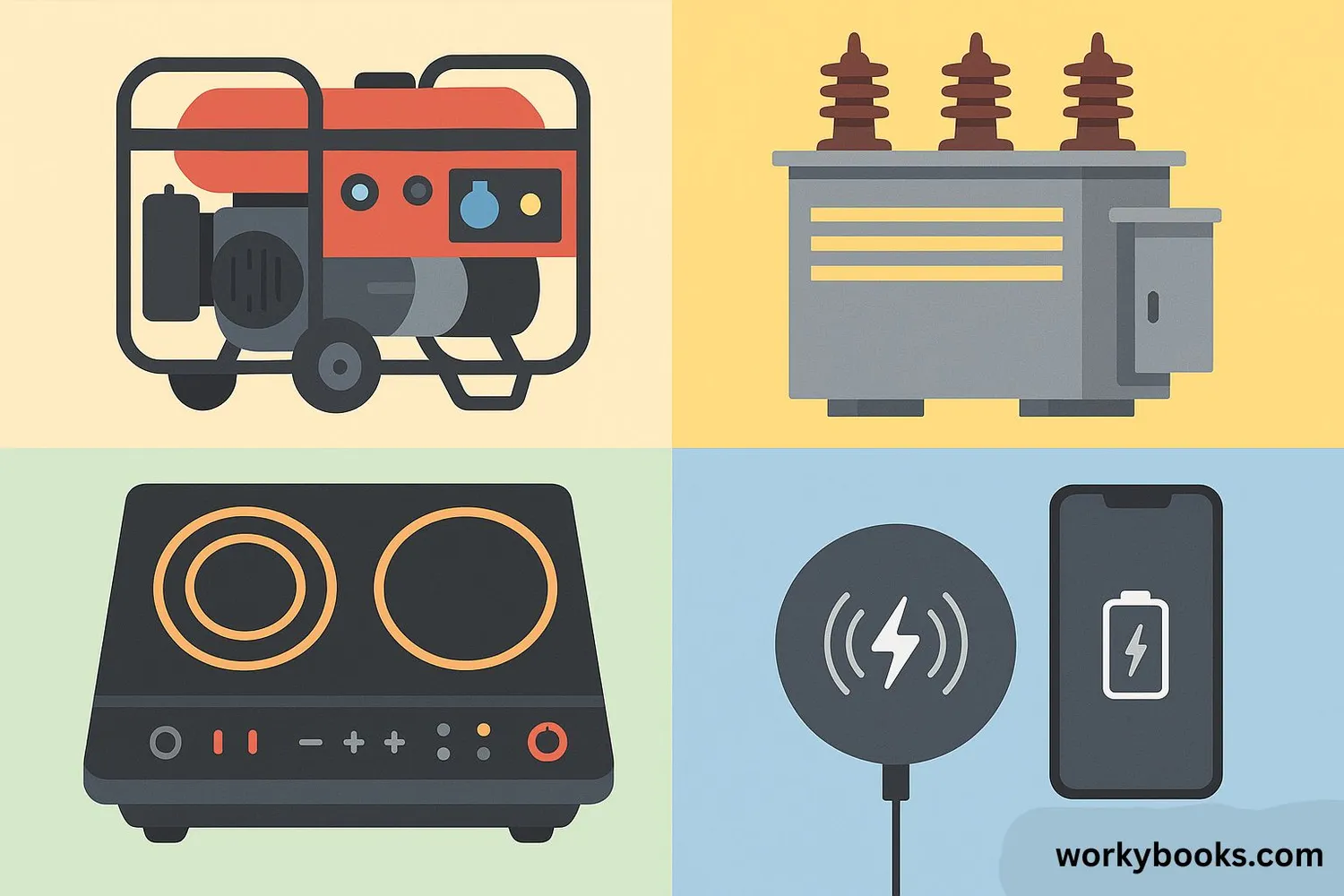
Electric motors are essential machines that convert electrical energy into mechanical motion, powering many devices we use daily. From ceiling fans spinning overhead to electric cars moving quietly on roads, these motors are at the heart of modern technology. Understanding how electric motors work helps us see the connections between electricity, magnetism, and motion. The basic design and operation of an electric motor reveal important scientific principles shaping our world.
How Electric Motors Work
An electric motor uses the interaction between a magnetic field and an electric current to create motion. The main parts include an electromagnet (a coil of wire, called the armature, that becomes magnetic when current flows through it), permanent magnets (which provide a constant magnetic field), a commutator (a split ring that reverses the direction of current), and brushes (conductive materials that deliver current to the rotating parts). When electric current flows through the coil, it generates a magnetic field. This field interacts with the field from the permanent magnets. According to the law of electromagnetic force, these fields push or pull on each other, causing the armature to spin. The commutator quickly changes the direction of current every half-turn, ensuring the rotation continues in one direction. This process transforms electrical energy into the mechanical energy of rotation.
Applications and Real-World Examples
Electric motors are found in a wide variety of devices. For example, a household fan uses a small electric motor to spin its blades, moving air and cooling a room. In electric cars, powerful motors turn the wheels, allowing the vehicle to accelerate rapidly while producing zero exhaust emissions. Power tools such as drills and saws also rely on motors to provide strong, controlled motion. Even many toys contain miniature motors to create movement. In every case, the principle remains the same: electric current creates a magnetic force that turns parts of the machine. Some motors are designed for speed, while others are built for strength, depending on their purpose. Researchers continue to improve motor efficiency, reducing energy loss as heat and making devices more environmentally friendly.
Comparing Electric Motors and Engines
It is important to distinguish electric motors from engines. While motors convert electrical energy to mechanical energy, engines—like those in gasoline cars—convert chemical energy from fuel into motion. Engines produce energy by burning fuel in a process called combustion, releasing gases and often causing pollution. In contrast, electric motors can operate cleanly and quietly if the electricity comes from renewable sources. However, both systems involve transforming one type of energy into another and use similar principles of force and motion. The growing use of electric motors in transportation and industry reflects an ongoing shift toward more sustainable technology, as society seeks to reduce our impact on the environment.
Electric motors demonstrate fundamental ideas about energy, force, and movement. Their design brings together electricity and magnetism, two of the most powerful forces in physics. Understanding motors helps us appreciate the science behind everyday machines—and the innovations that will shape our future.
Interesting Fact: The world’s largest electric motor, used in industrial applications, can produce over 100,000 horsepower—enough to power a small town!
Comprehension quiz (10 questions)
1. What is the primary function of an electric motor?
2. Which part of the electric motor reverses the direction of current?
3. In an electric motor, what creates the force that makes the armature spin?
4. What is the main difference between an electric motor and an engine, according to the passage?
5. What does the term "efficiency" mean in the context of electric motors?
6. True or False: Electric motors can only be found in large machines.
7. True or False: The commutator is responsible for creating the magnetic field in the motor.
8. Which device is NOT powered by an electric motor, according to the passage?
9. Why do electric motors need brushes?
10. What makes electric motors more environmentally friendly than engines?
Perfect for the way you teach
- Build comprehension skills
- Auto-graded quiz
- Differentiated reading
- Read together at home
- Improve fluency
- Quiet reading time
- Reading curriculum support
- Independent practice
- Track Lexile growth