This learning resource is available in interactive and printable formats. The interactive worksheet can be played online and assigned to students. The Printable PDF version can be downloaded and printed for completion by hand.
This engaging middle school science passage explores the concept of resistance, a fundamental idea in the study of electricity and circuits. Aligned with NGSS standard MS-PS2-3, students will learn how resistance acts as the opposition to the flow of electric current, how it is measured in ohms (Ω), and the factors that affect it—such as material type, length, thickness, and temperature. The text introduces Ohm's Law and real-world applications, including why wires can become hot and how resistors are used in electronic devices. Students will encounter clear definitions, cause-and-effect relationships, and practical examples relevant to daily life and technology. This passage is supported by a glossary, differentiated and Spanish versions, comprehension questions, writing prompts, and graphic organizers. Audio integration ensures accessibility for diverse learners, making it an excellent resource for classrooms and independent study.
CONTENT PREVIEW
Expand content preview
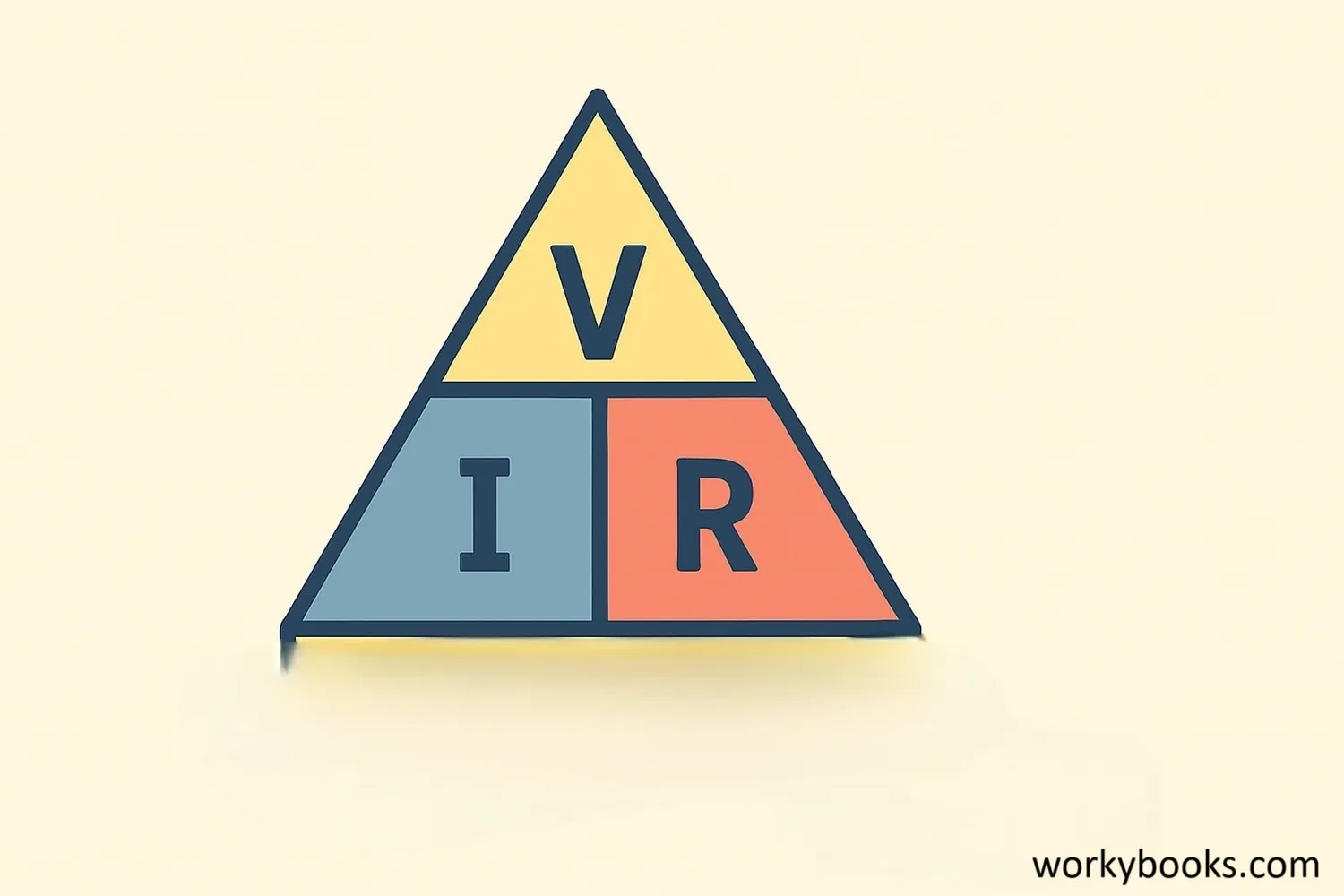
Ohm's Law triangle showing the relationship between V, I, and R
Resistance is a property of materials that determines how much they oppose the flow of electric current. When an electric circuit is in use, not all materials let electrons move freely. Some materials, called conductors, allow electrons to pass easily, while insulators block the flow almost completely. The amount of resistance a material provides is measured in units called ohms (Ω). Resistance is a critical factor in how electrical devices and circuits function, influencing everything from the brightness of a light bulb to the safety of electrical wires.
How Does Resistance Work? At the atomic level, resistance is caused by collisions between moving electrons and atoms within a wire or other material. These collisions make it harder for electrons to keep moving, just as it is harder to walk through a crowded hallway. Several factors affect resistance. The material type matters: copper, for example, is a better conductor than iron, so it has less resistance. The length of the wire also matters—a longer wire means electrons face more obstacles, increasing resistance. The thickness (diameter) of the wire is important too: thinner wires have higher resistance than thicker ones. Lastly, temperature can increase resistance because atoms vibrate more as they get hotter, further blocking electron flow.
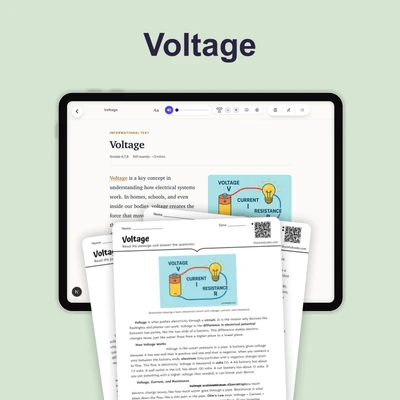
Applications and Ohm's Law Resistance is not just a challenge; it is an essential part of electrical design. Resistors are small components placed in circuits to control the amount of current that flows. This is important for protecting sensitive parts, such as computer chips or LED lights. The relationship between voltage (V), current (I), and resistance (R) is described by Ohm's Law: V = I × R. For example, if you know the voltage and resistance in a circuit, you can calculate the current. This law helps engineers design safe and efficient electronics.
Resistance, Heat, and Safety When electrons collide with atoms and lose energy, that energy is released as heat. This is why wires and resistors can get hot when a lot of current flows through them. In fact, devices like toasters and electric heaters use resistance to produce heat on purpose. However, too much heat in a regular wire can be dangerous, causing damage or even fire. That’s why it’s important to use wires with the correct thickness and material for each job.
In summary, resistance is a key factor in how electricity moves and is controlled in circuits. By understanding what affects resistance and how to measure and manage it, scientists and engineers can design safer, more reliable technology. This concept connects to larger principles about energy, matter, and the ways humans use science to solve real-world problems.
Interesting Fact: Superconductors are special materials that have zero resistance when they are extremely cold. That means electricity can flow through them without any energy loss!
What is resistance?
A property that opposes the flow of electric current.A measure of how bright a light bulb is.A material that allows current to flow easily.A type of electric charge.
Which unit is used to measure resistance?
Amperes (A)Ohms (Ω)Volts (V)Watts (W)
Why do thinner wires have more resistance?
They are cooler.Electrons have less space to move.They are always longer.They are made of insulators.
How does temperature affect resistance?
Higher temperature lowers resistance.Temperature does not affect resistance.Higher temperature increases resistance.Lower temperature makes resistance infinite.
What does a resistor do in a circuit?
Increases voltage.Allows all current to pass freely.Controls the amount of current that flows.Stores electric charge.
According to Ohm's Law, what is the formula relating voltage, current, and resistance?
V = I × RV = I + RI = V × RR = V × I
What happens to energy when electrons collide with atoms in a wire?
It is lost as light.It is released as heat.It becomes sound.It disappears completely.
Which is NOT a factor that affects resistance?
Material typeWire thicknessWire colorWire length
True or False: Insulators have very high resistance.
TrueFalse
True or False: Superconductors have zero resistance at room temperature.
TrueFalse
Perfect For:
👩🏫 Teachers
• Reading comprehension practice
• Auto-graded assessments
• Literacy skill development
👨👩👧👦 Parents
• Reading practice at home
• Comprehension improvement
• Educational reading time
🏠 Homeschoolers
• Reading curriculum support
• Independent reading practice
• Progress monitoring
Reading Features:
📖
Reading Passage
Engaging fiction or nonfiction text
❓
Comprehension Quiz
Auto-graded questions
📊
Instant Feedback
Immediate results and scoring
📄
Printable Version
Download for offline reading
🔊
Read Aloud
Voice-over with word highlighting
Reviews & Ratings
No reviews yet. Be the first to share your experience!
Related Content
Types of Magnets
This science passage for grades 6-8 explains the types of magnets—permanent, temporary, natural, and briefly electromagn...
MS-PS2-3
Magnetic Materials
This passage, aligned to NGSS standard MS-PS2-3, explores the science behind magnetic materials and their importance in ...
MS-PS2-3
What Is Electricity?
This middle school science passage introduces the concept of electricity, aligned with NGSS standard MS-PS2-3. Students ...
MS-PS2-3
Electric Charge
This comprehensive middle school science passage introduces the concept of electric charge as a fundamental property of ...
MS-PS2-3
How Charges Interact
This standards-aligned passage for grades 6-8 introduces students to how electric charges interact, focusing on the fund...
MS-PS2-3MS-PS2-5
Electric Current
This comprehensive middle school science passage, aligned with NGSS standard MS-PS2-3, introduces students to the concep...
MS-PS2-3
Electrical Conductors and Insulators
This comprehensive science passage for grades 6-8 delves into the concepts of electrical conductors and insulators, alig...
MS-PS2-3
Electric Circuits
This middle school science passage explores electric circuits in depth, aligning with NGSS standard MS-PS2-3. Students w...
MS-PS2-3
Series and Parallel Circuits
This informative passage for grades 6-8 explains the scientific mechanisms behind series and parallel electrical circuit...
MS-PS2-3
Electrical Safety
This comprehensive informational passage for grades 6-8 explores the science behind electrical safety, focusing on the m...
MS-PS2-3
Voltage
This comprehensive passage for grades 6-8 explores the concept of voltage, defined as the electrical potential differenc...
MS-PS2-3
Static Electricity
This passage provides a comprehensive exploration of static electricity, aimed at students in grades 6-8 and aligned wit...
MS-PS2-3MS-PS2-5
Electricity and Magnetism Connection
This comprehensive science passage for grades 6-8 explores the deep connection between electricity and magnetism, beginn...
MS-PS2-3MS-PS2-5
Electromagnets
This middle school science passage introduces students to electromagnets, aligning with NGSS standard MS-PS2-3. It cover...
MS-PS2-3
Uses of Electromagnets
This engaging middle school science passage explores the uses of electromagnets, aligned with NGSS standard MS-PS2-3. St...
MS-PS2-3
Electromagnetic Induction
This middle school science reading passage explores the concept of electromagnetic induction, focusing on Faraday's grou...
MS-PS2-3MS-PS3-5
Electric Motors
This comprehensive middle school science passage explores the science of electric motors, aligning with NGSS standards M...
MS-PS2-3MS-PS3-5
Transformers
This middle school science passage explores the science of transformers—devices that change the voltage of electricity u...
MS-PS2-3
Strength of Electromagnets
This middle school science passage explores the factors that affect the strength of electromagnets, including the number...