Strength of Electromagnets
Interactive passage with audio narration, comprehension questions, and printable PDF.
By completing this purchase you agree to our Terms of Use and Privacy Policy. Your subscription renews automatically until you cancel. You can cancel anytime from your account settings. All sales are final and non-refundable. Digital content is available for download in your account immediately upon purchase.
What's included
Strength of Electromagnets preview and details
About this printable Strength of Electromagnets science reading passage, NGSS-aligned (Grades 5-8)
Sample passage and quiz from Strength of Electromagnets
Reading passage and comprehension quiz preview
Strength of Electromagnets
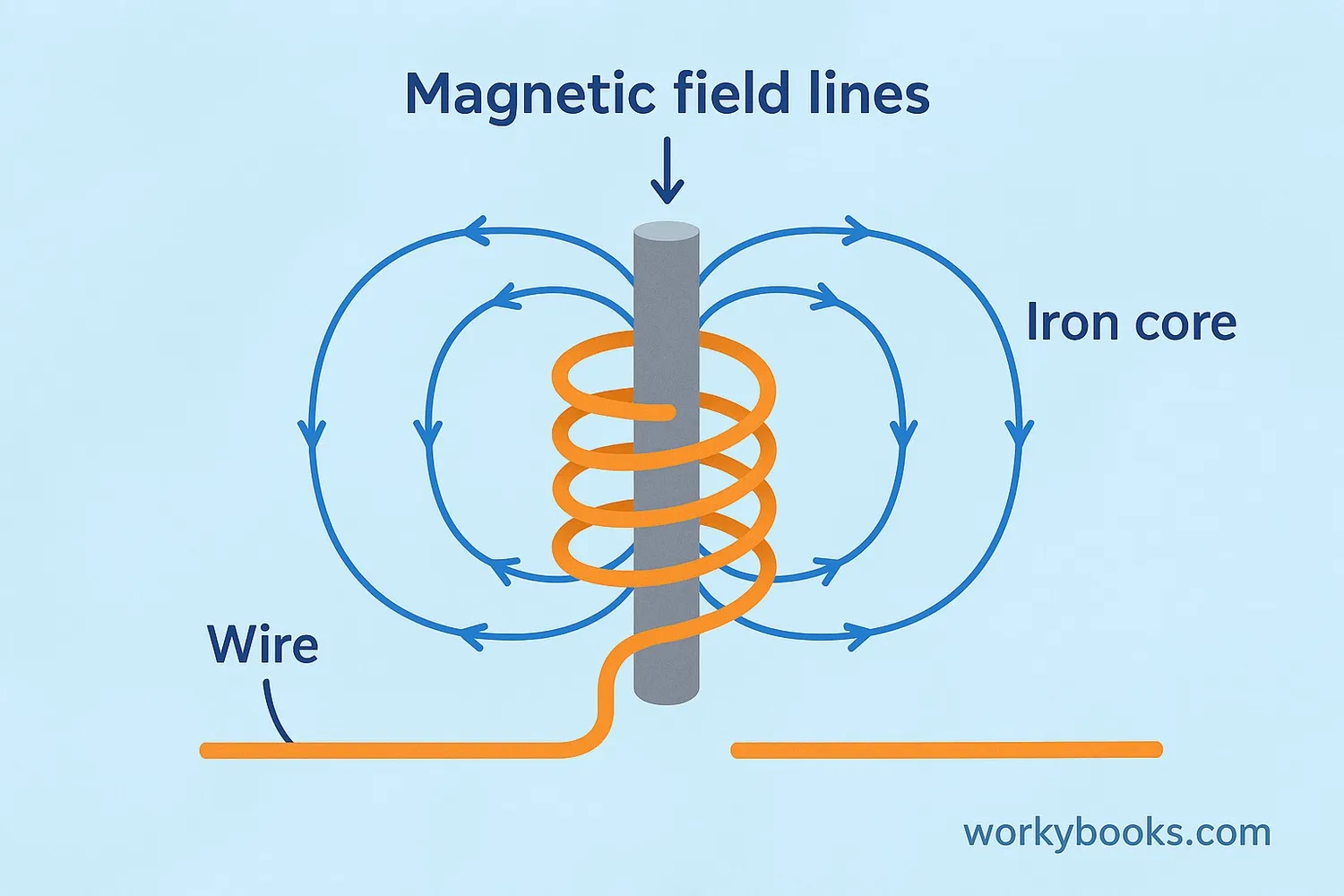
Electromagnets are devices that use electricity to create a magnetic field. Unlike permanent magnets, electromagnets can be turned on or off by controlling the flow of electric current. The strength of an electromagnet is important in many real-world applications, such as lifting heavy metal objects in recycling centers or operating medical machines like MRI scanners. Scientists and engineers need to understand what factors make an electromagnet stronger or weaker in order to design effective devices for different purposes.
How Electromagnets Work
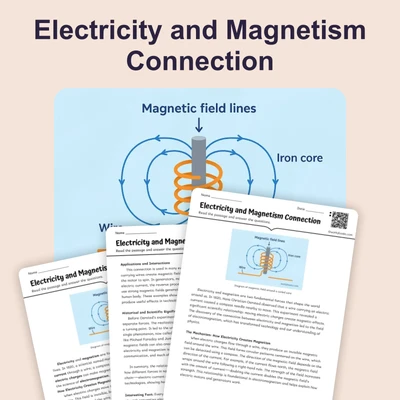
At the core of an electromagnet is a simple system: a wire is coiled around a core material (often iron), and an electric current passes through the wire. This flow of electricity generates a magnetic field. The strength of this field depends on several interacting factors. First, the number of coils in the wire matters—a greater number of coils means that the magnetic field lines are concentrated, making the electromagnet stronger. For example, doubling the number of coils can nearly double the strength of the magnet, as shown in experiments where a coil with 20 loops picks up only 3 paperclips, while a coil with 40 loops can lift 6 or more. Second, the amount of electric current flowing through the wire is crucial; higher current increases the magnetic field. Third, the type of core material plays a major role. Iron cores are much more effective at channeling magnetic fields than air or non-magnetic materials, increasing the magnet's strength by several orders of magnitude.
Testing Variables and Real-World Examples
Understanding the strength of electromagnets requires careful experimental design. In science labs, students often test one variable at a time to see its effect. For instance, they may keep the current and core material constant and only change the number of coils. This helps them identify cause-and-effect relationships. When comparing a weak electromagnet built with a small battery and a few coils to a powerful industrial electromagnet, the differences are clear: industrial magnets have hundreds or thousands of coils, very high current, and large iron cores. Such magnets can lift cars in junkyards, while classroom electromagnets might only pick up small nails. Data from industrial settings show that increasing the core size by 50% can increase lifting capacity by up to 80% when combined with more coils and higher current.
Interactions and Broader Implications
The factors that affect electromagnet strength interact in complex ways. For example, using a thicker core can make the magnet stronger, but only if the current and coil number are also increased. Engineers must balance these factors to prevent overheating and energy waste. The principles behind electromagnets connect to broader scientific ideas about energy transfer and conservation, as well as the relationship between electricity and magnetism. These concepts are not only important for building magnets, but also for understanding how electric motors, generators, and even maglev trains operate.
Electromagnets demonstrate how scientific experimentation and engineering design go hand in hand. By manipulating variables and observing outcomes, we can build devices that shape industries, medicine, and everyday life.
Interesting Fact: Some of the world's most powerful electromagnets, used in particle accelerators, can create magnetic fields over a million times stronger than Earth's natural field!
Comprehension quiz (10 questions)
1. What is the main purpose of an electromagnet?
2. Which factor does NOT make an electromagnet stronger?
3. What happens if you double the number of coils in an electromagnet, based on experiments?
4. Which real-world application uses powerful electromagnets?
5. What is a 'core' in the context of electromagnets?
6. What does 'experimental design' mean in the passage?
7. If you use a thicker iron core but do not increase the coils or current, what might happen?
8. Why do engineers have to balance the factors that make electromagnets stronger?
9. True or False: Using more electric current always makes an electromagnet weaker.
10. True or False: Electromagnets can be turned on and off, unlike permanent magnets.
Perfect for the way you teach
- Build comprehension skills
- Auto-graded quiz
- Differentiated reading
- Read together at home
- Improve fluency
- Quiet reading time
- Reading curriculum support
- Independent practice
- Track Lexile growth