This learning resource is available in interactive and printable formats. The interactive worksheet can be played online and assigned to students. The Printable PDF version can be downloaded and printed for completion by hand.
This passage explores the Fall of Rome in 476 CE, a pivotal event in world history that led to the end of the Roman Empire and the beginning of the Middle Ages. Students will learn about the key causes of Rome's decline, including barbarian invasions, economic problems, and the weakening of centralized government. The passage highlights primary sources, such as accounts from Roman historians, and connects these events to broader social, geographic, and political changes. Activities include a multiple-choice quiz, writing prompts that emphasize the use of evidence and historical reasoning, graphic organizers, and a timeline of events. The resource is aligned with CA HSS 6.7 and CCSS RI.6.3 standards, and offers a Spanish translation and read aloud audio to support diverse learners. This comprehensive lesson helps students analyze cause-and-effect relationships and understand the significance of the Fall of Rome in shaping medieval Europe.
CONTENT PREVIEW
Expand content preview
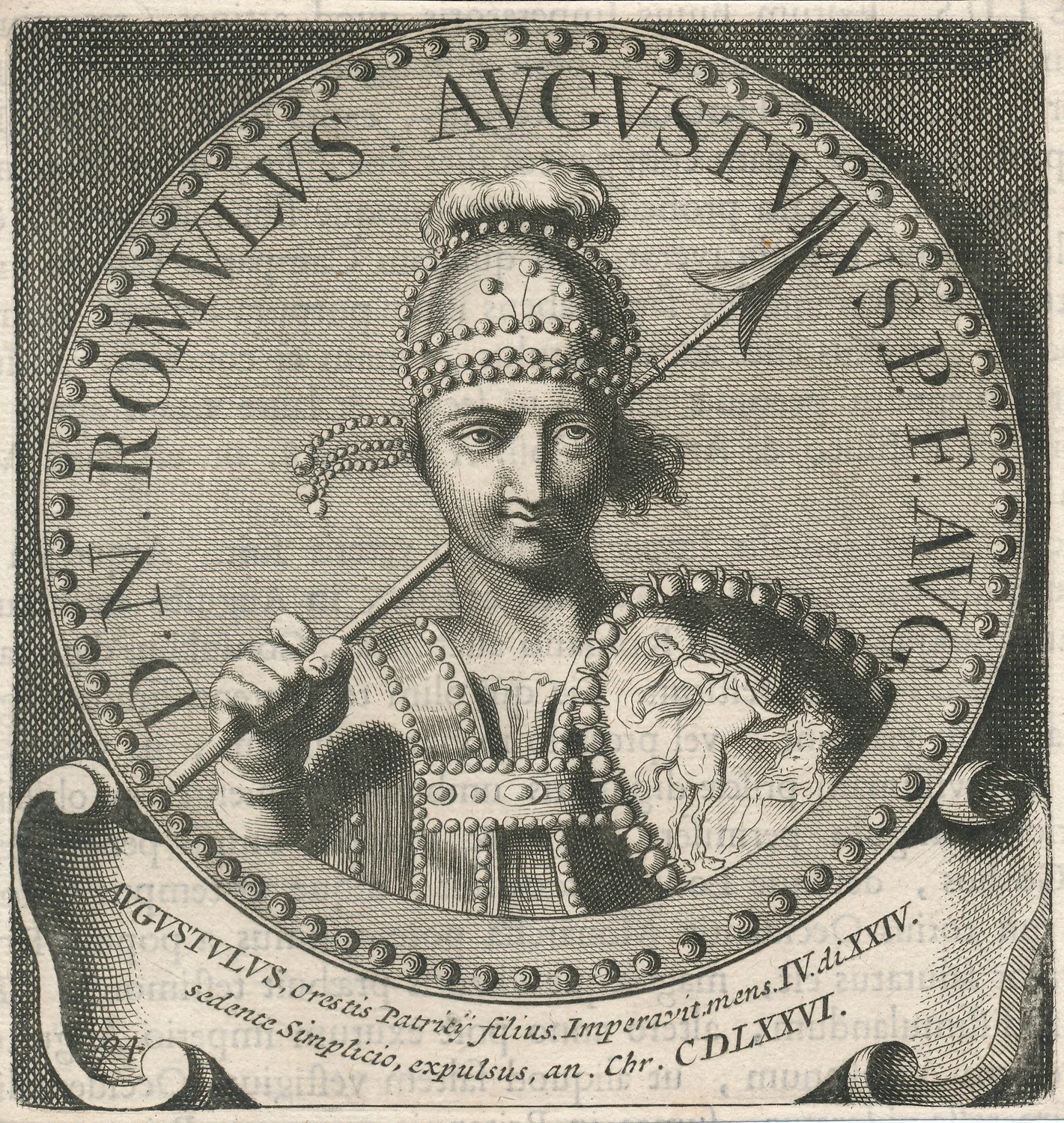
engraving in medallion of Romulus Augustulus, last emperor of the Western empire 475-476 / Wikimedia Commons.
The Roman Empire collapsed in 476 CE, ending centuries of rule over much of Europe, North Africa, and the Middle East. The fall of Rome is seen by historians as a major turning point that marked the close of the ancient world and the start of the medieval period, also known as the Middle Ages.
Several factors led to the collapse of the Roman Empire. One major cause was the continuous pressure from barbarian groups, such as the Visigoths, Vandals, and Ostrogoths. These groups, often described in Roman sources as outsiders, invaded Roman territory many times during the 4th and 5th centuries CE. In 410 CE, the Visigoths, led by Alaric, invaded and sacked Rome. This event shocked the Roman world and signaled the empire's weakness. Archaeological evidence, such as ruined city walls and destroyed homes, shows the damage caused by these invasions.
Another key reason for Rome's collapse was the weakening of the central government. Over time, the Roman government became less effective, with frequent changes of emperor and power struggles among military leaders. Between 235 and 284 CE, there were over 20 emperors, many of whom were assassinated. This instability made it difficult to respond to threats and manage the large empire. The economy also suffered, as heavy taxes and inflation made daily life harder for ordinary citizens. Written accounts from the historian Ammianus Marcellinus describe how people struggled to survive as basic services broke down.
Geography also played a role. The Roman Empire was vast, stretching from Britain to Egypt. Defending such a large area was expensive and difficult. The empire had to rely on mercenaries, or hired soldiers, many of whom were not loyal Romans. Over time, traditional Roman values and social structures changed. The social hierarchy shifted, and wealthy landowners gained more power while peasants lost their freedoms. This made the empire less unified and more vulnerable to outside threats.
In 476 CE, a Germanic general named Odoacer forced the last Roman emperor, Romulus Augustulus, to give up the throne. There was no longer a single ruler in the West, and local leaders took over. This marked the end of centralized Roman government and the beginning of the Middle Ages. Although the Eastern Roman Empire, known as the Byzantine Empire, continued for nearly a thousand more years, Western Europe became divided into smaller kingdoms.
The fall of Rome changed the course of European history. It led to a period of decentralization, where no one government controlled all of Europe. New cultures, languages, and kingdoms emerged. This era set the stage for the development of modern Europe.
Interesting Fact: The word "barbarian" comes from the Greek word "barbaros," which the Romans used to describe people who did not speak Latin or Greek.
When did the Roman Empire collapse?
476 CE410 CE284 CE235 CE
Who led the Visigoths in sacking Rome?
AlaricOdoacerRomulusAmmianus
What event marked the start of the Middle Ages?
The fall of RomeBuilding the ColosseumRise of Julius CaesarCreation of the Republic
Why did Rome's government become weak?
Frequent changes of emperorGood economyStrong militaryNew technology
What was a result of barbarian invasions?
Ruined city wallsStronger empireMore tradePeaceful times
How did geography affect Rome's fall?
Empire too large to defendNo water sourcesSmall territoryPerfectly safe borders
The Byzantine Empire ended in 476 CE.
TrueFalse
What does 'decentralization' mean?
Breaking up central powerBuilding big citiesHiring more soldiersMaking new laws
Perfect For:
👩🏫 Teachers
• Reading comprehension practice
• Auto-graded assessments
• Literacy skill development
👨👩👧👦 Parents
• Reading practice at home
• Comprehension improvement
• Educational reading time
🏠 Homeschoolers
• Reading curriculum support
• Independent reading practice
• Progress monitoring
Reading Features:
📖
Reading Passage
Engaging fiction or nonfiction text
❓
Comprehension Quiz
Auto-graded questions
📊
Instant Feedback
Immediate results and scoring
📄
Printable Version
Download for offline reading
🔊
Read Aloud
Voice-over with word highlighting
Reviews & Ratings
No reviews yet. Be the first to share your experience!
Related Content
Middle Ages Legacy
This history reading passage examines the lasting legacy of the Middle Ages, including the development of universities, ...
Early Middle Ages
This comprehensive reading passage explores the Early Middle Ages (500-1000 CE), a transformative period in European his...
High Middle Ages
This detailed world history reading passage explores the High Middle Ages (1000-1300 CE), a transformative era in Europe...
What Were the Middle Ages?
This engaging world history reading passage introduces students to the Middle Ages, the period in European history betwe...
Late Middle Ages
This rigorous world history reading passage explores the Late Middle Ages (1300-1500 CE), a time marked by the devastati...
Dark Ages
This passage offers a rigorous, engaging examination of why the early Middle Ages are often called the 'Dark Ages.' Stud...
Life in Middle Ages
This rigorous history reading passage explores life in Europe during the Middle Ages, focusing on the structure of feuda...
Medieval Islamic World
This rigorous reading passage delves into the Medieval Islamic World's golden age, when a vast civilization stretched fr...
Islamic Golden Age
This history reading passage explores the Islamic Golden Age, a period from the 8th to 14th centuries marked by outstand...
Medieval to Modern Transition
This engaging world history reading passage explores the dramatic transformation from the Middle Ages to the modern era,...
Medieval Words in English
This engaging history reading passage examines the evolution of the English language during the Middle Ages, focusing on...
Age of Exploration Begins
This engaging history reading passage explores the Age of Exploration, a turning point in world history when European po...
Italian City-States
This passage explores the rise and significance of the Italian city-states—Venice, Florence, and Genoa—during the Middle...
Attila the Hun
This engaging world history reading passage examines Attila the Hun, a powerful and feared ruler during the Middle Ages....
Medieval Guilds
This engaging world history reading passage explores the important role of guilds—worker groups that shaped the economy ...
Medieval Christian Worship
This detailed passage examines how people worshiped during the Middle Ages, focusing on essential religious practices su...
Power of the Pope
This history reading passage examines the power of the pope during the Middle Ages, focusing on his role as spiritual le...
Carolingian Renaissance
This engaging world history passage explores how Charlemagne, ruler of the Franks, transformed education and learning in...
Islamic Golden Age Inventions
This world history reading passage explores the remarkable inventions and scientific advances made in the medieval Islam...
Medieval Agricultural Innovations
This history reading passage explores how farming inventions like the heavy plow, three-field system, and horse collar r...