First Crusade 1095
Interactive passage with audio narration, comprehension questions, and printable PDF.
By completing this purchase you agree to our Terms of Use and Privacy Policy. Your subscription renews automatically until you cancel. You can cancel anytime from your account settings. All sales are final and non-refundable. Digital content is available for download in your account immediately upon purchase.
What's included
First Crusade 1095 preview and details
About this printable First Crusade 1095 reading passage (Grades 5-8)
Sample passage and quiz from First Crusade 1095
Reading passage and comprehension quiz preview
First Crusade 1095
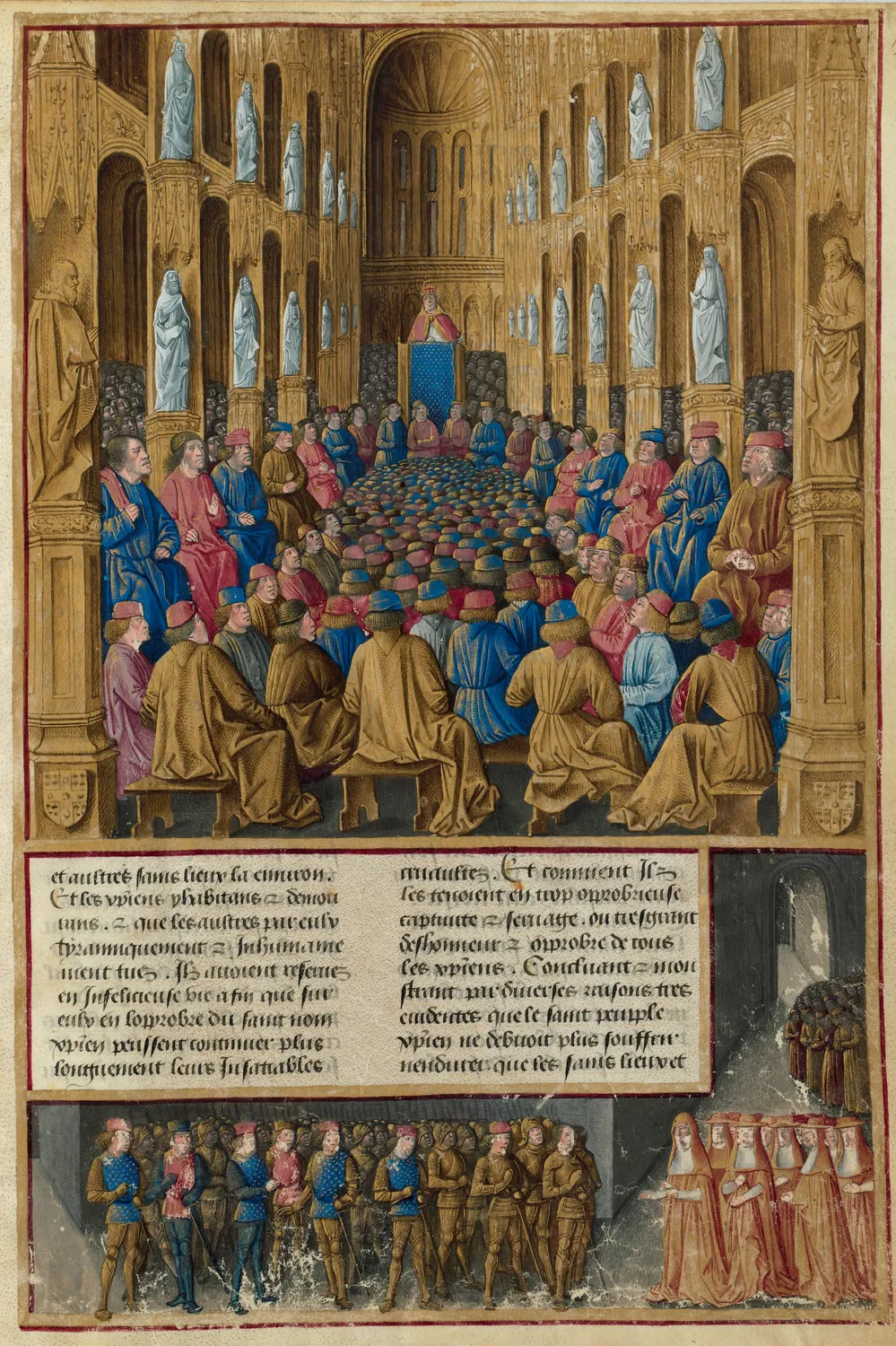
"Overseas Passages Fr5594, folio 19r, Council of Clermont" by Jean Colombe / Wikimedia Commons.
The First Crusade was a major religious and military expedition launched in 1095 when Pope Urban II called on Christians in Europe to take up arms and travel to the Holy Land. He wanted them to reclaim Jerusalem and other important cities from Muslim control. The Holy Land, especially Jerusalem, was sacred to Christians, Jews, and Muslims. By the late 11th century, it had been under Muslim rule for centuries. Pope Urban II gave his speech at the Council of Clermont in France, urging knights and nobles to stop fighting each other and focus on a common cause.
Thousands of people responded to the Pope's call. Knights, nobles, and even peasants, inspired by religious zeal, began a long and difficult journey east. They traveled through unfamiliar lands, facing harsh weather, hunger, and disease. Many crusaders believed that joining the expedition would earn them forgiveness for their sins, a concept known as indulgence. Some also hoped to gain wealth or land in the process. According to the contemporary chronicler Fulcher of Chartres, entire families sometimes set out together, showing how deeply the idea of the Crusade affected European society.
After several years of travel and fighting, the Crusaders reached Jerusalem in 1099. The city was heavily fortified, and the final siege lasted for weeks. Accounts by eyewitnesses, such as the Gesta Francorum, describe the determination and hardships faced by the Crusaders. Finally, they breached the walls and captured Jerusalem in July 1099. This victory was seen as a miracle by the Crusaders and marked a major turning point in medieval history. Following their success, the Crusaders established new territories in the region, called Crusader states, including the Kingdom of Jerusalem, the County of Edessa, and the Principality of Antioch. These states were ruled by European nobles and became centers of trade, culture, and conflict.
The First Crusade had lasting effects on Europe and the Middle East. It increased contact between different cultures and religions, although it also led to violence and mistrust. The Crusader states remained for nearly two centuries, but they were often threatened by surrounding Muslim powers. The Crusades also influenced European society by increasing the power of the Church and changing the lives of knights and commoners. Over time, the idea of religious warfare continued to shape politics, belief systems, and relationships between East and West.
The story of the First Crusade connects to larger themes of geography, religion, and social change in world history. It shows how religious beliefs, leadership, and the desire for land and power can drive people to undertake extraordinary journeys and reshape the world.
Interesting Fact: Some knights who joined the First Crusade carved crosses into their clothing or armor, which is why Crusaders were often called "people of the cross."
Comprehension quiz (8 questions)
1. Who started the First Crusade?
2. What city did Crusaders capture in 1099?
3. What was a Crusader state?
4. Why did many join the Crusade?
5. What was the effect of the Crusader victory?
6. What hardship did Crusaders face?
7. The First Crusade began in 1095. True or false?
8. What does 'siege' mean?
Perfect for the way you teach
- Build comprehension skills
- Auto-graded quiz
- Differentiated reading
- Read together at home
- Improve fluency
- Quiet reading time
- Reading curriculum support
- Independent practice
- Track Lexile growth