Gothic Architecture
Interactive passage with audio narration, comprehension questions, and printable PDF.
By completing this purchase you agree to our Terms of Use and Privacy Policy. Your subscription renews automatically until you cancel. You can cancel anytime from your account settings. All sales are final and non-refundable. Digital content is available for download in your account immediately upon purchase.
What's included
Gothic Architecture preview and details
About this printable Gothic Architecture reading passage (Grades 5-8)
Sample passage and quiz from Gothic Architecture
Reading passage and comprehension quiz preview
Gothic Architecture
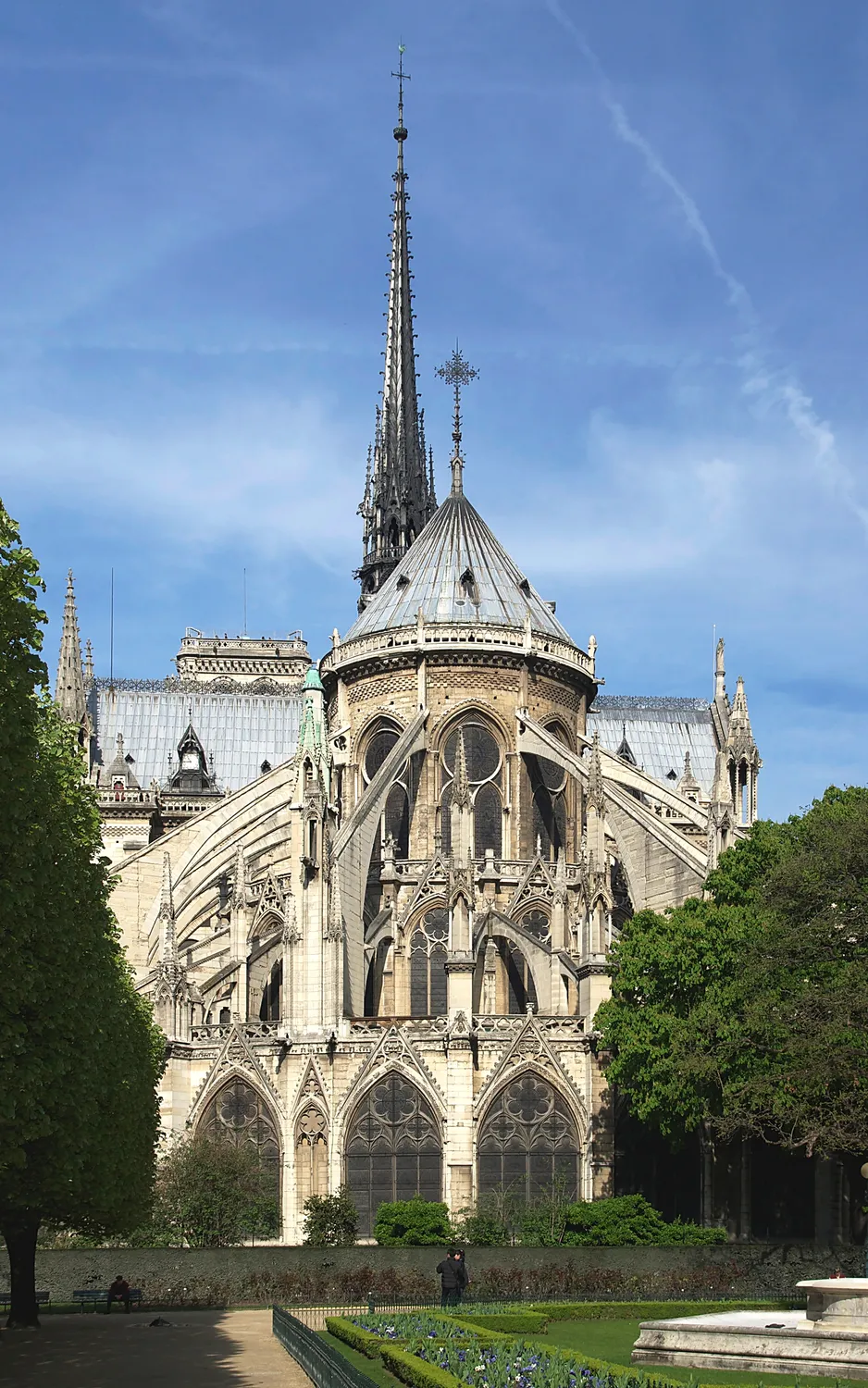
"Notre Dame chevet" by Jebulon / Wikimedia Commons.
Gothic architecture emerged in Europe during the Middle Ages, beginning around the 12th century in France. It is known for its dramatic style, which transformed the appearance of churches, cathedrals, and even some castles. This architectural movement replaced the earlier Romanesque style, which featured thick walls and small windows. Instead, Gothic builders created structures that were taller, lighter, and filled with colorful light.
The most important innovations of Gothic architecture included the pointed arch, the ribbed vault, and the flying buttress. Pointed arches helped distribute the weight of heavy stone roofs more evenly, allowing buildings to reach greater heights. Ribbed vaults were a framework of intersecting stone ribs that supported ceilings and added both strength and elegance. Flying buttresses were external supports that transferred the force of the roof and walls outward to the ground, making it possible to build much taller structures with thinner walls. The first major use of flying buttresses can be seen at Notre-Dame Cathedral in Paris, constructed beginning in 1163.
These innovations made it possible to add large stained glass windows, which were both decorative and educational. The windows filled the interiors with colorful light and often showed biblical scenes or important events. Cathedrals like Chartres in France, completed in the early 13th century, are famous for their stunning stained glass. The use of light had a symbolic meaning, representing the presence of the divine. Inside, visitors were surrounded by vibrant colors and soaring ceilings, creating a sense of awe and spiritual wonder.
Gothic cathedrals were more than just places of worship. They were also centers of community life, hosting markets, festivals, and important gatherings. Building these cathedrals required the labor of skilled artisans, masons, and craftsmen, who created detailed sculptures and carvings that decorated the buildings. The construction of these massive structures often took decades, or even centuries. For example, Cologne Cathedral in Germany was begun in 1248 but not finished until 1880. Cathedrals were also symbols of a city's wealth and religious devotion, reflecting the social hierarchy and ambitions of medieval society.
Gothic architecture spread across Europe, influencing buildings in England, Spain, Germany, and beyond. Each region adapted the style to its own culture and materials, showing both change and continuity over time. The legacy of Gothic architecture can still be seen today in many famous landmarks and continues to inspire architects and artists.
Gothic architecture connects to broader themes in world history, such as technological innovation, the relationship between religion and society, and the ways humans shape their environments to reflect their beliefs and values.
Interesting Fact: Some medieval builders left hidden carvings, such as animals or faces, high up in cathedrals where only someone repairing the building might ever see them!
Comprehension quiz (8 questions)
1. Where did Gothic architecture begin?
2. What year did Notre-Dame construction begin?
3. Which cathedral is famous for stained glass?
4. Why were flying buttresses important?
5. How did stained glass help people?
6. What did cathedrals show about a city?
7. Gothic cathedrals used thick walls. True or false?
8. What is a 'mason'?
Perfect for the way you teach
- Build comprehension skills
- Auto-graded quiz
- Differentiated reading
- Read together at home
- Improve fluency
- Quiet reading time
- Reading curriculum support
- Independent practice
- Track Lexile growth