Great Famine
Interactive passage with audio narration, comprehension questions, and printable PDF.
By completing this purchase you agree to our Terms of Use and Privacy Policy. Your subscription renews automatically until you cancel. You can cancel anytime from your account settings. All sales are final and non-refundable. Digital content is available for download in your account immediately upon purchase.
What's included
Great Famine preview and details
About this printable Great Famine reading passage (Grades 5-8)
Sample passage and quiz from Great Famine
Reading passage and comprehension quiz preview
Great Famine
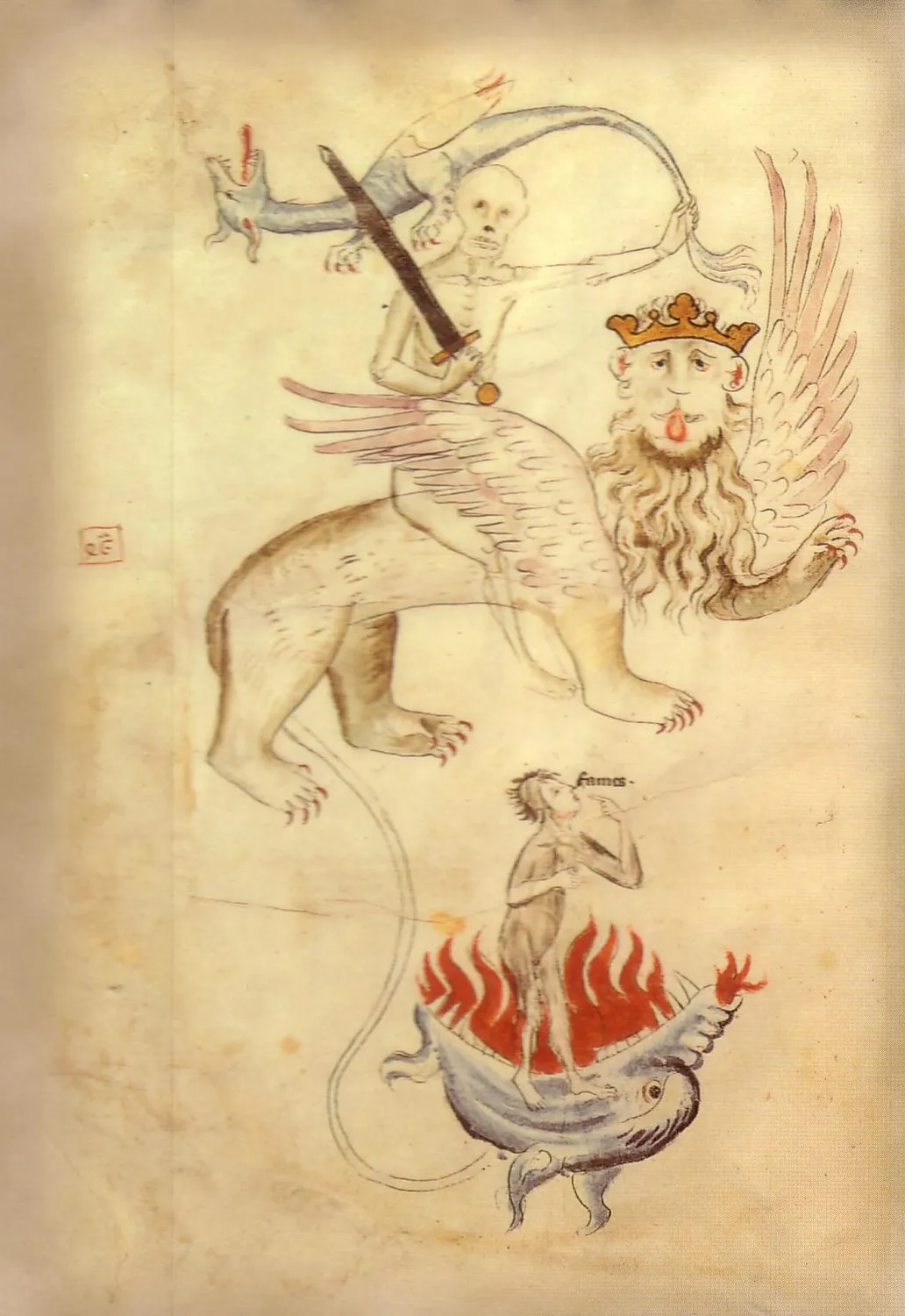
"Great famine" Scanned from the cover of The Great Famine (1996) by William Chester Jordan. Original cover art from a photograph courtesy of Stiftung Weimarer Klassik, Herzogin Anna Amalia Bibliothek. / Wikimedia Commons.
The Great Famine of 1315-1317 was one of the most devastating disasters in medieval European history. For over two years, extreme weather and failed harvests led to widespread starvation. It is estimated that millions of people died, making this event a turning point for societies across Europe.
In the spring of 1315, heavy rains began to fall across much of Northern Europe. These rains were not typical; they continued through the summer and into 1316. Farmland became waterlogged, and crops such as wheat, rye, and barley could not grow. Medieval peasants, who depended on their small plots for survival, watched helplessly as their food supplies dwindled. Chroniclers like Jean de Venette wrote about the endless rain and the suffering it caused. Archaeologists have found evidence of skeletons with signs of malnutrition from this period, supporting the historical accounts.
As crops failed, food prices soared. Records from England show that the price of grain tripled in just a few months. Poor families could no longer afford bread, and even wealthier households struggled. Many people were forced to eat whatever they could find, including roots, leaves, and even bark. Some documents describe how entire villages were abandoned because people fled in search of food. The famine did not only affect peasants; nobles and townspeople also suffered, although those with more resources survived longer. Social order broke down in some areas, with reports of theft and violence increasing as desperation grew.
The famine also weakened people's health, making them more vulnerable to diseases. Many medieval Europeans were already living close to the edge, so when their diets became less nutritious, sickness spread quickly. The Great Famine revealed the limits of medieval society’s ability to respond to environmental crises. Governments and church leaders tried to help by organizing grain shipments and prayers, but their efforts had little effect against the scale of the disaster.
When the rains finally ended in 1317, harvests slowly improved, but the population of Europe had been reduced by as much as 10%. The famine changed the structure of society, as many landowners found themselves with fewer peasants to work the land. This shortage eventually improved conditions for survivors, who could demand better wages and more rights. The Great Famine is a powerful example of how climate and geography can shape human history.
The events of the Great Famine connect to larger themes in world history, such as the relationship between humans and the environment, and the ways societies respond to challenges.
Interesting Fact: Some medieval chronicles reported that wolves became bolder during the famine, entering villages to search for food just like desperate people.
Comprehension quiz (8 questions)
1. When did the Great Famine begin?
2. What caused crop failures?
3. How much did food prices change?
4. What did peasants do when food ran out?
5. Why did disease spread more easily?
6. How did the famine change society?
7. The famine ended in 1317. True or false?
8. What does 'malnutrition' mean?
Perfect for the way you teach
- Build comprehension skills
- Auto-graded quiz
- Differentiated reading
- Read together at home
- Improve fluency
- Quiet reading time
- Reading curriculum support
- Independent practice
- Track Lexile growth