How Coal Forms
Interactive passage with audio narration, comprehension questions, and printable PDF.
By completing this purchase you agree to our Terms of Use and Privacy Policy. Your subscription renews automatically until you cancel. You can cancel anytime from your account settings. All sales are final and non-refundable. Digital content is available for download in your account immediately upon purchase.
What's included
How Coal Forms preview and details
About this printable How Coal Forms science reading passage, NGSS-aligned (Grades 6-8)
Sample passage and quiz from How Coal Forms
Reading passage and comprehension quiz preview
How Coal Forms
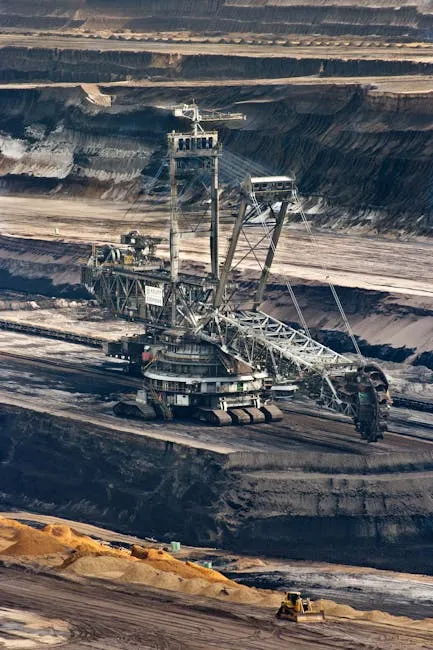
"Large bucket wheel excavator operating in an open-pit mine with layered soil and coal." by Pixabay / Pexels.
Coal is a fossil fuel that forms from the remains of ancient plants. The process takes millions of years and requires specific conditions. Coal formation begins in swamps where plants grow, die, and accumulate in water. Over geological time, layers of sediment bury this plant material, and heat and pressure transform it into different types of coal.
The first stage of coal formation starts in swamps about 300 million years ago during the Carboniferous Period. Large ferns, trees, and mosses grew in warm, wet environments. When these plants died, they fell into swampy water that had little oxygen. Without oxygen, bacteria could not completely decompose the plant material. Instead, the dead plants formed thick layers of partially decayed matter on the swamp floor. This process is similar to how fallen leaves pile up in a wet area of your yard, but on a much larger scale and over thousands of years.
As more plants died and accumulated, the layers grew thicker. Eventually, sediment such as sand and clay covered these plant layers. The weight of the sediment pressed down on the plant material, squeezing out water and gases. This pressure, combined with heat from Earth's interior, began to change the plant material into peat. Peat is the first stage of coal formation. It is brown, crumbly, and still contains recognizable plant structures. Peat has a low carbon content of about 60% and produces less heat when burned compared to other coal types.
Over millions of years, more sediment accumulated above the peat. The increasing weight created greater pressure, and temperatures rose as the material was buried deeper underground. Under these conditions, peat transformed into lignite, also called brown coal. Lignite is the second stage of coal formation. It is harder than peat and has a carbon content of about 70%. Lignite still contains some moisture and produces more heat than peat when burned, but it is considered a low-quality coal.
As burial continued and pressure and temperature increased further, lignite changed into bituminous coal. This is the third stage and the most abundant type of coal found today. Bituminous coal is black, hard, and has a carbon content between 75% and 90%. It produces significant heat when burned and is widely used to generate electricity. The transformation from lignite to bituminous coal required millions more years and burial depths of several kilometers.
The final stage produces anthracite, the highest quality coal. Anthracite forms when bituminous coal experiences extreme pressure and heat, often from mountain-building events where rock layers fold and compress. Anthracite is very hard, shiny black, and has a carbon content above 90%. It burns with little smoke and produces the most heat of all coal types. However, anthracite is rare because the specific conditions needed for its formation occur in only a few locations.
The entire process of coal formation, called carbonization, demonstrates how Earth's geological processes create energy resources over immense time periods. Each stage of coal represents a different level of carbon concentration and energy content. Understanding coal formation helps scientists locate coal deposits and explains why coal is considered a non-renewable resource—it takes millions of years to form but can be consumed in a relatively short time.
Interesting Fact: Some coal deposits contain perfectly preserved fossils of ancient insects, leaves, and even tree bark, providing scientists with detailed information about life on Earth over 300 million years ago.
Comprehension quiz (10 questions)
1. What is the first stage of coal formation?
2. During which geological time period did coal formation begin?
3. What does 'carbon content' mean in the context of coal formation?
4. Based on the passage, what role does oxygen play in coal formation?
5. Why does bituminous coal produce more heat than lignite?
6. What conditions are necessary to transform bituminous coal into anthracite?
7. If you found a piece of coal that was brown and crumbly with visible plant structures, which stage would it most likely be?
8. Why is coal considered a non-renewable resource?
9. Coal can form in just a few hundred years.
10. Anthracite has the highest carbon content of all coal types.
Perfect for the way you teach
- Build comprehension skills
- Auto-graded quiz
- Differentiated reading
- Read together at home
- Improve fluency
- Quiet reading time
- Reading curriculum support
- Independent practice
- Track Lexile growth