How to Design Solutions for Natural Hazards — Reading Comprehension
Rate this
Premium Resource
Present
Present in classroom. No work saved
Assign
Classroom with student accounts, Track progress
Quick Play
No student accounts, assign with a link
Grades
3
4
5
Standards
NGSS 4-ESS3-2
PRINT+DIGITAL RESOURCE
This learning resource is available in interactive and printable formats. The interactive worksheet can be played online and assigned to students. The Printable PDF version can be downloaded and printed for completion by hand.
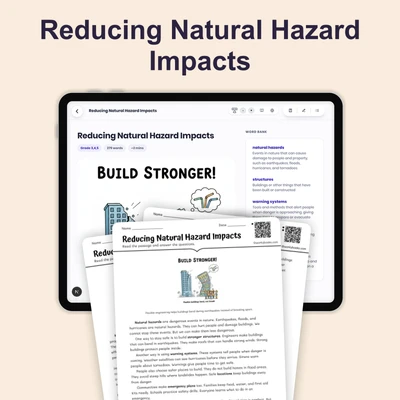
This 250-word reading passage introduces fourth-grade students to the engineering design process for solving natural hazard problems, aligned with NGSS standard 4-ESS3-2. Students learn how engineers identify hazards like earthquakes, floods, and hurricanes, then design solutions to reduce damage. The passage explains key concepts including brainstorming, constraints, testing, and improving designs. Written at a Grade 4 reading level, the content uses simple sentences and everyday vocabulary to make complex engineering concepts accessible. Students discover that engineers don't create perfect solutions but instead work within real-world limits like cost and available materials. The passage includes bold vocabulary terms with immediate definitions, helping students build science literacy. Audio-integrated features support diverse learners by allowing them to listen while reading. Accompanying activities include multiple-choice comprehension questions testing recall and application, short-answer writing prompts requiring explanations and real-world connections, and graphic organizers that help students visualize the engineering design process. This resource provides foundational understanding of how human ingenuity can reduce the impact of natural hazards, preparing students for hands-on STEM activities and collaborative problem-solving discussions in the classroom.
CONTENT PREVIEW
Expand content preview
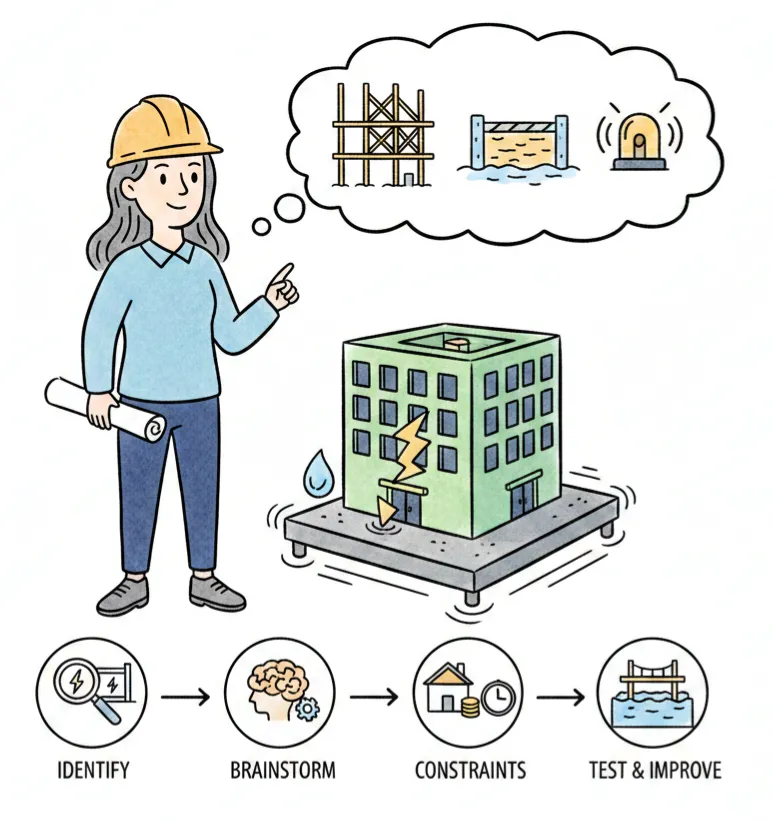
Engineers follow a step-by-step process to solve problems and stay safe.
Natural hazards are events in nature that can cause damage to homes, schools, and communities. Earthquakes shake buildings, floods cover streets with water, and hurricanes bring powerful winds. These hazards can hurt people and destroy property. Engineers work to design solutions that reduce the damage from natural hazards and keep people safe.
Engineers follow a step-by-step process to solve problems. First, they identify the hazard—the dangerous event they need to protect against. Next, they study how the hazard causes damage. For example, they might learn that earthquake shaking makes buildings collapse or that floodwater pushes against walls. Then engineers brainstorm—they think of many different ideas for solutions. They might design stronger building frames, create barriers to block water, or build warning systems to alert people.
Engineers must think about constraints—the limits that affect their designs. Constraints include how much money is available, what materials can be used, and how much time they have. A perfect solution might cost too much or need materials that are hard to find. Engineers choose the best solution that works within these constraints. They build a model or prototype—a small version of their design—and test it. If the prototype doesn't work well, they improve it based on what they learned. This process helps engineers create better solutions over time.
Interesting Fact: In Japan, engineers designed buildings that can sway during earthquakes instead of breaking. These flexible structures have saved thousands of lives during powerful earthquakes!
What are natural hazards?
Fun events in natureDangerous events that cause damageWeather that is always sunnySafe places to play
What is the first step engineers take?
Build the final solutionTest a prototypeIdentify the hazardBuy expensive materials
What does brainstorm mean?
Think of many different ideasBuild a storm shelterStudy weather patternsTest only one solution
Why might a perfect solution not work?
It is too simpleIt costs too much moneyIt works too wellIt is too small
What happens after engineers test a prototype?
They throw it away immediatelyThey never change itThey improve it based on resultsThey sell it to stores
How do Japanese buildings survive earthquakes better?
They are made of paperThey can sway instead of breakThey are buried undergroundThey float on water
Engineers always create perfect solutions for hazards.
TrueFalse
What is a prototype?
A dangerous natural hazardA limit on a designA small model to testA type of building material
Perfect For:
👩🏫 Teachers
• Reading comprehension practice
• Auto-graded assessments
• Literacy skill development
👨👩👧👦 Parents
• Reading practice at home
• Comprehension improvement
• Educational reading time
🏠 Homeschoolers
• Reading curriculum support
• Independent reading practice
• Progress monitoring
Reading Features:
📖
Reading Passage
Engaging fiction or nonfiction text
❓
Comprehension Quiz
Auto-graded questions
📊
Instant Feedback
Immediate results and scoring
📄
Printable Version
Download for offline reading
🔊
Read Aloud
Voice-over with word highlighting
Reviews & Ratings
No reviews yet. Be the first to share your experience!
Related Content
What Are Tsunamis
This Grade 4 science reading passage introduces students to tsunamis, aligning with NGSS standard 4-ESS3-2. Students lea...
NGSS 4-ESS3-2
How Tsunamis Affect People
This engaging 250-word reading passage introduces fourth-grade students to the devastating impacts of tsunamis on coasta...
NGSS 4-ESS3-2
What Are Avalanches
This engaging 250-word reading passage introduces fourth-grade students to avalanches and their impact on mountain commu...
NGSS 4-ESS3-2
Landslides
This engaging 350-word reading passage introduces Grade 4-5 students to landslides as powerful natural events where soil...
NGSS 4-ESS3-2
What Are Earthquakes
This engaging 250-word reading passage introduces fourth-grade students to the concept of earthquakes as natural hazards...
NGSS 4-ESS3-2
How Earthquakes Affect People
This 250-word informational reading passage introduces Grade 4 students to the ways earthquakes affect people and commun...
NGSS 4-ESS3-2ESS3.B
What Are Volcanoes
This engaging 250-word reading passage introduces fourth-grade students to volcanoes and volcanic activity, aligned with...
NGSS 4-ESS3-2
How Volcanoes Affect People
This 250-word reading passage introduces fourth-grade students to the ways volcanic eruptions affect people and communit...
NGSS 4-ESS3-2
What Are Weather Hazards
This Grade 4 science reading passage introduces students to weather hazards as part of the NGSS 4-ESS3-2 standard focusi...
NGSS 4-ESS3-2ESS3.B
What Are Tornadoes
This engaging Grade 4 science reading passage introduces students to tornadoes, one of nature's most powerful and danger...
NGSS 4-ESS3-2
What Are Hurricanes
This Grade 4 science reading passage introduces students to hurricanes and their impact on coastal communities, aligned ...
NGSS 4-ESS3-2
What Are Floods
This engaging 250-word reading passage introduces fourth-grade students to floods as natural hazards, aligned with NGSS ...
NGSS 4-ESS3-2
What Are Wildfires
This 250-word reading passage explains what wildfires are and introduces Grade 4 students to key concepts about these na...
NGSS 4-ESS3-2
What Are Droughts
This 250-word reading passage introduces fourth-grade students to the concept of droughts as defined in NGSS 4-ESS3-2. S...
NGSS 4-ESS3-2
What Are Natural Hazards
This audio-integrated reading passage introduces fourth-grade students to natural hazards as part of the NGSS 4-ESS3-2 s...
NGSS 4-ESS3-2ESS3.B
Why We Cannot Stop Natural Hazards
This 250-word reading passage introduces fourth-grade students to the concept that natural hazards are caused by natural...
NGSS 4-ESS3-2
Reducing Natural Hazard Impacts
This Grade 4 science reading passage introduces students to the concept of reducing natural hazard impacts, aligned with...
NGSS 4-ESS3-2
How Buildings Resist Earthquakes
This 250-word reading passage introduces fourth-grade students to earthquake-resistant building design, aligned with NGS...
NGSS 4-ESS3-2
How Scientists Monitor Volcanoes
This engaging 250-word reading passage introduces fourth-grade students to the important work of volcano monitoring, ali...
NGSS 4-ESS3-2
How Tsunami Warnings Work
This engaging 250-word reading passage introduces fourth-grade students to tsunami warning systems and how they protect ...