Hydraulics and Pneumatics
Interactive passage with audio narration, comprehension questions, and printable PDF.
By completing this purchase you agree to our Terms of Use and Privacy Policy. Your subscription renews automatically until you cancel. You can cancel anytime from your account settings. All sales are final and non-refundable. Digital content is available for download in your account immediately upon purchase.
What's included
Hydraulics and Pneumatics preview and details
About this printable Hydraulics and Pneumatics science reading passage, NGSS-aligned (Grades 5-8)
Sample passage and quiz from Hydraulics and Pneumatics
Reading passage and comprehension quiz preview
Hydraulics and Pneumatics
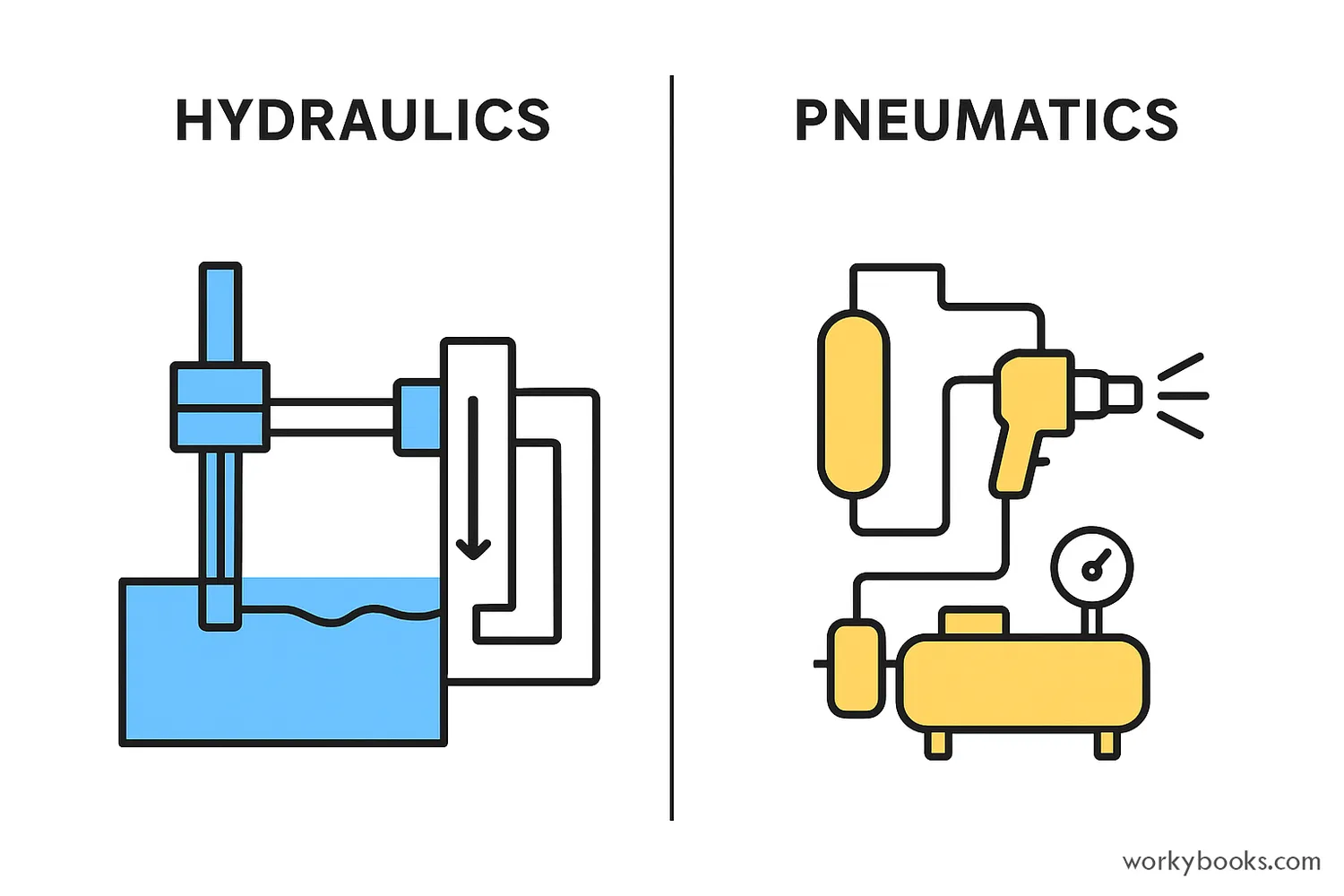
Hydraulics and pneumatics are systems that use fluids or gases to transmit force and perform work. These systems are essential in modern technology, from construction machines to medical devices. Understanding how they operate helps us see why engineers choose one system over the other for different tasks. The differences between hydraulics and pneumatics directly affect how we move, build, and control machines in our daily lives.
How Hydraulics and Pneumatics Work
Both systems use a fluid (a substance that flows) to transfer force, but hydraulics use liquids, while pneumatics use gases. In hydraulics, an incompressible liquid (usually oil or water) is pushed through pipes or cylinders. When force is applied, the liquid moves and transfers that force to another part of the system. Because liquids do not compress easily, the force is transmitted almost instantly and precisely. In contrast, pneumatics use compressible gases, usually air. When air is compressed inside a cylinder, it can expand and move parts of a machine. Gases can be squeezed into a smaller space, which means some energy is stored and then released, making pneumatic systems more flexible but less precise than hydraulics.
Applications and Examples
Hydraulic systems are used where strong, precise, and steady force is needed. For example, hydraulic brakes in cars transfer pressure from your foot on the pedal to stop the wheels. Construction equipment like excavators and lifts use hydraulics to move heavy loads. Pneumatic systems are found in places where speed and safety are important, such as pneumatic drills used by dentists or road workers. Trains and trucks often use air brakes, a pneumatic system that stops vehicles using compressed air. According to studies, hydraulic systems can operate at pressures over 20,000 psi (pounds per square inch), while most pneumatic systems work between 80–120 psi, making hydraulics better for heavy-duty tasks.
Comparing Advantages and Limitations
Hydraulics provide greater force and precise control because liquids do not compress. This makes them ideal for tasks that need strength and accuracy, but they can leak and require careful maintenance. Pneumatics are lighter and safer, as air leaks are not usually dangerous. They are also faster and less expensive to build and repair. However, because gases compress, pneumatic systems may be less accurate and can deliver less force. Engineers carefully select which system to use based on the specific needs of each application, considering factors like cost, safety, and performance.
Understanding hydraulics and pneumatics shows how scientific principles, such as Newton’s laws of motion and properties of matter, connect to the machines we use every day. These systems demonstrate how the behavior of fluids and gases can be harnessed to solve real-world problems and power modern technology.
Interesting Fact: The ancient Greeks used simple hydraulic devices over 2,000 years ago, long before modern engines and motors existed!
Comprehension quiz (10 questions)
1. What is the main difference between hydraulics and pneumatics?
2. Why are hydraulics better for heavy-duty tasks than pneumatics?
3. What does 'incompressible' mean in the context of hydraulics?
4. Which of the following is an example of a pneumatic system?
5. What is the main advantage of pneumatic systems?
6. Which term means 'a system that uses compressed gases to transfer force'?
7. In the passage, why might an engineer choose pneumatics over hydraulics?
8. What is a real-world example of hydraulics mentioned in the passage?
9. Hydraulic systems can operate at pressures over 20,000 psi. True or False?
10. Pneumatic systems are always more precise than hydraulic systems. True or False?
Perfect for the way you teach
- Build comprehension skills
- Auto-graded quiz
- Differentiated reading
- Read together at home
- Improve fluency
- Quiet reading time
- Reading curriculum support
- Independent practice
- Track Lexile growth