Illuminated Manuscripts
Interactive passage with audio narration, comprehension questions, and printable PDF.
What's included
Illuminated Manuscripts preview and details
About this printable Illuminated Manuscripts reading passage (Grades 5-8)
Sample passage and quiz from Illuminated Manuscripts
Reading passage and comprehension quiz preview
Illuminated Manuscripts
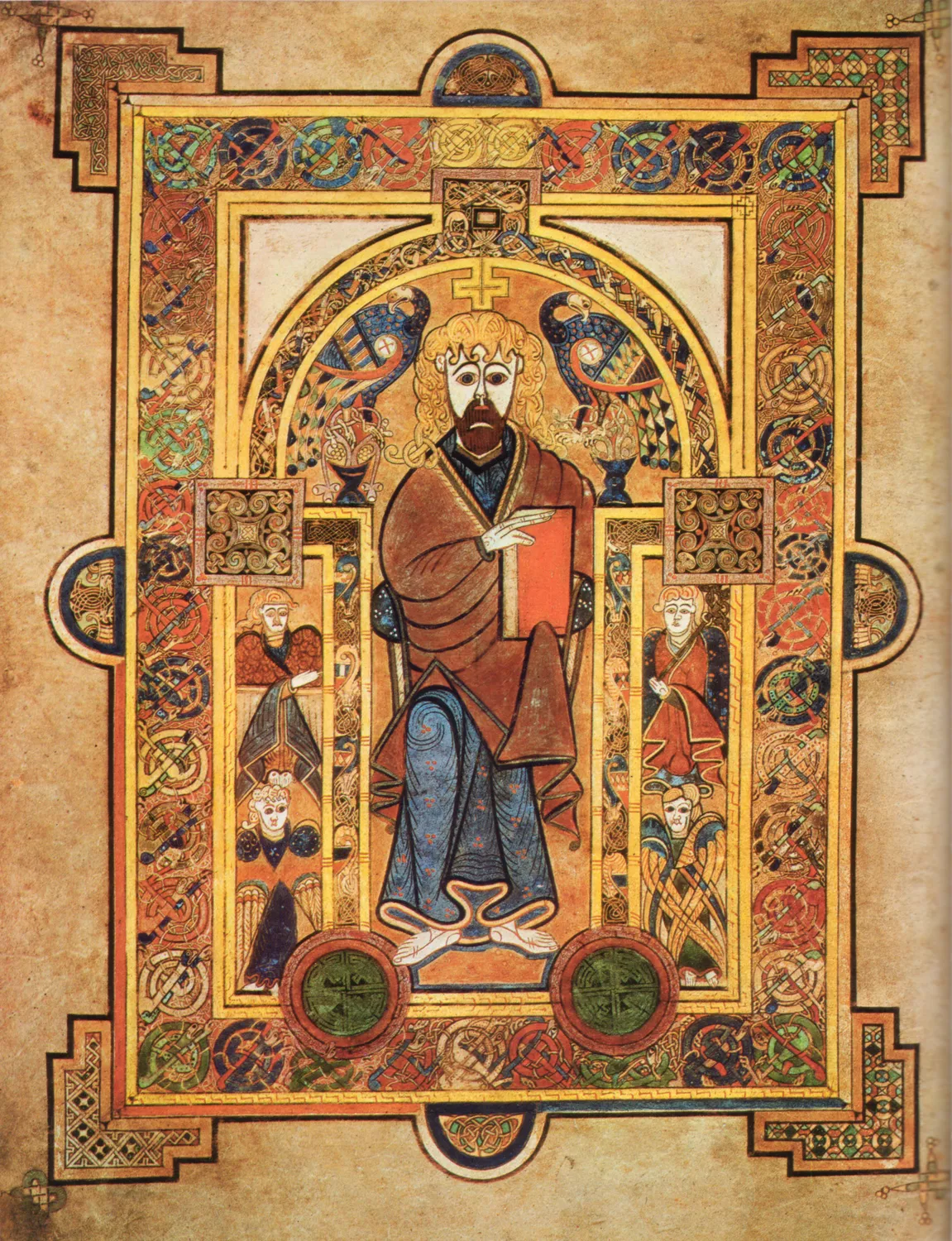
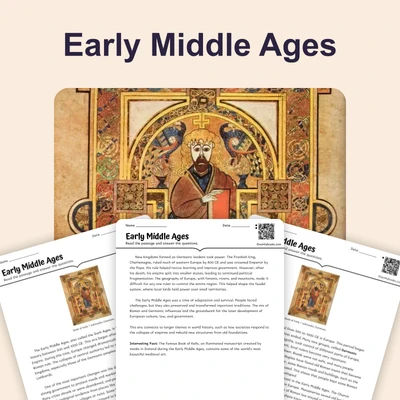
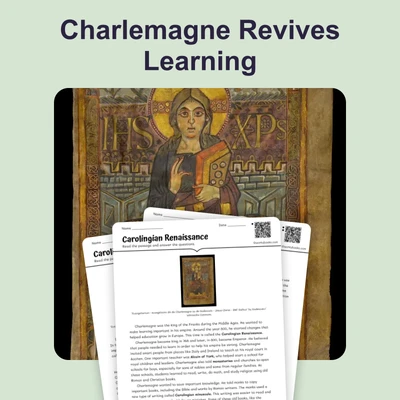
"Book of Kells (an illuminated manuscript), Folio 32v, Christ Enthroned." / Wikimedia Commons.
Illuminated manuscripts are hand-decorated books produced mainly in Europe during the Middle Ages, especially between the 6th and 15th centuries. These works are famous for their colorful illustrations, gold and silver decorations, and careful handwriting. In a world without printing presses, illuminated manuscripts were essential for recording and sharing important knowledge, including religious texts, history, science, and literature.
Monasteries played a major role in the creation of illuminated manuscripts. Monks and nuns, who lived in these religious communities, spent many hours copying texts by hand. Their work took place in special writing rooms called scriptoria. In these rooms, the process of making a manuscript involved teamwork. One monk might carefully write the main text using calligraphy, while another would add illustrations, borders, and decorative letters known as initials. Some manuscripts also featured gold leaf, which is very thin sheets of gold pressed onto the page, making the book shine in the light. For example, the Lindisfarne Gospels, created in England around 715 CE, is a famous illuminated manuscript that combined Christian stories with intricate Celtic designs.
Creating illuminated manuscripts required many resources and skills. The pages were often made from animal skins called parchment or vellum. Making just one book could take months or even years. Artists mixed their own paints from minerals and plants, choosing bright colors to help tell the stories in the book. The process also depended on a patron, someone wealthy who would pay for the manuscript to be produced and sometimes decide what it would contain. The Book of Kells, made in Ireland around 800 CE, is another famous example that uses rich colors and gold to decorate Christian texts. Archaeologists have found evidence of these manuscripts across Europe, showing the spread of knowledge and artistic styles between cultures.
Illuminated manuscripts helped preserve knowledge during a time when few people could read or write. They protected important religious, historical, and scientific works from being lost. Manuscripts also reflected the social hierarchy of the Middle Ages. Only a few people, usually monks, nuns, or wealthy nobles, could own or create these precious books. Over time, as printing technology developed in the 15th century, manuscript production declined, but the beauty and importance of illuminated manuscripts continue to inspire historians and artists today.
These manuscripts connect world history to art, religion, and technology. They show how human creativity and teamwork preserved knowledge for future generations, helping us understand the past and its influence on today’s world.
Interesting Fact: Some illuminated manuscripts have hidden images or jokes drawn in the margins, called marginalia, showing that even medieval artists sometimes had a sense of humor!
Comprehension quiz (8 questions)
1. When were illuminated manuscripts mainly produced?
2. Who made most illuminated manuscripts?
3. What is gold leaf?
4. Why did illuminated manuscripts matter?
5. How did manuscripts reflect social hierarchy?
6. What happened after the printing press was invented?
7. True or False: Illuminated manuscripts used gold leaf.
8. What does 'marginalia' mean?
Perfect for the way you teach
- Build comprehension skills
- Auto-graded quiz
- Differentiated reading
- Read together at home
- Improve fluency
- Quiet reading time
- Reading curriculum support
- Independent practice
- Track Lexile growth