Is There Really a Dark Side of the Moon
Interactive passage with audio narration, comprehension questions, and printable PDF.
By completing this purchase you agree to our Terms of Use and Privacy Policy. Your subscription renews automatically until you cancel. You can cancel anytime from your account settings. All sales are final and non-refundable. Digital content is available for download in your account immediately upon purchase.
What's included
Is There Really a Dark Side of the Moon preview and details
About this printable Is There Really a Dark Side of the Moon science reading passage, NGSS-aligned (Grades 5-8)
Sample passage and quiz from Is There Really a Dark Side of the Moon
Reading passage and comprehension quiz preview
Is There a Dark Side of the Moon?
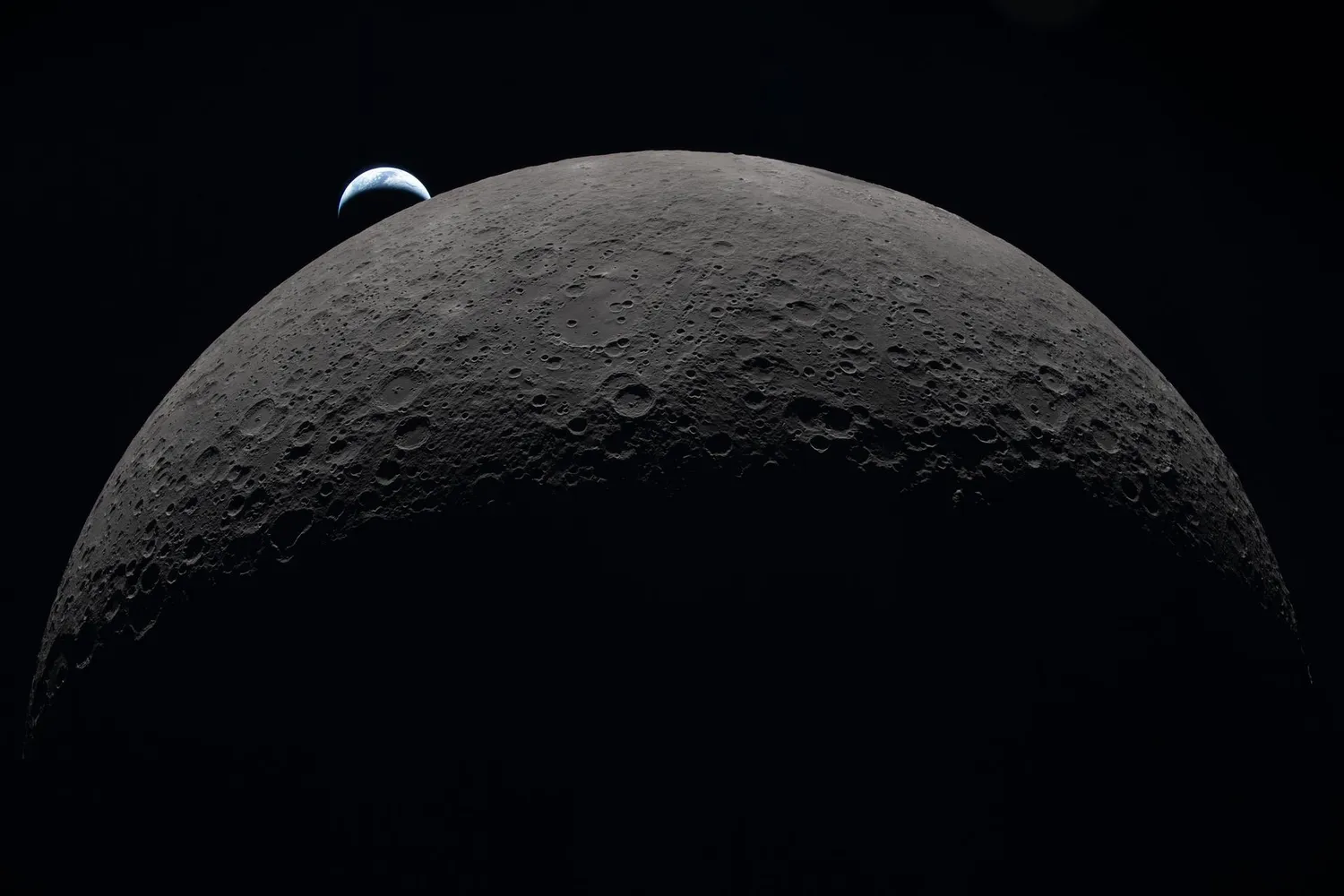
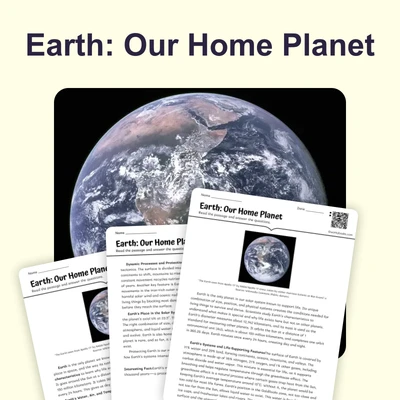
The dark portion of Earth is experiencing nighttime. On Earth’s day side, swirling clouds are visible over the Australia and Oceania region. "A New View of the Moon" / NASA (Public domain).
Is there really a dark side of the Moon? The answer is no. This common misconception confuses many people. Both sides of the Moon receive equal amounts of sunlight. The phrase "dark side" actually refers to the side we cannot see from Earth, not a side that stays dark.
The Moon rotates on its axis just like Earth does. However, the Moon's rotation works in a special way. Scientists call this synchronous rotation. The Moon takes about 27.3 days to complete one full rotation. It also takes 27.3 days to complete one orbit around Earth. Because these two motions take the same amount of time, the same side of the Moon always faces Earth. We call the side facing Earth the near side. The opposite side is called the far side.
Evidence shows that both sides receive sunlight as the Moon orbits Earth. When the Moon passes between Earth and the Sun, the far side gets full sunlight. During this time, we see a new moon from Earth. When Earth is between the Moon and the Sun, the near side receives full sunlight. We observe a full moon during this phase. The lunar cycle demonstrates that sunlight reaches all parts of the Moon over time.
Scientists first saw the far side in 1959 when a Soviet spacecraft photographed it. The images revealed a surface very different from the near side. The far side has more craters and fewer dark plains called maria. Apollo astronauts orbited the Moon and observed both sides directly. In 2019, China's Chang'e 4 mission became the first spacecraft to land on the far side. These missions prove that the far side receives just as much sunlight as the near side.
Understanding the Moon's rotation matters for space exploration and scientific research. The far side offers unique opportunities for astronomy. Radio telescopes placed there would be shielded from Earth's radio signals. This location could help scientists detect faint signals from distant parts of the universe. Accurate knowledge about the Moon's illumination patterns also helps engineers plan future lunar bases and missions.
Interesting Fact: The far side of the Moon is sometimes called the "dark side" in popular culture, but astronauts who have orbited the Moon report that it can be just as bright as the near side when the Sun shines on it.
Comprehension quiz (10 questions)
1. What does the phrase 'dark side of the Moon' actually refer to?
2. How long does it take the Moon to complete one rotation on its axis?
3. What is synchronous rotation?
4. When do we see a full moon from Earth?
5. According to the passage, what does the term 'maria' mean?
6. Why would the far side of the Moon be a good location for radio telescopes?
7. What evidence shows that both sides of the Moon receive sunlight?
8. Which mission was the first to land on the far side of the Moon?
9. True or False: The far side of the Moon has more craters than the near side.
10. True or False: The same side of the Moon always stays completely dark.
Perfect for the way you teach
- Build comprehension skills
- Auto-graded quiz
- Differentiated reading
- Read together at home
- Improve fluency
- Quiet reading time
- Reading curriculum support
- Independent practice
- Track Lexile growth