Islamic Art and Architecture
Interactive passage with audio narration, comprehension questions, and printable PDF.
By completing this purchase you agree to our Terms of Use and Privacy Policy. Your subscription renews automatically until you cancel. You can cancel anytime from your account settings. All sales are final and non-refundable. Digital content is available for download in your account immediately upon purchase.
What's included
Islamic Art and Architecture preview and details
About this printable Islamic Art and Architecture reading passage (Grades 5-8)
Sample passage and quiz from Islamic Art and Architecture
Reading passage and comprehension quiz preview
Islamic Art and Architecture
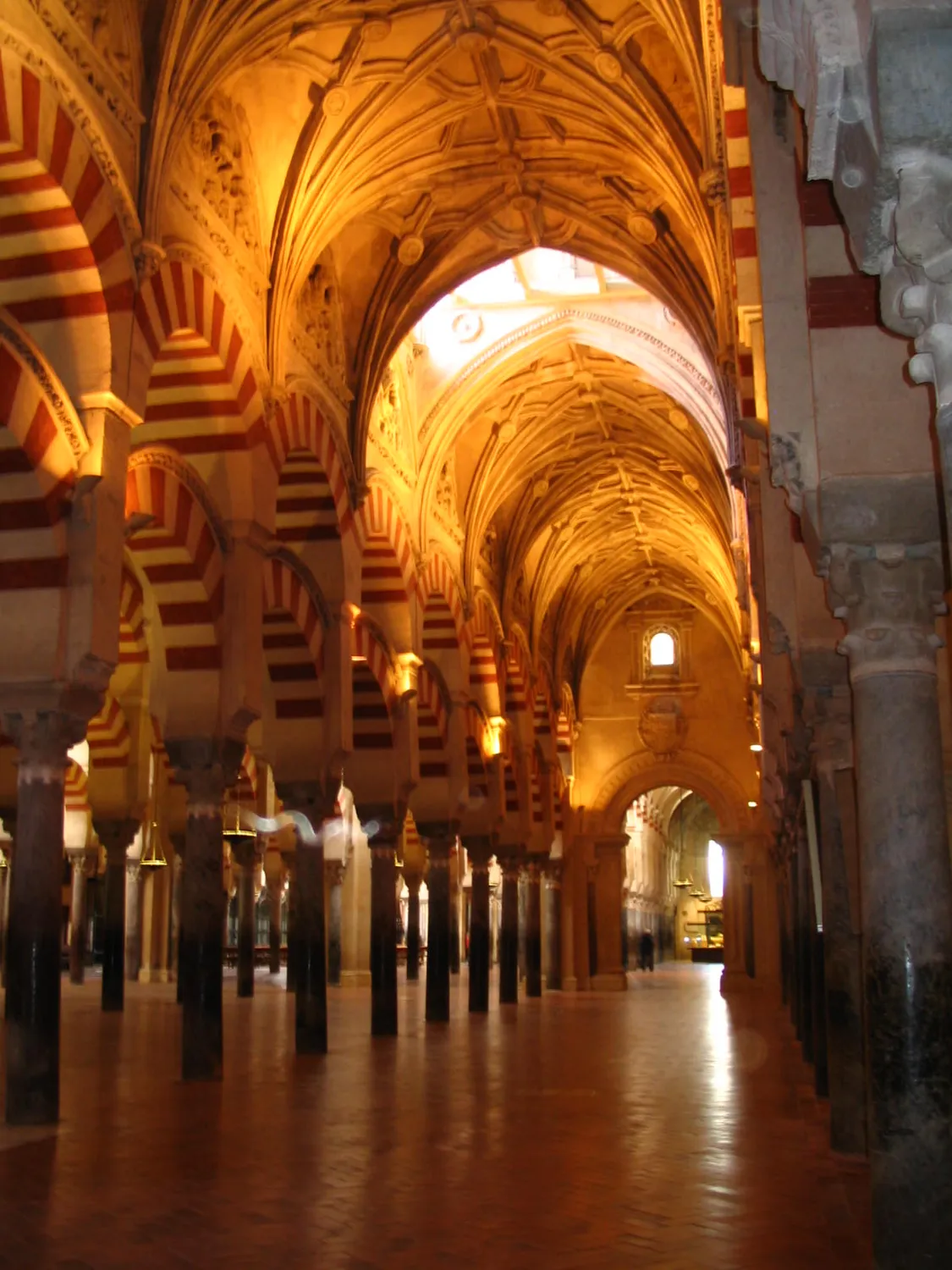
"Mezquita de Córdoba (Spain)" by Pistachoveloz assumed (based on copyright claims). / Wikimedia Commons.
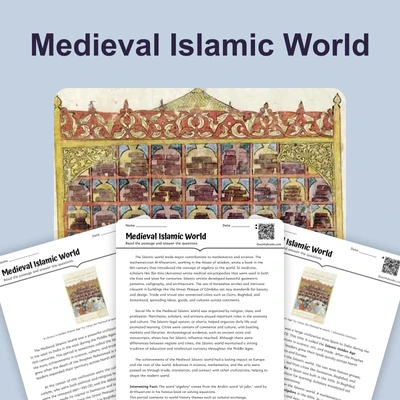
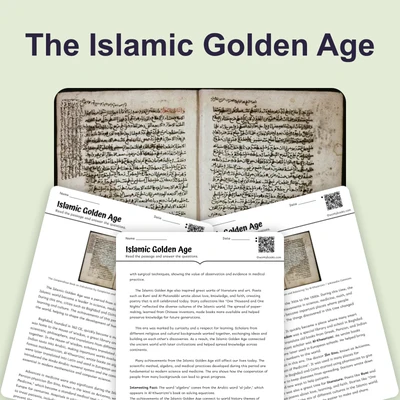
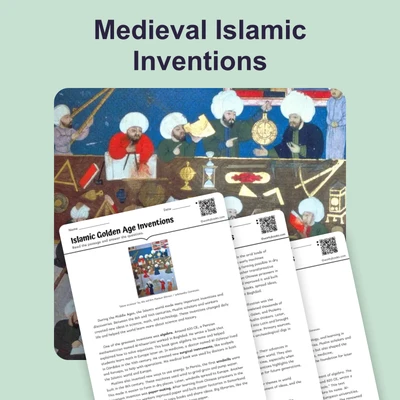
Islamic art and architecture developed across the Middle East, North Africa, and parts of Europe after the rise of Islam in the 7th century CE. This art form is known for its distinctive geometric patterns, elegant calligraphy, and the famous domes and arches seen in mosques. Islamic artists and builders created unique designs that reflected their religious beliefs and local cultures.
During the Middle Ages, cities like Baghdad, Cairo, and Córdoba became centers of learning and artistic achievement. One of the most important structures in Islamic society is the mosque, a place for Muslim worship. Mosques are designed to focus attention on prayer, using open courtyards, prayer halls, and a mihrab—a niche in the wall indicating the direction of Mecca. The Great Mosque of Córdoba in Spain, built in the 8th century, is famous for its double arches and striking columns. Another example, the Dome of the Rock in Jerusalem (completed in 691 CE), features a golden dome and beautiful tilework, showing the influence of Byzantine and Persian art.
One key feature of Islamic art is the use of arabesque designs—repeating, intertwining patterns of leaves, vines, and geometric shapes. Artists avoided portraying human or animal figures in religious art to follow Islamic teachings that discourage the worship of images. Instead, they used calligraphy to decorate buildings and objects with verses from the Qur’an, the holy book of Islam. This made writing itself an important art form. For example, the Alhambra palace in Granada, Spain, is decorated with intricate Arabic script and elaborate patterns carved into stone and plaster.
Islamic architecture often includes large domes, pointed arches, and tall minarets, which are towers used to call people to prayer. The use of glazed tiles and colored mosaics added vibrant color and detail to walls and floors. Over time, these artistic traditions spread from the Middle East to India, Africa, and even parts of Europe, influencing other cultures and styles. Islamic art was not only used in religious settings but also in daily life, from ceramics and carpets to metalwork and textiles.
Islamic art and architecture helped unite people across different regions, expressing a shared faith and identity. These artistic achievements continue to inspire designers and architects worldwide. The focus on patterns, mathematics, and beautiful writing reflects both the religious values and the creative spirit of the Islamic world.
This study of Islamic art connects to broader world history themes of cultural exchange, religion, and the impact of geography on human creativity.
Interesting Fact: The famous blue tiles of the Shah Mosque in Isfahan, Iran, were created by hand using mathematical calculations to ensure perfect patterns.
Comprehension quiz (8 questions)
1. Where did Islamic art first develop?
2. What is a mosque?
3. Why are human images rare in Islamic religious art?
4. What is a mihrab?
5. How did Islamic art spread to other regions?
6. What made writing important in Islamic art?
7. Islamic art inspired later artists. True or false?
8. What is an arabesque?
Perfect for the way you teach
- Build comprehension skills
- Auto-graded quiz
- Differentiated reading
- Read together at home
- Improve fluency
- Quiet reading time
- Reading curriculum support
- Independent practice
- Track Lexile growth