John Milton Paradise Lost
Interactive passage with audio narration, comprehension questions, and printable PDF.
By completing this purchase you agree to our Terms of Use and Privacy Policy. Your subscription renews automatically until you cancel. You can cancel anytime from your account settings. All sales are final and non-refundable. Digital content is available for download in your account immediately upon purchase.
What's included
John Milton Paradise Lost preview and details
About this printable John Milton Paradise Lost reading passage (Grades 5-8)
Sample passage and quiz from John Milton Paradise Lost
Reading passage and comprehension quiz preview
John Milton Paradise Lost
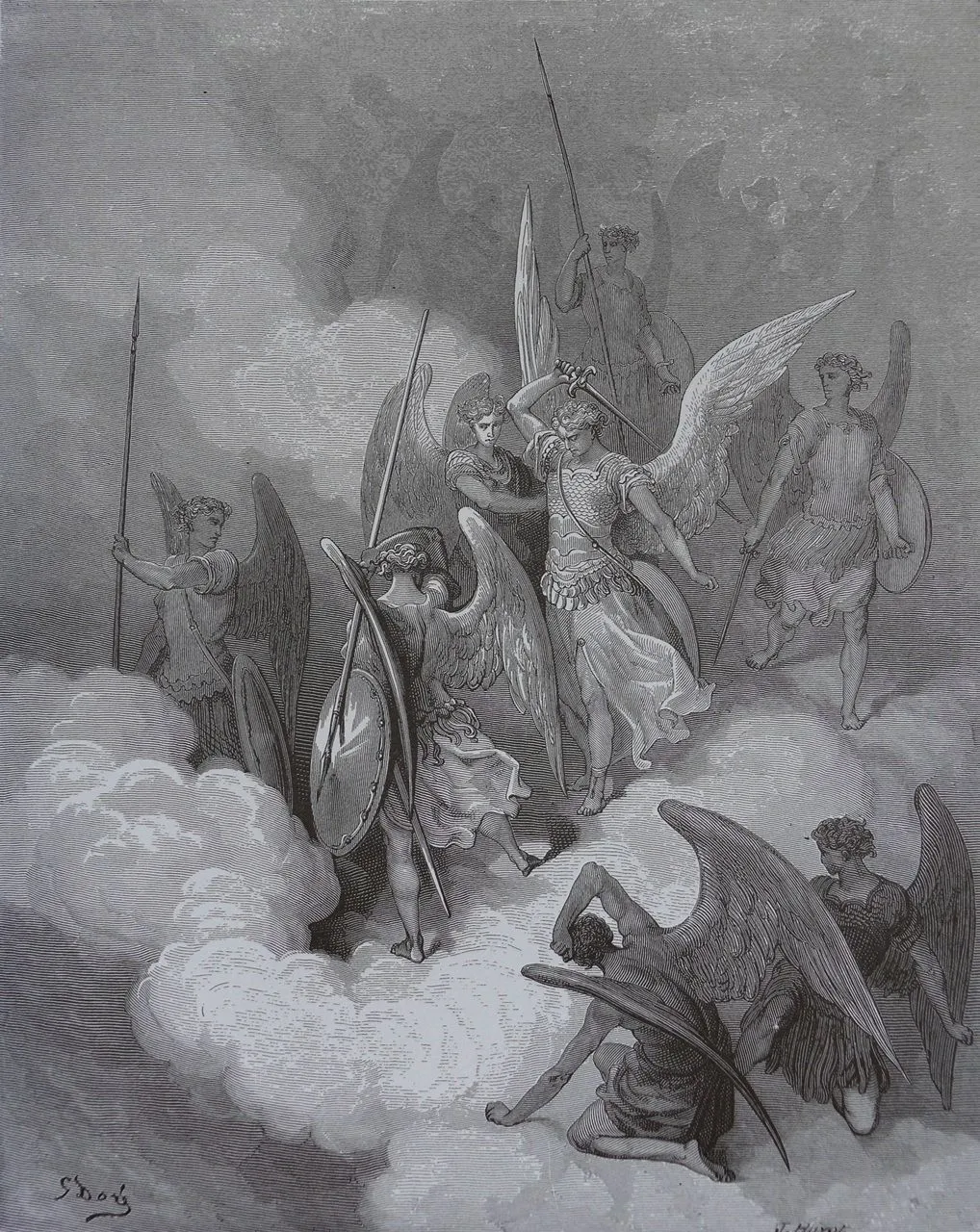
"Paradise Lost" by Gustave Doré / Wikimedia Commons.
John Milton’s Paradise Lost is one of the most significant works of English literature, written in the 17th century during the later period of the Renaissance. The poem tells the story of the biblical fall of man—how Adam and Eve, the first humans, disobeyed God and were expelled from the Garden of Eden. Published in 1667, Paradise Lost is an epic poem, meaning it is a long, narrative work that explores grand themes like good and evil, obedience, and free will.
The Renaissance was a time of great change and creativity in Europe, roughly from the 1300s to the 1600s. In England, writers and thinkers were inspired by classical ideas from ancient Greece and Rome, but they also explored new ways of understanding religion, science, and art. John Milton (1608-1674) was deeply influenced by both his Christian faith and the intellectual spirit of the Renaissance. He wrote Paradise Lost in blank verse (unrhymed iambic pentameter), a style that gave the poem a powerful and serious tone.
Milton crafted his poem during a period of political and religious upheaval in England. He was personally involved in debates about government and liberty, and some historians believe his own experiences shaped his depiction of rebellion and authority in Paradise Lost. The poem’s main source is the Book of Genesis from the Bible, but Milton also drew from classical epics like Homer’s Iliad and Virgil’s Aeneid. For example, when Satan, the poem’s central antagonist, declares, “Better to reign in Hell than serve in Heaven,” Milton uses classical techniques to show the complexity of his characters. Primary sources such as Milton’s own letters and early editions of the poem reveal his careful attention to structure and theme.
The impact of Paradise Lost was enormous. It influenced writers such as William Blake and Mary Shelley and shaped the way later generations understood the story of Adam and Eve. Its vocabulary and imagery enriched the English language, and its exploration of free will and moral choice remains relevant. Scholars also note that Milton’s poem reflects the broader Renaissance concern with human nature and the limits of knowledge. Over time, the work has been interpreted in many ways—sometimes as a religious warning, sometimes as a study of freedom and temptation.
In summary, Paradise Lost stands as a masterpiece of epic poetry, connecting biblical themes with Renaissance ideas and leaving a lasting mark on literature and culture. Its creation and legacy reveal how art can express the hopes, fears, and beliefs of an entire era.
Interesting Fact: John Milton was blind when he wrote most of Paradise Lost. He dictated the entire poem to assistants who wrote it down for him.
This passage connects to broader course themes of how art, literature, and belief systems reflect and shape world history.
Comprehension quiz (8 questions)
1. When was Paradise Lost published?
2. Who is the author of Paradise Lost?
3. What is the main source for Paradise Lost?
4. Why did Milton use blank verse?
5. How did Milton’s life influence the poem?
6. What is one major theme of Paradise Lost?
7. Paradise Lost was written after Milton became blind.
8. What does 'epic' mean in literature?
Perfect for the way you teach
- Build comprehension skills
- Auto-graded quiz
- Differentiated reading
- Read together at home
- Improve fluency
- Quiet reading time
- Reading curriculum support
- Independent practice
- Track Lexile growth