This learning resource is available in interactive and printable formats. The interactive worksheet can be played online and assigned to students. The Printable PDF version can be downloaded and printed for completion by hand.
This passage explores the historical significance of the Magna Carta, focusing on how English barons compelled King John to sign this landmark document in 1215. Students will learn about the causes and effects of the Magna Carta, its connection to social hierarchy, and its enduring influence on legal systems. The reading includes analysis of primary sources, a chronological timeline, and glossary of key terms. The passage meets CA HSS 7.6.5 and CCSS RH.6-8.1 standards, and is accompanied by a Spanish translation, read aloud audio, and comprehension activities. Designed for middle school learners, this resource encourages students to analyze cause-and-effect relationships and understand the Magna Carta's lasting impact on world history.
CONTENT PREVIEW
Expand content preview
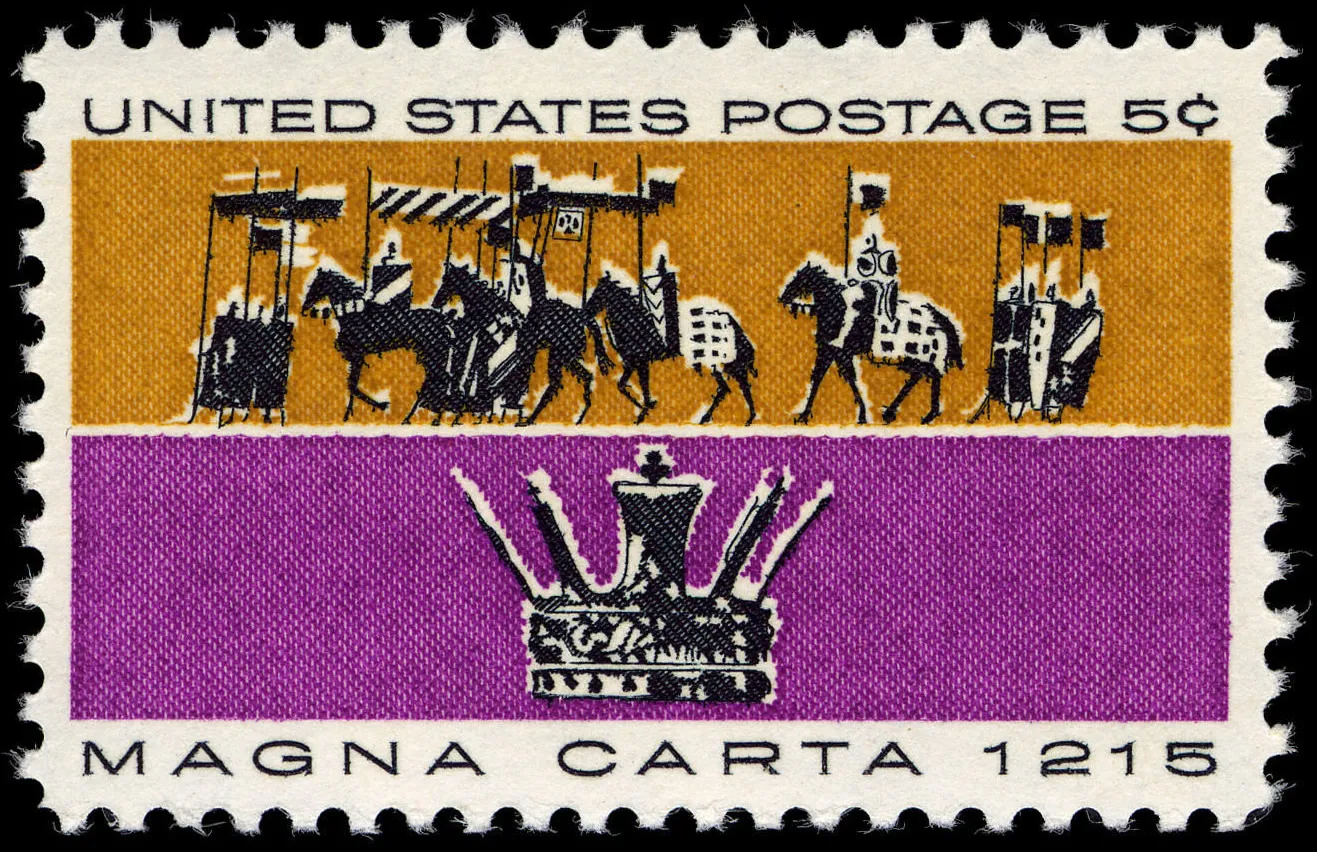
Magna Carta 5c 1965 issue U.S. stamp by Bureau of Engraving and Printing. Designed by Brook Temple. Wikimedia Commons
The Magna Carta is one of the most famous documents in world history. In June 1215, a group of powerful English barons forced King John to sign this historic charter at Runnymede, a meadow by the River Thames. The Magna Carta, which means "Great Charter" in Latin, was designed to limit the king’s power and protect certain rights for the nobility and, eventually, all free people.
During the early 13th century, England was facing political and economic turmoil. King John, who ruled from 1199 to 1216, had increased taxes and lost important lands in France. His harsh methods and frequent demands for money angered many nobles. The barons believed that King John was not respecting traditional feudal customs and was abusing his authority. In 1215, after failed negotiations, the barons rebelled and occupied London, forcing the king to meet their demands.
The Magna Carta consisted of 63 clauses, many of which addressed feudal rights and the relationship between the king and his subjects. Some of the most important clauses established the principle that the king was not above the law. For example, Clause 39 stated that no free man could be imprisoned or punished without the judgment of his peers or by the law of the land. This idea introduced the concept of due process and trial by jury. Another key clause protected the right of the Church to be free from royal interference.
Primary sources reveal how the Magna Carta was sealed in front of witnesses, including bishops, barons, and royal officials. A copy from the British Library still survives today. Although the Magna Carta was originally intended to protect the rights of the nobility, over time its principles influenced the development of constitutional government and individual rights in England and beyond. The Magna Carta was reissued several times, with each version strengthening its legacy.
The Magna Carta’s significance goes beyond medieval England. Its core ideas later inspired the writers of the United States Constitution and the Universal Declaration of Human Rights. By challenging the idea of unlimited royal power, the Magna Carta became a symbol of liberty and justice. Its message—that even rulers must obey the law—continues to shape political systems around the world.
This event connects to broader themes in world history, such as the rise of representative government and the struggle for rights and equality.
Interesting Fact: Only four original copies of the 1215 Magna Carta still exist, and they are kept in museums and libraries in England.
When was Magna Carta signed?
1215106613001199
Who was forced to sign Magna Carta?
King JohnKing HenryKing RichardKing Edward
Where was Magna Carta signed?
RunnymedeLondonParisCanterbury
Why did barons rebel against King John?
High taxes and lost landReligious reasonsForeign invasionNo heir to throne
What is due process?
Fair legal treatmentFarming methodRoyal ceremonyChurch festival
What did Clause 39 protect?
Right to fair trialKing's familyForeign tradeChurch taxes
Magna Carta influenced later laws. True or false?
TrueFalse
What is a charter?
Written document of rightsType of buildingBattle strategyReligious leader
Perfect For:
👩🏫 Teachers
• Reading comprehension practice
• Auto-graded assessments
• Literacy skill development
👨👩👧👦 Parents
• Reading practice at home
• Comprehension improvement
• Educational reading time
🏠 Homeschoolers
• Reading curriculum support
• Independent reading practice
• Progress monitoring
Reading Features:
📖
Reading Passage
Engaging fiction or nonfiction text
❓
Comprehension Quiz
Auto-graded questions
📊
Instant Feedback
Immediate results and scoring
📄
Printable Version
Download for offline reading
🔊
Read Aloud
Voice-over with word highlighting
Reviews & Ratings
No reviews yet. Be the first to share your experience!
Related Content
Middle Ages Legacy
This history reading passage examines the lasting legacy of the Middle Ages, including the development of universities, ...
Early Middle Ages
This comprehensive reading passage explores the Early Middle Ages (500-1000 CE), a transformative period in European his...
High Middle Ages
This detailed world history reading passage explores the High Middle Ages (1000-1300 CE), a transformative era in Europe...
What Were the Middle Ages?
This engaging world history reading passage introduces students to the Middle Ages, the period in European history betwe...
Late Middle Ages
This rigorous world history reading passage explores the Late Middle Ages (1300-1500 CE), a time marked by the devastati...
Dark Ages
This passage offers a rigorous, engaging examination of why the early Middle Ages are often called the 'Dark Ages.' Stud...
Life in Middle Ages
This rigorous history reading passage explores life in Europe during the Middle Ages, focusing on the structure of feuda...
Medieval Islamic World
This rigorous reading passage delves into the Medieval Islamic World's golden age, when a vast civilization stretched fr...
Islamic Golden Age
This history reading passage explores the Islamic Golden Age, a period from the 8th to 14th centuries marked by outstand...
Medieval to Modern Transition
This engaging world history reading passage explores the dramatic transformation from the Middle Ages to the modern era,...
Medieval Words in English
This engaging history reading passage examines the evolution of the English language during the Middle Ages, focusing on...
Age of Exploration Begins
This engaging history reading passage explores the Age of Exploration, a turning point in world history when European po...
Italian City-States
This passage explores the rise and significance of the Italian city-states—Venice, Florence, and Genoa—during the Middle...
Attila the Hun
This engaging world history reading passage examines Attila the Hun, a powerful and feared ruler during the Middle Ages....
Medieval Guilds
This engaging world history reading passage explores the important role of guilds—worker groups that shaped the economy ...
Medieval Christian Worship
This detailed passage examines how people worshiped during the Middle Ages, focusing on essential religious practices su...
Power of the Pope
This history reading passage examines the power of the pope during the Middle Ages, focusing on his role as spiritual le...
Carolingian Renaissance
This engaging world history passage explores how Charlemagne, ruler of the Franks, transformed education and learning in...
Islamic Golden Age Inventions
This world history reading passage explores the remarkable inventions and scientific advances made in the medieval Islam...
Medieval Agricultural Innovations
This history reading passage explores how farming inventions like the heavy plow, three-field system, and horse collar r...