Medieval Battle Tactics
Interactive passage with audio narration, comprehension questions, and printable PDF.
By completing this purchase you agree to our Terms of Use and Privacy Policy. Your subscription renews automatically until you cancel. You can cancel anytime from your account settings. All sales are final and non-refundable. Digital content is available for download in your account immediately upon purchase.
What's included
Medieval Battle Tactics preview and details
About this printable Medieval Battle Tactics reading passage (Grades 5-8)
Sample passage and quiz from Medieval Battle Tactics
Reading passage and comprehension quiz preview
Medieval Battle Tactics
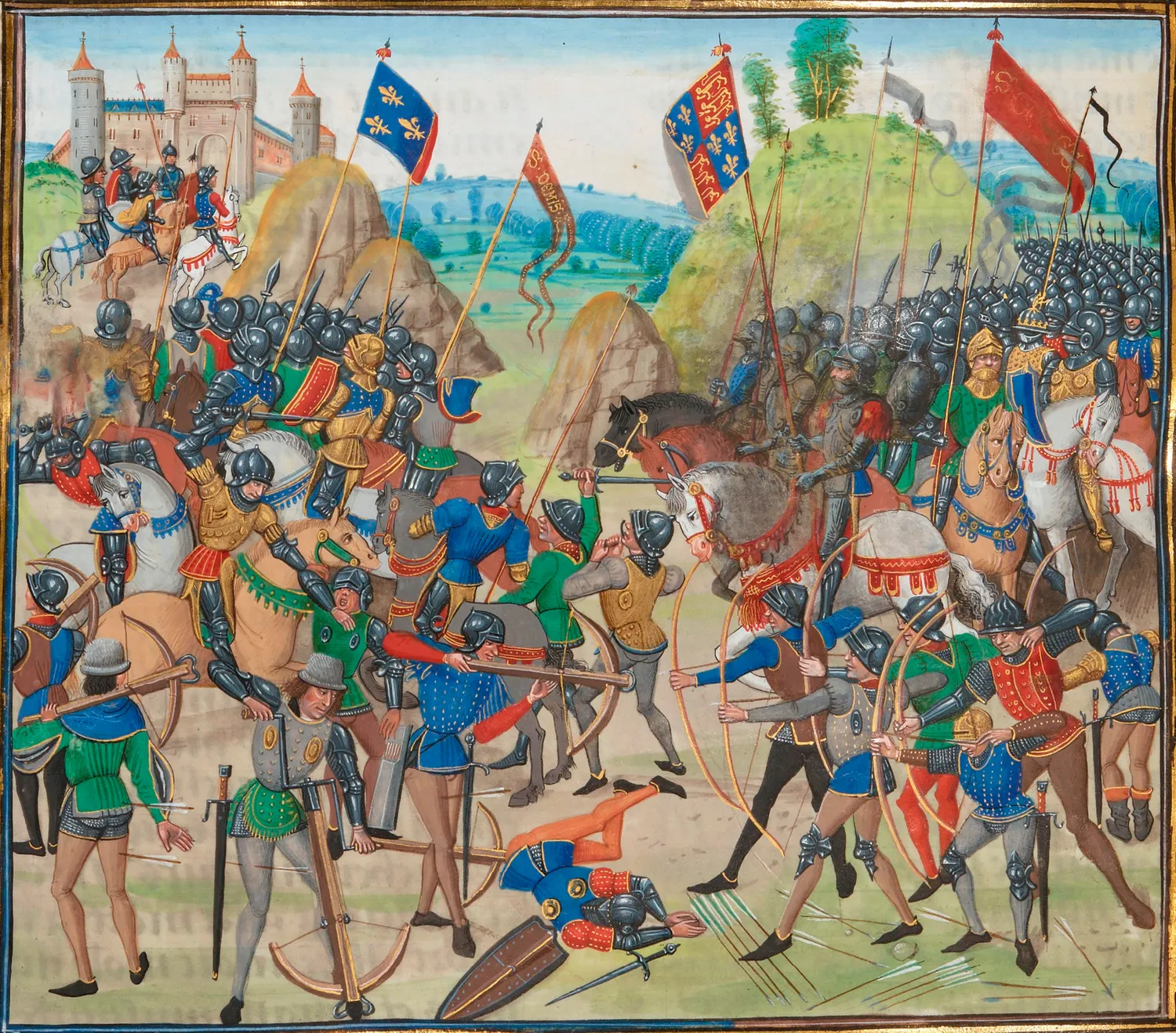
"Battle of crecy froissart" by Loyset Liédet / Wikimedia Commons.
The Middle Ages, also known as the medieval period, saw the rise of distinctive battle tactics that shaped European warfare from about 500 to 1500 CE. Armies relied on cavalry, infantry, and skilled archers to win battles and defend territories. These tactics not only determined victory or defeat in famous conflicts but also influenced the daily lives and social hierarchy of people across medieval Europe.
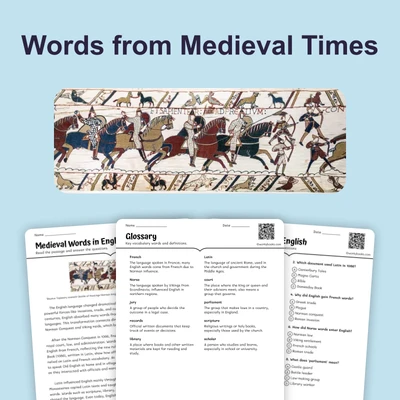
One of the most important strategies was the use of cavalry charges. Mounted knights, often from the noble class, wore heavy armor and rode trained horses. Their ability to move quickly and break enemy lines was a powerful advantage. For example, at the Battle of Hastings in 1066, Norman cavalry played a crucial role in defeating the English forces. The Bayeux Tapestry, embroidered shortly after the battle, provides a primary source showing knights charging with lances, highlighting the impact of cavalry shock attacks.
Infantry, or foot soldiers, formed the backbone of medieval armies. They often fought in tight formations, such as the shield wall or pike square. These groups could defend against cavalry by using long spears or shields locked together. Archaeological evidence from the Battle of Visby in 1361, where many soldiers' skeletons were found still wearing armor, reveals how infantry faced deadly challenges. Over time, the development of new infantry weapons, like the English longbow and the Swiss halberd, changed the balance of power on the battlefield.
Archers and crossbowmen added another layer of strategy. English longbowmen at the Battle of Agincourt in 1415, for example, used rapid volleys of arrows to weaken French knights before they reached the English lines. This tactic was especially effective in muddy terrain, where heavy cavalry struggled to charge. Siege warfare was also common. Armies built siege engines like catapults and trebuchets to break castle walls or gates during long attacks on fortified cities. The siege of Orléans in 1429, where Joan of Arc led French forces, shows how leadership and new tactics could change the outcome of a standoff.
Medieval battle tactics reflected the resources, technology, and social structure of their time. Nobles with wealth could afford armor and horses, while peasants often served as infantry. Geography, such as rivers or hills, influenced where battles took place and what tactics worked best. Over centuries, the constant struggle for power led to the improvement of weapons and strategies. Understanding these military methods helps us see how warfare shaped medieval society and influenced the development of Europe.
These tactics connect to larger themes in world history, such as the role of technology, leadership, and geography in shaping societies.
Interesting Fact: The word "knight" comes from the Old English "cniht," meaning servant, showing how social roles changed over time.
Comprehension quiz (8 questions)
1. Who used cavalry charges at Hastings?
2. What helped English win at Agincourt?
3. When did the Battle of Visby occur?
4. Why did archers matter in battle?
5. How did geography affect tactics?
6. What did siege engines do?
7. Cavalry were soldiers on horseback. True or false?
8. What does 'infantry' mean?
Perfect for the way you teach
- Build comprehension skills
- Auto-graded quiz
- Differentiated reading
- Read together at home
- Improve fluency
- Quiet reading time
- Reading curriculum support
- Independent practice
- Track Lexile growth