This learning resource is available in interactive and printable formats. The interactive worksheet can be played online and assigned to students. The Printable PDF version can be downloaded and printed for completion by hand.
This engaging world history reading passage examines the design, purpose, and daily life within medieval castles. Students will learn how features like moats, thick walls, and towers protected people during the Middle Ages, while also exploring archaeological evidence and historical examples such as the Tower of London and Krak des Chevaliers. The passage supports critical thinking with vocabulary, timelines, and comparison of defensive tactics. Activities include comprehension quizzes, writing prompts, graphic organizers, and both English and Spanish versions, making it ideal for diverse classrooms. Aligned with CA HSS 7.2 and CCSS RH.6-8.2, this resource also includes a glossary and coloring page prompt, and provides opportunities to analyze cause and effect, continuity and change, and the broader impact of castles on European society.
CONTENT PREVIEW
Expand content preview
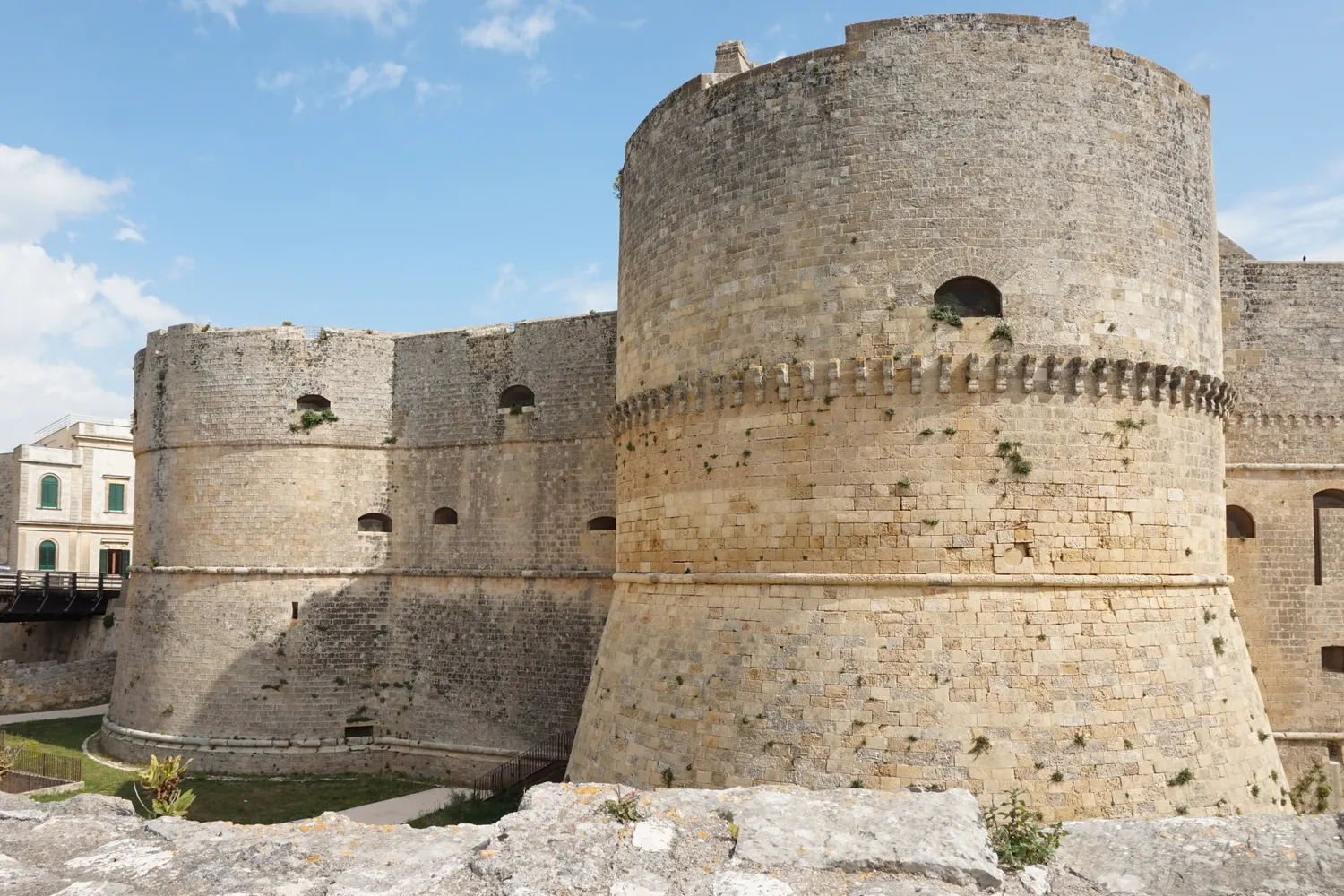
"Castle of Otranto" by Bernard Gagnon / Wikimedia Commons.
Castles were powerful fortresses built across Europe and the Middle East during the Middle Ages, roughly from 900 to 1500 CE. Rulers, nobles, and military leaders constructed these massive structures for both defense and control over their lands. Castles were not only military strongholds but also the homes and administrative centers for the people who lived there. Their design, location, and daily use reveal much about the societies that built them.
A typical castle was designed for maximum defense. Builders selected strategic locations—such as hilltops or river bends—to make attacks more difficult. Thick stone walls, often several meters wide, protected those inside from arrows and battering rams. Many castles were surrounded by a moat, a deep ditch filled with water, which prevented attackers from easily reaching the walls. The only way in was often a drawbridge, which could be raised in times of danger. Tall towers gave guards a clear view of the surrounding area and allowed defenders to spot enemies from far away. Arrow slits—narrow window openings—let archers shoot at attackers while remaining protected.
Inside the castle, life reflected the social hierarchy of the Middle Ages. The lord and his family lived in the most comfortable rooms, often in the central keep or great hall. Servants, soldiers, and craftsmen occupied smaller, more crowded quarters. Archaeological evidence, such as pottery shards and food remains found in places like the Tower of London, shows what people ate and how they worked. Documents from the 12th century describe daily routines: cooking, cleaning, training for battle, and even religious ceremonies held in castle chapels. Castles also stored supplies to withstand long sieges—a key strategy during wars like the Crusades.
Castles were centers of power that influenced the development of medieval society. Their designs changed over time as warfare technology advanced. For example, the stone walls of Krak des Chevaliers in Syria (built in the 12th century) were reinforced after attackers learned to use siege engines. The presence of castles helped rulers control large territories and provided protection for nearby villages. Over centuries, as gunpowder and cannons made stone walls less effective, castles lost their military purpose but remained important symbols of authority and history.
The story of castles connects to the broader history of human innovation, community, and conflict. Studying castles helps us understand how geography, technology, and social organization shaped the Middle Ages and beyond.
Interesting Fact: The Tower of London once housed a royal menagerie with lions, elephants, and even a polar bear, gifted to the English king in the 13th century.
When were most castles built?
900-1500 CE500-800 CE1500-1800 CE1800-2000 CE
What is a moat?
Deep ditch with waterTall stone towerWooden bridgeUnderground tunnel
Who lived in the keep?
The lord and familyFarmersVisitorsVillage children
Why were castles built on hills?
For better defenseTo grow cropsNear waterTo hold markets
How did castle design change over time?
Walls became strongerCastles became smallerNo guards were neededThey moved underground
What does archaeological evidence tell us?
Daily life in castlesWeather patternsMarket pricesModern buildings
Castles are still used for defense today.
TrueFalse
What is a "drawbridge"?
Bridge that raisesStone wallCastle windowAnimal shelter
Perfect For:
👩🏫 Teachers
• Reading comprehension practice
• Auto-graded assessments
• Literacy skill development
👨👩👧👦 Parents
• Reading practice at home
• Comprehension improvement
• Educational reading time
🏠 Homeschoolers
• Reading curriculum support
• Independent reading practice
• Progress monitoring
Reading Features:
📖
Reading Passage
Engaging fiction or nonfiction text
❓
Comprehension Quiz
Auto-graded questions
📊
Instant Feedback
Immediate results and scoring
📄
Printable Version
Download for offline reading
🔊
Read Aloud
Voice-over with word highlighting
Reviews & Ratings
No reviews yet. Be the first to share your experience!
Related Content
Middle Ages Legacy
This history reading passage examines the lasting legacy of the Middle Ages, including the development of universities, ...
Early Middle Ages
This comprehensive reading passage explores the Early Middle Ages (500-1000 CE), a transformative period in European his...
High Middle Ages
This detailed world history reading passage explores the High Middle Ages (1000-1300 CE), a transformative era in Europe...
What Were the Middle Ages?
This engaging world history reading passage introduces students to the Middle Ages, the period in European history betwe...
Late Middle Ages
This rigorous world history reading passage explores the Late Middle Ages (1300-1500 CE), a time marked by the devastati...
Dark Ages
This passage offers a rigorous, engaging examination of why the early Middle Ages are often called the 'Dark Ages.' Stud...
Life in Middle Ages
This rigorous history reading passage explores life in Europe during the Middle Ages, focusing on the structure of feuda...
Medieval Islamic World
This rigorous reading passage delves into the Medieval Islamic World's golden age, when a vast civilization stretched fr...
Islamic Golden Age
This history reading passage explores the Islamic Golden Age, a period from the 8th to 14th centuries marked by outstand...
Medieval to Modern Transition
This engaging world history reading passage explores the dramatic transformation from the Middle Ages to the modern era,...
Medieval Words in English
This engaging history reading passage examines the evolution of the English language during the Middle Ages, focusing on...
Age of Exploration Begins
This engaging history reading passage explores the Age of Exploration, a turning point in world history when European po...
Italian City-States
This passage explores the rise and significance of the Italian city-states—Venice, Florence, and Genoa—during the Middle...
Attila the Hun
This engaging world history reading passage examines Attila the Hun, a powerful and feared ruler during the Middle Ages....
Medieval Guilds
This engaging world history reading passage explores the important role of guilds—worker groups that shaped the economy ...
Medieval Christian Worship
This detailed passage examines how people worshiped during the Middle Ages, focusing on essential religious practices su...
Power of the Pope
This history reading passage examines the power of the pope during the Middle Ages, focusing on his role as spiritual le...
Carolingian Renaissance
This engaging world history passage explores how Charlemagne, ruler of the Franks, transformed education and learning in...
Islamic Golden Age Inventions
This world history reading passage explores the remarkable inventions and scientific advances made in the medieval Islam...
Medieval Agricultural Innovations
This history reading passage explores how farming inventions like the heavy plow, three-field system, and horse collar r...