This learning resource is available in interactive and printable formats. The interactive worksheet can be played online and assigned to students. The Printable PDF version can be downloaded and printed for completion by hand.
This reading passage introduces students to the world of medieval cathedral building, delving into the complex process that spanned generations and involved entire communities. Students will explore the architectural innovations, the roles of skilled craftsmen such as stonemasons and carpenters, and the religious devotion that inspired these magnificent structures. The passage highlights famous examples like Chartres Cathedral and Notre-Dame de Paris, discusses the challenges faced, and explains the significance of cathedrals in medieval society. Activities include a multiple-choice quiz, writing prompts, graphic organizers, a glossary, and both English and Spanish versions. This comprehensive history reading passage aligns with CA HSS 7.6 and CCSS RH.6-8.2 standards, and includes audio and Spanish translation for accessibility. Ideal for teaching students about the human ingenuity and communal efforts of the Middle Ages.
CONTENT PREVIEW
Expand content preview
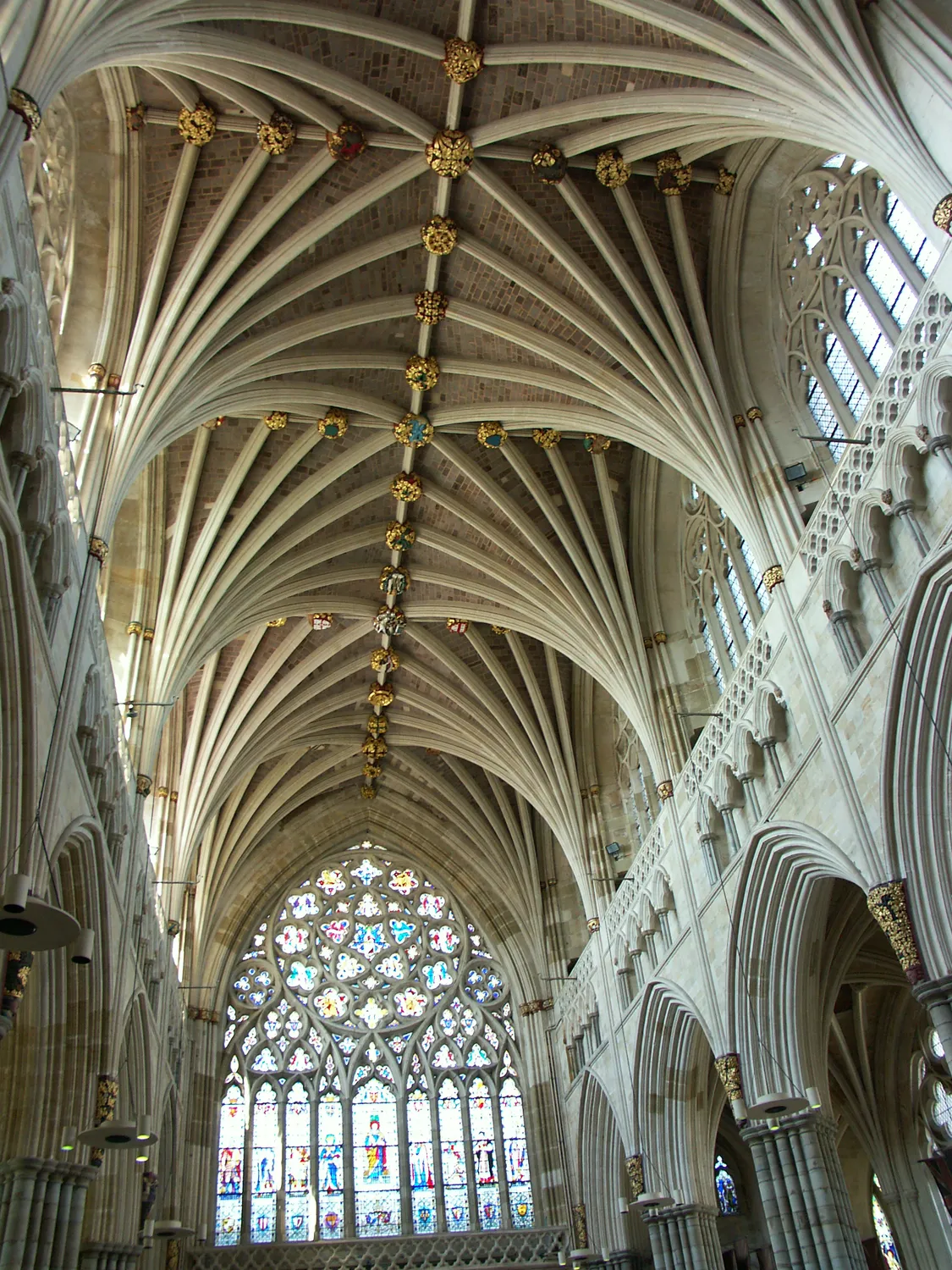
"Exeter cathedral" by Wanner-Laufer / Wikimedia Commons.
The construction of medieval cathedrals was one of the most ambitious architectural projects in European history. During the Middle Ages, from about 1000 to 1500 CE, communities across Western Europe built grand cathedrals that often took decades or even centuries to complete. These buildings were not only places of worship but also symbols of religious devotion, civic pride, and technical skill.
Cathedral construction required careful planning, a skilled workforce, and significant resources. The process usually began with a bishop or local ruler deciding to build a new cathedral, often as a way to display power or honor God. The town would raise funds through taxes, donations, or the sale of indulgences. The design was crafted by a master mason, who acted as both architect and project manager. The master mason drew detailed plans and supervised workers like stonemasons, carpenters, glassmakers, and laborers. For example, the construction of Notre-Dame de Paris began in 1163 and was not completed until 1345, involving several generations of workers.
Cathedrals were often built in the Gothic style, which featured tall pointed arches, ribbed vaults, and large stained glass windows. These features allowed cathedrals to reach impressive heights and fill their interiors with colorful light. To support these massive structures, builders used flying buttresses—arched supports on the outside walls. Chartres Cathedral, completed around 1220, is known for its beautiful rose windows and intricate sculpture. Archaeological evidence, such as stone marks left by individual masons, shows that each worker had a unique role and took pride in their craft.
The construction of cathedrals was a true community effort. People from all social classes contributed, from wealthy nobles who donated money to peasants who carried stones. Many workers saw their labor as a form of religious service. Cathedrals also shaped daily life, serving as centers for festivals, markets, and education. Over time, new techniques and tools improved construction, but the central role of teamwork and faith remained unchanged.
Medieval cathedrals continue to inspire people today as symbols of human achievement and devotion. They remind us of the creativity, perseverance, and collaboration that shaped European society during the Middle Ages.
This study of medieval cathedrals connects to broader themes in world history, such as technological innovation, community cooperation, and the influence of religion on society.
Interesting Fact: Some cathedrals, like the Sagrada Familia in Spain, have taken over a hundred years to build and are still under construction today.
When did cathedral building flourish in Europe?
1000-1500 CE500-800 CE1500-1700 CE800-1000 CE
Who usually designed the cathedral plans?
Master masonKingPriestPeasant
Which city is home to Chartres Cathedral?
ChartresLondonRomeMadrid
Why were flying buttresses used?
To support tall wallsTo decorate windowsTo store toolsTo light candles
What effect did cathedrals have on daily life?
Became community centersReplaced castlesClosed marketsEnded religious practice
What was a cause of cathedral construction?
Religious devotionFinding goldFighting warsGrowing crops
Cathedral building always took less than 10 years.
TrueFalse
What does 'innovation' mean in the passage?
A new idea or methodA type of stoneA church leaderA window design
Perfect For:
👩🏫 Teachers
• Reading comprehension practice
• Auto-graded assessments
• Literacy skill development
👨👩👧👦 Parents
• Reading practice at home
• Comprehension improvement
• Educational reading time
🏠 Homeschoolers
• Reading curriculum support
• Independent reading practice
• Progress monitoring
Reading Features:
📖
Reading Passage
Engaging fiction or nonfiction text
❓
Comprehension Quiz
Auto-graded questions
📊
Instant Feedback
Immediate results and scoring
📄
Printable Version
Download for offline reading
🔊
Read Aloud
Voice-over with word highlighting
Reviews & Ratings
No reviews yet. Be the first to share your experience!
Related Content
Middle Ages Legacy
This history reading passage examines the lasting legacy of the Middle Ages, including the development of universities, ...
Early Middle Ages
This comprehensive reading passage explores the Early Middle Ages (500-1000 CE), a transformative period in European his...
High Middle Ages
This detailed world history reading passage explores the High Middle Ages (1000-1300 CE), a transformative era in Europe...
What Were the Middle Ages?
This engaging world history reading passage introduces students to the Middle Ages, the period in European history betwe...
Late Middle Ages
This rigorous world history reading passage explores the Late Middle Ages (1300-1500 CE), a time marked by the devastati...
Dark Ages
This passage offers a rigorous, engaging examination of why the early Middle Ages are often called the 'Dark Ages.' Stud...
Life in Middle Ages
This rigorous history reading passage explores life in Europe during the Middle Ages, focusing on the structure of feuda...
Medieval Islamic World
This rigorous reading passage delves into the Medieval Islamic World's golden age, when a vast civilization stretched fr...
Islamic Golden Age
This history reading passage explores the Islamic Golden Age, a period from the 8th to 14th centuries marked by outstand...
Medieval to Modern Transition
This engaging world history reading passage explores the dramatic transformation from the Middle Ages to the modern era,...
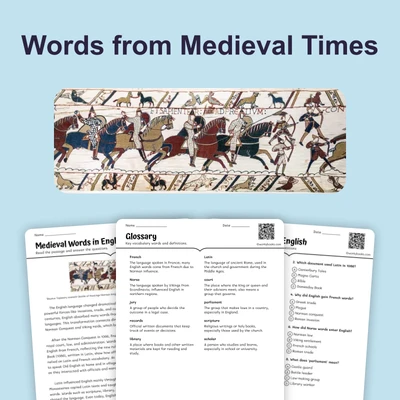
Medieval Words in English
This engaging history reading passage examines the evolution of the English language during the Middle Ages, focusing on...
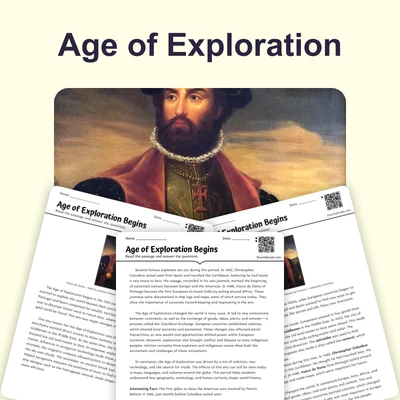
Age of Exploration Begins
This engaging history reading passage explores the Age of Exploration, a turning point in world history when European po...
Medieval Guilds
This engaging world history reading passage explores the important role of guilds—worker groups that shaped the economy ...
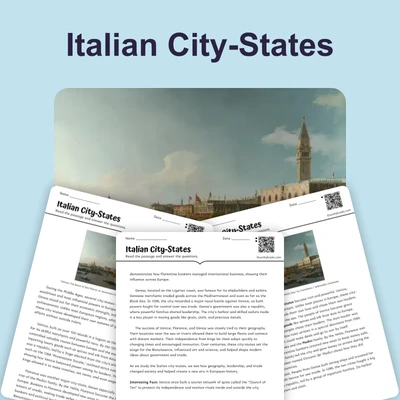
Italian City-States
This passage explores the rise and significance of the Italian city-states—Venice, Florence, and Genoa—during the Middle...
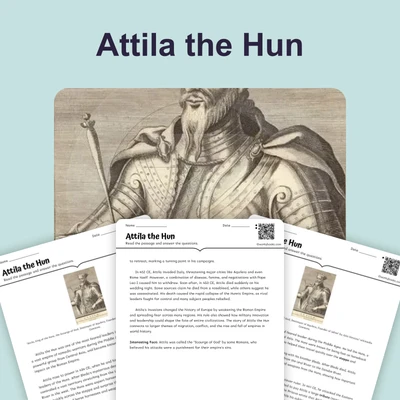
Attila the Hun
This engaging world history reading passage examines Attila the Hun, a powerful and feared ruler during the Middle Ages....
Medieval Christian Worship
This detailed passage examines how people worshiped during the Middle Ages, focusing on essential religious practices su...
Carolingian Renaissance
This engaging world history passage explores how Charlemagne, ruler of the Franks, transformed education and learning in...
Power of the Pope
This history reading passage examines the power of the pope during the Middle Ages, focusing on his role as spiritual le...
Islamic Golden Age Inventions
This world history reading passage explores the remarkable inventions and scientific advances made in the medieval Islam...
Medieval Agricultural Innovations
This history reading passage explores how farming inventions like the heavy plow, three-field system, and horse collar r...