This learning resource is available in interactive and printable formats. The interactive worksheet can be played online and assigned to students. The Printable PDF version can be downloaded and printed for completion by hand.
This history reading passage explores the role of medieval guilds in the Middle Ages, focusing on their control over trades, the apprentice training system, the enforcement of quality standards, and the protection of members’ interests. It provides historical context, using primary sources and archaeological evidence to explain how guilds shaped European cities and towns. Students will learn about the structure of guilds, the daily lives of craftsmen, and the broader significance of guilds in medieval society. This passage is aligned with CA HSS 7.6.3 and CCSS RH.6-8.2 and is accompanied by comprehension activities, writing prompts, graphic organizers, a glossary, a timeline, and a Spanish translation. The passage is suitable for middle school students and supports the development of historical thinking and critical reading skills, with read aloud audio provided for accessibility.
CONTENT PREVIEW
Expand content preview
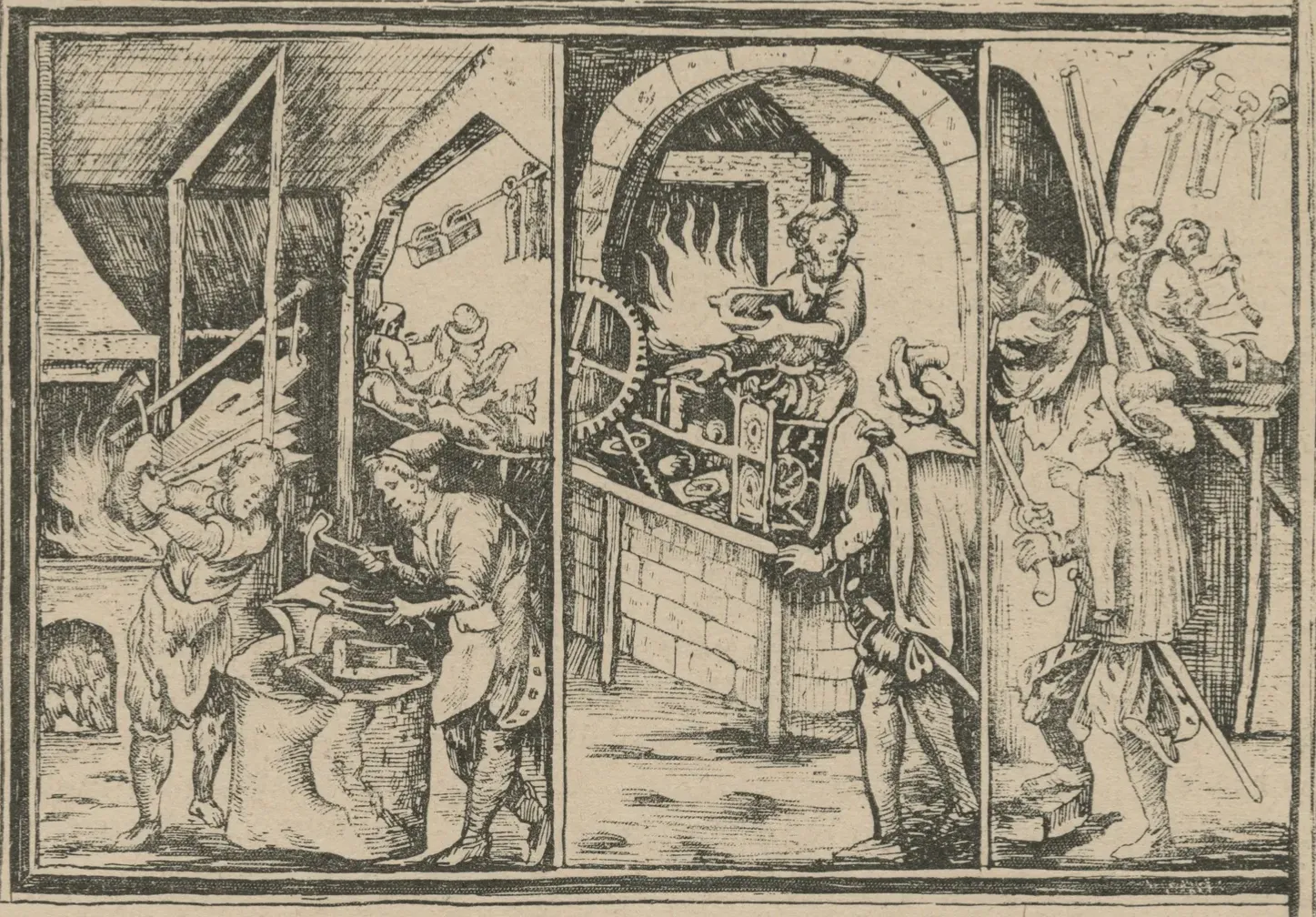
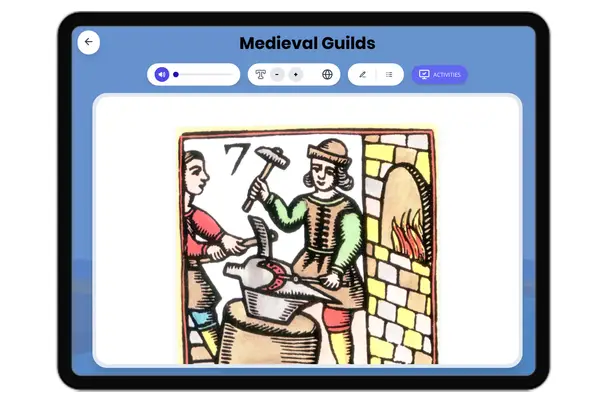
Locksmiths' guild. Wikimedia Commons
During the Middle Ages, guilds were powerful organizations that controlled trades and crafts in towns and cities across Europe. A guild was a group of people who worked in the same craft or trade, such as blacksmiths, bakers, or weavers. These groups set rules for how their members worked, trained new workers, and protected the interests of craftsmen and their families.
One of the main purposes of a guild was to control the quality of goods and who could join the trade. To become a member, a young person usually started as an apprentice. Apprentices were often boys as young as twelve who lived with a master craftsman and learned the skills of the trade. The training could last for seven years or more. After this, the apprentice became a journeyman, traveling to different towns to practice and improve his craft. Only after creating a 'masterpiece'—a high-quality example of work—could a journeyman become a full member or master in the guild.
Guilds set strict standards for products, making sure items were made well and honestly. For example, the London Bakers' Guild in the 13th century inspected bread to prevent bakers from selling loaves that were too light or contained poor ingredients. Guild rules were often recorded in guild charters—important documents that listed the rights and responsibilities of members. In some cities, like Florence, guilds even influenced city government and helped organize public festivals.
Members of a guild paid dues to support the group, which provided help to sick members, widows, and orphans. Guilds also protected their members from unfair competition and tried to keep wages and prices stable. Primary sources, such as the records of the Paris Goldsmiths' Guild from the 14th century, show that guilds punished members who broke the rules and rewarded those who contributed to the community. Archaeological evidence, including stamps on pottery or cloth, reveals how guilds marked their products to show quality.
Guilds had a major impact on medieval society. They helped towns grow by attracting skilled workers and keeping high standards for goods. Over time, guilds became less important as new economic systems emerged in the 16th and 17th centuries. However, their influence on training, quality control, and community protection can still be seen in professional organizations today.
The story of guilds connects to broader themes in world history, such as the rise of cities, the development of skilled trades, and the ways people organize to protect their rights and interests.
Interesting Fact: Some medieval guilds, like the Worshipful Company of Mercers in London, still exist today and continue to take part in city traditions.
Who usually started as an apprentice?
Young boysOld menWomenKings
What did guilds control?
Trades and craftsCastlesFarmsArmies
What is a 'masterpiece'?
A high-quality example of workA paintingA castleA meal
Why did guilds set standards?
To ensure good qualityTo build castlesTo collect taxesTo train soldiers
How did guilds help members' families?
Provided support to widows and orphansBuilt housesGave landTrained horses
What happened when a journeyman made a masterpiece?
Could become a masterLeft the guildBecame an apprenticeStarted a farm
Guilds no longer exist today. True or false?
TrueFalse
What does 'apprentice' mean?
A young person learning a tradeA city leaderA soldierA king
Perfect For:
👩🏫 Teachers
• Reading comprehension practice
• Auto-graded assessments
• Literacy skill development
👨👩👧👦 Parents
• Reading practice at home
• Comprehension improvement
• Educational reading time
🏠 Homeschoolers
• Reading curriculum support
• Independent reading practice
• Progress monitoring
Reading Features:
📖
Reading Passage
Engaging fiction or nonfiction text
❓
Comprehension Quiz
Auto-graded questions
📊
Instant Feedback
Immediate results and scoring
📄
Printable Version
Download for offline reading
🔊
Read Aloud
Voice-over with word highlighting
Reviews & Ratings
No reviews yet. Be the first to share your experience!
Related Content
Middle Ages Legacy
This history reading passage examines the lasting legacy of the Middle Ages, including the development of universities, ...
Early Middle Ages
This comprehensive reading passage explores the Early Middle Ages (500-1000 CE), a transformative period in European his...
High Middle Ages
This detailed world history reading passage explores the High Middle Ages (1000-1300 CE), a transformative era in Europe...
What Were the Middle Ages?
This engaging world history reading passage introduces students to the Middle Ages, the period in European history betwe...
Late Middle Ages
This rigorous world history reading passage explores the Late Middle Ages (1300-1500 CE), a time marked by the devastati...
Dark Ages
This passage offers a rigorous, engaging examination of why the early Middle Ages are often called the 'Dark Ages.' Stud...
Life in Middle Ages
This rigorous history reading passage explores life in Europe during the Middle Ages, focusing on the structure of feuda...
Medieval Islamic World
This rigorous reading passage delves into the Medieval Islamic World's golden age, when a vast civilization stretched fr...
Islamic Golden Age
This history reading passage explores the Islamic Golden Age, a period from the 8th to 14th centuries marked by outstand...
Medieval to Modern Transition
This engaging world history reading passage explores the dramatic transformation from the Middle Ages to the modern era,...
Medieval Words in English
This engaging history reading passage examines the evolution of the English language during the Middle Ages, focusing on...
Age of Exploration Begins
This engaging history reading passage explores the Age of Exploration, a turning point in world history when European po...
Italian City-States
This passage explores the rise and significance of the Italian city-states—Venice, Florence, and Genoa—during the Middle...
Attila the Hun
This engaging world history reading passage examines Attila the Hun, a powerful and feared ruler during the Middle Ages....
Medieval Guilds
This engaging world history reading passage explores the important role of guilds—worker groups that shaped the economy ...
Medieval Christian Worship
This detailed passage examines how people worshiped during the Middle Ages, focusing on essential religious practices su...
Power of the Pope
This history reading passage examines the power of the pope during the Middle Ages, focusing on his role as spiritual le...
Carolingian Renaissance
This engaging world history passage explores how Charlemagne, ruler of the Franks, transformed education and learning in...
Islamic Golden Age Inventions
This world history reading passage explores the remarkable inventions and scientific advances made in the medieval Islam...
Medieval Agricultural Innovations
This history reading passage explores how farming inventions like the heavy plow, three-field system, and horse collar r...