Medieval Literature
Interactive passage with audio narration, comprehension questions, and printable PDF.
By completing this purchase you agree to our Terms of Use and Privacy Policy. Your subscription renews automatically until you cancel. You can cancel anytime from your account settings. All sales are final and non-refundable. Digital content is available for download in your account immediately upon purchase.
What's included
Medieval Literature preview and details
About this printable Medieval Literature reading passage (Grades 5-8)
Sample passage and quiz from Medieval Literature
Reading passage and comprehension quiz preview
Stories That Live On
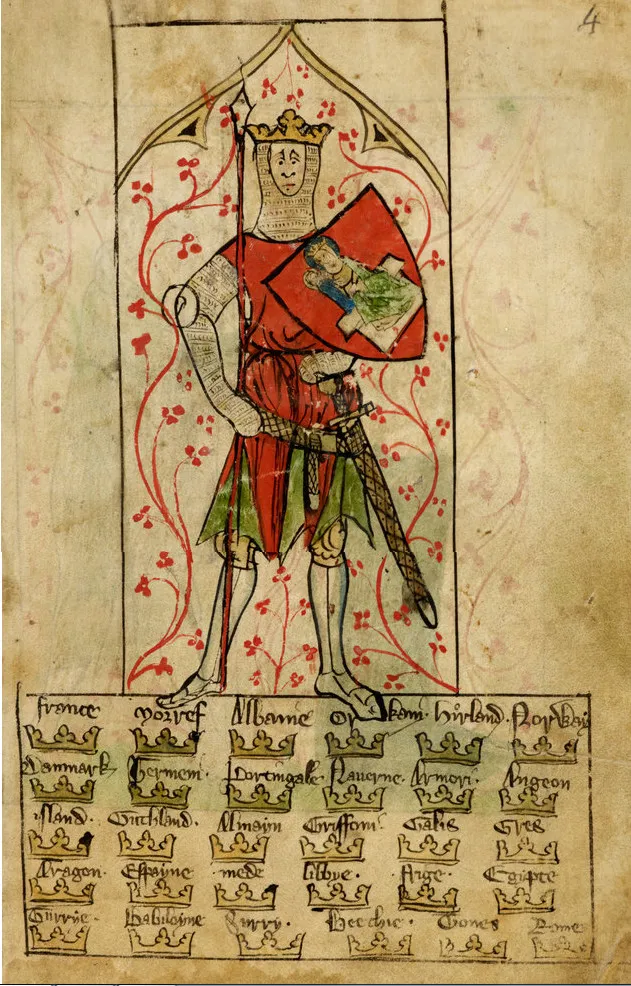
"King Arthur - Chronicle of England" by Peter de Langtoft / Wikimedia Commons.
The Middle Ages, also known as the medieval period, lasted from about 500 to 1500 CE and gave rise to some of the world’s most enduring legends. Two of the most famous are the tales of Robin Hood and King Arthur. These stories were first told in Europe centuries ago, but their influence is still strong today in movies, books, and games. Through these legends, we can explore how societies of the past imagined justice, heroism, and leadership.
The legend of Robin Hood likely began in England in the 1200s. Early ballads describe Robin as an outlaw who lived in Sherwood Forest, near Nottingham. He became a symbol of resistance against unfair rulers, especially the Sheriff of Nottingham. Robin Hood and his band of "Merry Men"—including characters like Little John and Friar Tuck—were said to steal from the rich and give to the poor. Historians debate whether Robin Hood was a real person, a blend of local heroes, or entirely fictional. However, references to outlaws named "Robyn Hode" appear in court records from the 13th and 14th centuries. This suggests that real-life struggles between peasants and local authorities may have inspired the tales. Over time, the stories changed to reflect new ideas about justice and fairness.
King Arthur is another legendary figure whose story has evolved over centuries. According to medieval texts such as Geoffrey of Monmouth’s “History of the Kings of Britain” (written around 1136), Arthur was a wise and brave king who united Britain against invaders. The legend grew to include the Knights of the Round Table, who followed a code of chivalry—a system of values like courage, loyalty, and honor. Archaeological evidence, such as the ruins at Tintagel Castle in Cornwall, suggests that powerful leaders lived in Britain during the early medieval period, but there is no proof that Arthur himself existed. Still, the Arthurian legends have shaped ideas of leadership and justice in Western culture.
Stories like Robin Hood and King Arthur were not just entertainment; they helped people in the Middle Ages understand their world. These legends taught values, offered hope in hard times, and questioned the power of rulers. Over centuries, the tales spread across Europe and changed with each retelling. In the 1800s, authors like Howard Pyle and Alfred, Lord Tennyson brought them to new audiences. Today, Robin Hood and King Arthur appear in films, television, comics, and video games, showing that these stories remain powerful ways to explore questions of right and wrong.
The continued popularity of medieval legends shows the importance of storytelling in shaping societies. These tales connect the past to the present, teaching us about the hopes and struggles of people who lived long ago. They also remind us how myths can inspire change and reflect the values of different times.
As we study world history, examining legends like Robin Hood and King Arthur helps us understand how cultural traditions are formed and why certain stories live on for generations.
Interesting Fact: The phrase “Robin Hood” was so popular in medieval England that it sometimes appeared as a nickname for criminals or rebels in historical records!
Comprehension quiz (8 questions)
1. Where did Robin Hood live?
2. Who was Robin Hood's enemy?
3. When did the Middle Ages begin?
4. Why did Robin Hood become popular?
5. What is chivalry?
6. How did legends change over time?
7. Robin Hood was always a real person.
8. What does 'legend' mean?
Perfect for the way you teach
- Build comprehension skills
- Auto-graded quiz
- Differentiated reading
- Read together at home
- Improve fluency
- Quiet reading time
- Reading curriculum support
- Independent practice
- Track Lexile growth