This learning resource is available in interactive and printable formats. The interactive worksheet can be played online and assigned to students. The Printable PDF version can be downloaded and printed for completion by hand.
This reading passage dives into the structure and daily life on a medieval manor during the Middle Ages. Students discover how manors were self-sufficient communities, featuring fields, villages, and the manor house, and learn about the roles and responsibilities of peasants and lords within the feudal system. The passage examines how geography shaped agricultural practices and explains the significance of social hierarchy and manorial obligations. With evidence from historical records, glossary of key terms, comprehension activities, a graphic organizer, and both English and Spanish versions, this resource supports CA HSS 7.6.3 and CCSS RH.6-8.2. It’s ideal for building historical thinking skills and offers read aloud audio for accessibility.
CONTENT PREVIEW
Expand content preview
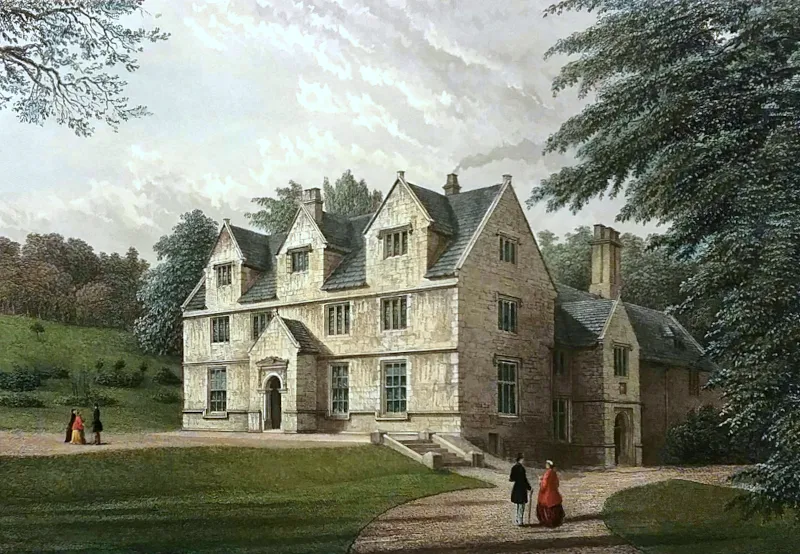
Tyneham House in a circa 1865 drawing by John Henry Le Keux. / Wikimedia Commons.
During the Middle Ages, a manor was the basic unit of society in much of Western Europe. A manor was a large estate owned by a lord and included farmland, a village, and the manor house. The manor system, also called manorialism, helped organize society and provided stability after the collapse of the Roman Empire around 476 CE.
The manor was designed to be self-sufficient. This means it produced almost everything the people who lived there needed. Fields surrounded the village, divided into strips for growing crops such as wheat, barley, and oats. The village in the center of the manor was home to peasants and their families. Most peasants were serfs, people who were legally tied to the land. Serfs could not leave the manor without permission and worked long hours in the lord’s fields. In return, the lord offered protection and a small plot of land for the serfs to farm for themselves.
The lord lived in a large stone house or castle, often built on a hill for defense. The manor house was the center of administration and justice. Lords collected taxes from peasants and held court to resolve disputes. Archaeological evidence, such as the remains of manor houses in England and records like the Domesday Book of 1086, shows that some manors supported hundreds of people. The Domesday Book, ordered by King William I, recorded details about land, resources, and the people living on manors across England.
Daily life for peasants was structured around the agricultural calendar. People worked together during planting and harvest seasons. In winter, peasants repaired tools and tended animals. The three-field system, first recorded in documents from medieval France, allowed one field to rest each year, improving soil and crop yields. This method helped manors remain productive and fed the community even during difficult times.
Manors were often isolated because travel was dangerous and roads were poor. This isolation made the manor’s self-sufficiency crucial. Over time, some regions saw changes as towns grew and trade increased, but the basic structure of the manor system lasted for centuries. The manor influenced the development of European society by shaping social hierarchies, laws, and economic relationships between lords and peasants.
Understanding life on a manor connects to broader themes in world history, such as how geography and social systems shape people’s lives and how agricultural innovations can drive change in societies.
Interesting Fact: Some medieval manors had their own mill, blacksmith, and bakery, so almost everything needed for daily life was made on the manor itself!
What is a manor?
A large estate owned by a lordA small shop in a cityA church buildingA government office
Who lived in the manor house?
The lordAll the peasantsThe blacksmithThe village priest
What did the Domesday Book record?
Land and resourcesPoems and songsBattle plansReligious laws
Why did manors need to be self-sufficient?
Travel was dangerousPeople did not like to tradeThere were many storesEveryone wanted to live alone
How did the three-field system help manors?
It improved crop yieldsIt built more housesIt created more serfsIt stopped all taxes
What was the role of serfs?
Work the land for the lordRule the manorCollect taxesTravel to other towns
The manor system lasted for centuries. True or false?
TrueFalse
What does 'self-sufficient' mean?
Produce everything neededPay many taxesTravel oftenWork as a blacksmith
Perfect For:
👩🏫 Teachers
• Reading comprehension practice
• Auto-graded assessments
• Literacy skill development
👨👩👧👦 Parents
• Reading practice at home
• Comprehension improvement
• Educational reading time
🏠 Homeschoolers
• Reading curriculum support
• Independent reading practice
• Progress monitoring
Reading Features:
📖
Reading Passage
Engaging fiction or nonfiction text
❓
Comprehension Quiz
Auto-graded questions
📊
Instant Feedback
Immediate results and scoring
📄
Printable Version
Download for offline reading
🔊
Read Aloud
Voice-over with word highlighting
Reviews & Ratings
No reviews yet. Be the first to share your experience!
Related Content
Middle Ages Legacy
This history reading passage examines the lasting legacy of the Middle Ages, including the development of universities, ...
Early Middle Ages
This comprehensive reading passage explores the Early Middle Ages (500-1000 CE), a transformative period in European his...
High Middle Ages
This detailed world history reading passage explores the High Middle Ages (1000-1300 CE), a transformative era in Europe...
What Were the Middle Ages?
This engaging world history reading passage introduces students to the Middle Ages, the period in European history betwe...
Late Middle Ages
This rigorous world history reading passage explores the Late Middle Ages (1300-1500 CE), a time marked by the devastati...
Dark Ages
This passage offers a rigorous, engaging examination of why the early Middle Ages are often called the 'Dark Ages.' Stud...
Life in Middle Ages
This rigorous history reading passage explores life in Europe during the Middle Ages, focusing on the structure of feuda...
Medieval Islamic World
This rigorous reading passage delves into the Medieval Islamic World's golden age, when a vast civilization stretched fr...
Islamic Golden Age
This history reading passage explores the Islamic Golden Age, a period from the 8th to 14th centuries marked by outstand...
Medieval to Modern Transition
This engaging world history reading passage explores the dramatic transformation from the Middle Ages to the modern era,...
Medieval Words in English
This engaging history reading passage examines the evolution of the English language during the Middle Ages, focusing on...
Age of Exploration Begins
This engaging history reading passage explores the Age of Exploration, a turning point in world history when European po...
Italian City-States
This passage explores the rise and significance of the Italian city-states—Venice, Florence, and Genoa—during the Middle...
Attila the Hun
This engaging world history reading passage examines Attila the Hun, a powerful and feared ruler during the Middle Ages....
Medieval Guilds
This engaging world history reading passage explores the important role of guilds—worker groups that shaped the economy ...
Medieval Christian Worship
This detailed passage examines how people worshiped during the Middle Ages, focusing on essential religious practices su...
Power of the Pope
This history reading passage examines the power of the pope during the Middle Ages, focusing on his role as spiritual le...
Carolingian Renaissance
This engaging world history passage explores how Charlemagne, ruler of the Franks, transformed education and learning in...
Islamic Golden Age Inventions
This world history reading passage explores the remarkable inventions and scientific advances made in the medieval Islam...
Medieval Agricultural Innovations
This history reading passage explores how farming inventions like the heavy plow, three-field system, and horse collar r...