Medieval Monastery Life
Interactive passage with audio narration, comprehension questions, and printable PDF.
By completing this purchase you agree to our Terms of Use and Privacy Policy. Your subscription renews automatically until you cancel. You can cancel anytime from your account settings. All sales are final and non-refundable. Digital content is available for download in your account immediately upon purchase.
What's included
Medieval Monastery Life preview and details
About this printable Medieval Monastery Life reading passage (Grades 5-8)
Sample passage and quiz from Medieval Monastery Life
Reading passage and comprehension quiz preview
Medieval Monastery Life
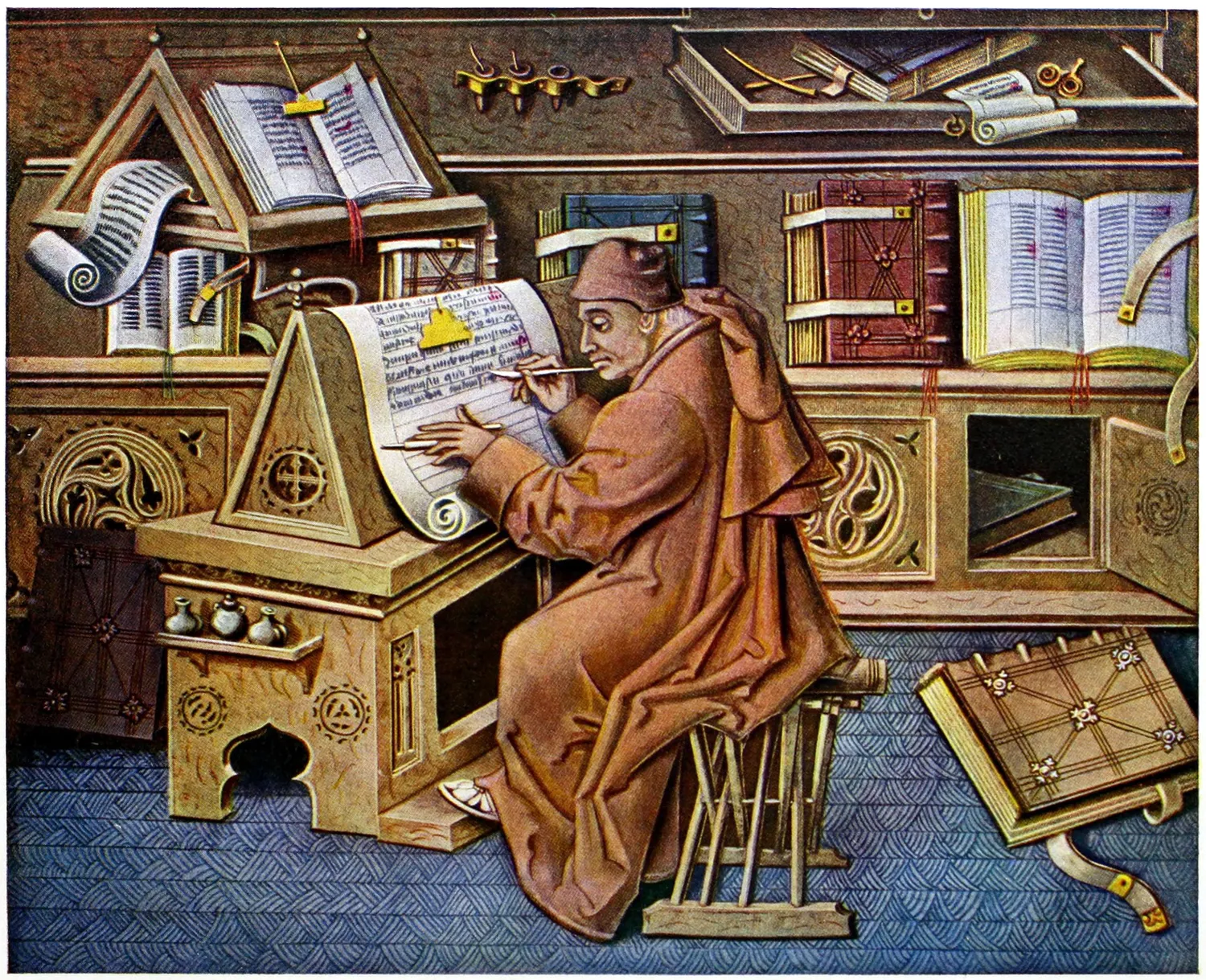
"The Scribe at Work" by Jean Le Tavernier / Wikimedia Commons.
During the Middle Ages, monasteries played a crucial role in European society. A monastery was a special religious community where men, called monks, dedicated their lives to spiritual work, prayer, and study. These communities were often built in remote locations across Europe, such as the Abbey of Monte Cassino in Italy, founded by St. Benedict around 529 CE. Monasteries became centers of religion, learning, and even economic activity during this era.
Daily life in a monastery followed a strict routine, guided by the Benedictine Rule. This set of guidelines, written by St. Benedict, outlined how monks should live together peacefully and devote themselves to work, prayer, and study. The day began before sunrise, with the ringing of bells to call the monks to the first of many prayers known as the "Divine Office." Monks wore simple robes and ate modest meals, often in silence. Their daily schedule was divided between religious services, manual labor like farming, and intellectual tasks.
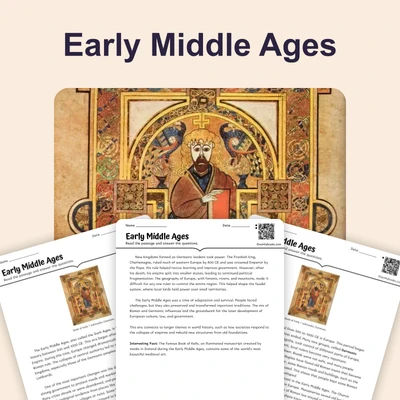
One of the most important jobs in a monastery was the preservation of knowledge. Monks worked in a special room called the scriptorium, where they carefully copied ancient texts by hand. This process was slow and required great attention to detail. Monks copied not only religious books like the Bible, but also important works of philosophy, science, and history written by Greek and Roman authors. For example, the 9th-century monk Alcuin of York helped preserve many classical works that might have otherwise been lost. Illuminated manuscripts, decorated with colorful illustrations and gold leaf, were also produced in monasteries and are valuable primary sources for historians today.
Monasteries also served as centers of learning. Some, like the Monastery of Cluny in France, became famous for their schools and libraries. Monks taught reading, writing, and Latin to young boys who might later become priests or scholars. The social structure in monasteries was organized, with an abbot as leader, and novices (new monks) learning from experienced brothers. Monasteries provided shelter, food, and sometimes medical care to travelers and the poor, making them important to the wider community.
The work of monks in monasteries had a lasting impact on European civilization. By preserving and copying books, they kept ancient knowledge alive through centuries of war and upheaval. The Benedictine Rule influenced religious orders for centuries, shaping the culture of Christian Europe. Monasteries show how organized communities can become centers of learning, spirituality, and social support, connecting the past to the present.
Interesting Fact: Some medieval monasteries even grew their own special herbs and made medicines, preserving both books and medical knowledge for future generations.
Comprehension quiz (8 questions)
1. Who wrote the Benedictine Rule?
2. What is a scriptorium?
3. Which monastery was founded in Italy?
4. Why did monks copy ancient texts?
5. How did monasteries help local communities?
6. What effect did the Benedictine Rule have?
7. Monks made illuminated manuscripts. True or false?
8. What is an abbot?
Perfect for the way you teach
- Build comprehension skills
- Auto-graded quiz
- Differentiated reading
- Read together at home
- Improve fluency
- Quiet reading time
- Reading curriculum support
- Independent practice
- Track Lexile growth