Medieval Peasant Life
Interactive passage with audio narration, comprehension questions, and printable PDF.
By completing this purchase you agree to our Terms of Use and Privacy Policy. Your subscription renews automatically until you cancel. You can cancel anytime from your account settings. All sales are final and non-refundable. Digital content is available for download in your account immediately upon purchase.
What's included
Medieval Peasant Life preview and details
About this printable Medieval Peasant Life reading passage (Grades 5-8)
Sample passage and quiz from Medieval Peasant Life
Reading passage and comprehension quiz preview
Medieval Peasant Life
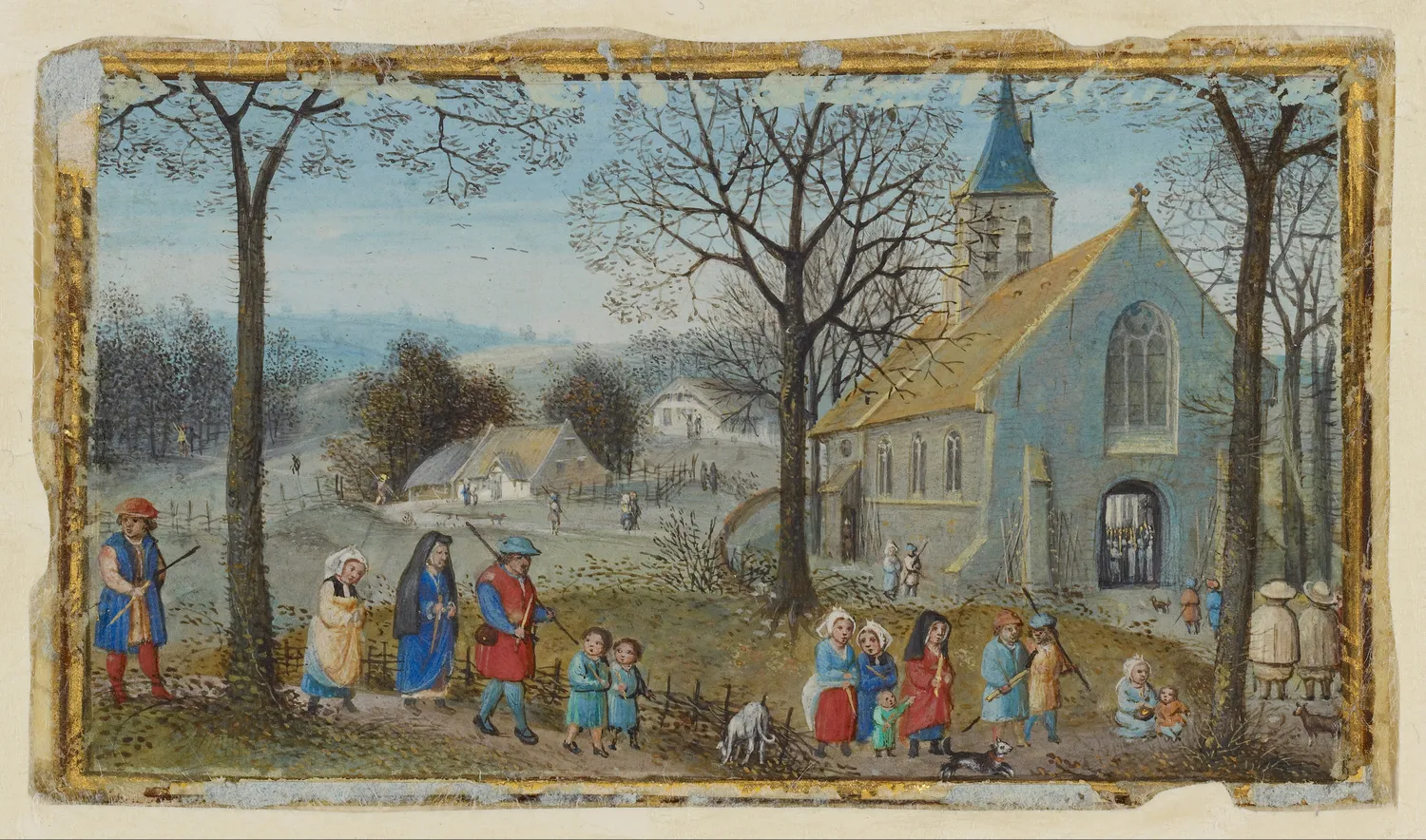
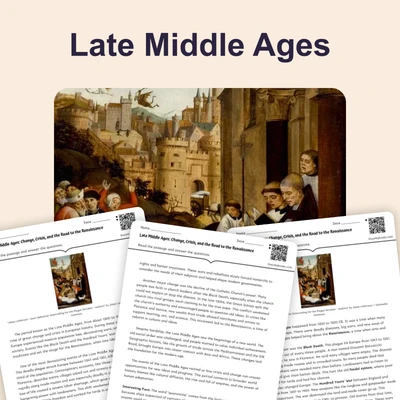
"Villagers on Their Way to Church" by Simon Bening / Wikimedia Commons.
Peasants made up the largest group in medieval European society, living and working mainly on rural manors from the 9th to the 15th centuries. Their lives were shaped by the feudal system, which divided society into ranks: kings, nobles, knights, and peasants. Most peasants were known as serfs, legally bound to the land owned by a lord.
Daily life for a peasant was filled with hard physical labor. From dawn to dusk, peasants worked the fields, planting and harvesting crops like wheat, barley, and oats. These crops provided food for the entire community and were essential for survival, especially during harsh winters. Archaeological evidence, such as the remains of wooden plows and iron sickles found in English villages like Wharram Percy, shows the tools peasants used. Written accounts from the Domesday Book of 1086 describe how every able-bodied member of a peasant family, including children, had to help with the harvest.
Peasants faced many challenges beyond their daily work. Lords demanded taxes and rent, often paid in crops or labor. In addition, peasants owed the church a tenth of their produce, called a tithe. These obligations left little for the peasants' own families. Laws limited their rights, and peasants could not leave the manor without permission. The threat of poor harvests, famine, and disease was always present. Despite these hardships, records from the 13th-century manor court rolls show that peasants sometimes protested unfair treatment, demonstrating some agency within their limited circumstances.
Not everything in peasant life was grim. Community festivals, religious holidays, and simple pleasures like music or storytelling offered moments of joy. Peasants had strong family ties and relied on neighbors for support. Over time, especially after the Black Death in the 14th century, labor shortages allowed some peasants to demand better conditions, leading to gradual changes in social structure. The continuity of rural traditions and the slow shift toward more freedom for peasants show how daily life reflected broader changes in European society.
The experiences of peasants in the Middle Ages help historians understand the foundations of European society, the importance of agriculture, and the effects of social hierarchy. Studying their lives connects to broader themes of power, community, and change in world history.
Interesting Fact: Some medieval peasants brewed their own ale and held village games, which became traditions that still exist today in some rural European areas.
Comprehension quiz (8 questions)
1. Who owned the land peasants worked?
2. What was a tithe?
3. Which book recorded peasant life in 1086?
4. Why did peasants protest in the 13th century?
5. What effect did the Black Death have?
6. How did peasants pay rent?
7. Peasants were free to leave the manor. True or False?
8. What is the meaning of "feudal"?
Perfect for the way you teach
- Build comprehension skills
- Auto-graded quiz
- Differentiated reading
- Read together at home
- Improve fluency
- Quiet reading time
- Reading curriculum support
- Independent practice
- Track Lexile growth