Medieval Stained Glass
Interactive passage with audio narration, comprehension questions, and printable PDF.
By completing this purchase you agree to our Terms of Use and Privacy Policy. Your subscription renews automatically until you cancel. You can cancel anytime from your account settings. All sales are final and non-refundable. Digital content is available for download in your account immediately upon purchase.
What's included
Medieval Stained Glass preview and details
About this printable Medieval Stained Glass reading passage (Grades 5-8)
Sample passage and quiz from Medieval Stained Glass
Reading passage and comprehension quiz preview
Medieval Stained Glass
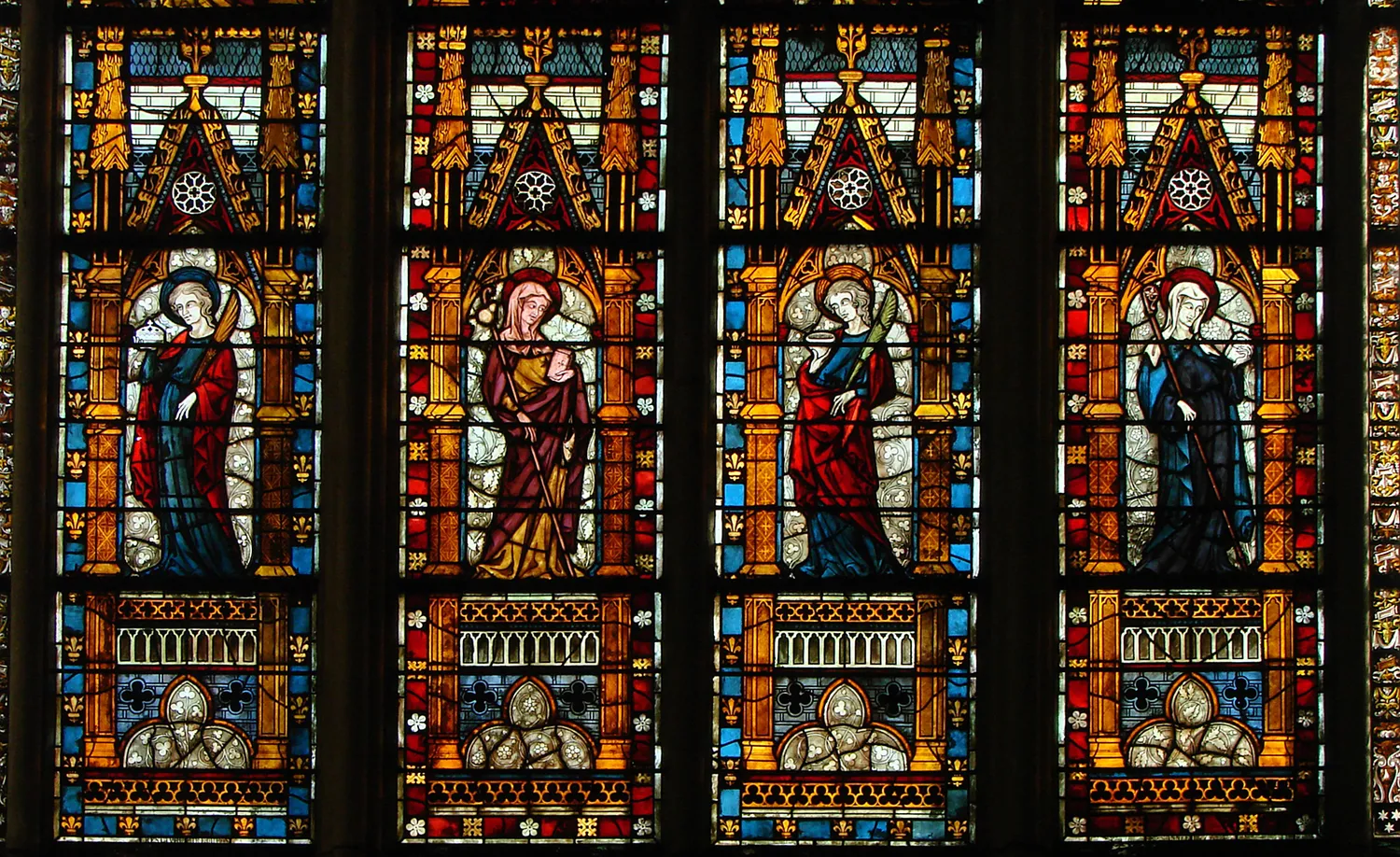
"Vitrail Cathédrale Troyes" by Vassil / Wikimedia Commons (Public domain).
Stained glass windows became one of the most remarkable features of cathedrals in medieval Europe. From the 12th to the 16th centuries, these colorful windows decorated churches, especially in France, England, and Germany. They served not only as decoration, but as essential tools for teaching religious stories to people who could not read. Their beauty also transformed the way people experienced light and color inside sacred spaces.
The process of making stained glass was complicated and required skilled artisans. Craftsmen began by mixing sand and potash to create glass, then added minerals to produce different colors. For example, cobalt made blue, while copper created red or green hues. To form images, the glass was cut into shapes and painted with special black paint called grisaille. After painting, the pieces were fired in a kiln so the paint would fuse to the glass. Finally, thin strips of lead called cames joined the pieces together, creating large panels that could be installed into the stone frames of cathedral windows.
Stained glass windows had a special role in a largely illiterate society. Most people in medieval Europe could not read the Bible themselves. Instead, windows acted as "the Bible in pictures." Scenes included the life of Jesus, stories of saints, and important biblical events. For example, the famous rose window at Chartres Cathedral, built around 1230, shows the Virgin Mary surrounded by prophets and kings. Visitors could "read" the stories by looking at the colorful images, often with the help of a priest or guide. This use of art made religious teachings accessible to everyone, regardless of their education.
Besides their storytelling function, stained glass windows created a powerful visual effect. Sunlight shining through colored glass filled the cathedral with glowing reds, blues, and greens. This light was seen as a sign of the divine, making the space feel holy and inspiring awe among worshippers. The size and complexity of windows also showed the wealth and power of the church or city that built them. Building large, elaborate windows required great expense and organization, often involving guilds of glassmakers and support from local rulers or bishops.
Over time, stained glass styles changed. Earlier windows had simple, bold images and strong colors. Later, especially in the Gothic period, artists created more detailed and realistic figures. Some windows included portraits of donors or scenes from daily life, reflecting social hierarchy and the connection between church and community. Stained glass continued to be used in churches after the Middle Ages, but the medieval period remains the height of this art form.
In summary, medieval stained glass was much more than decoration. It was a unique blend of art, technology, religion, and community. Its impact can still be seen today in the surviving windows of cathedrals across Europe.
Interesting Fact: Some medieval stained glass windows have survived for over 800 years, allowing historians to study the colors, techniques, and stories of the past.
Comprehension quiz (8 questions)
1. Where were stained glass windows most common?
2. What mineral made blue glass?
3. What is the rose window at Chartres famous for?
4. Why were stained glass windows important for illiterate people?
5. How did stained glass change in the Gothic period?
6. What was a sign of the divine?
7. Stained glass windows are only found in France. True or false?
8. What does 'illiterate' mean?
Perfect for the way you teach
- Build comprehension skills
- Auto-graded quiz
- Differentiated reading
- Read together at home
- Improve fluency
- Quiet reading time
- Reading curriculum support
- Independent practice
- Track Lexile growth