Medieval Towns
Interactive passage with audio narration, comprehension questions, and printable PDF.
By completing this purchase you agree to our Terms of Use and Privacy Policy. Your subscription renews automatically until you cancel. You can cancel anytime from your account settings. All sales are final and non-refundable. Digital content is available for download in your account immediately upon purchase.
What's included
Medieval Towns preview and details
About this printable Medieval Towns reading passage (Grades 5-8)
Sample passage and quiz from Medieval Towns
Reading passage and comprehension quiz preview
Towns Come Alive
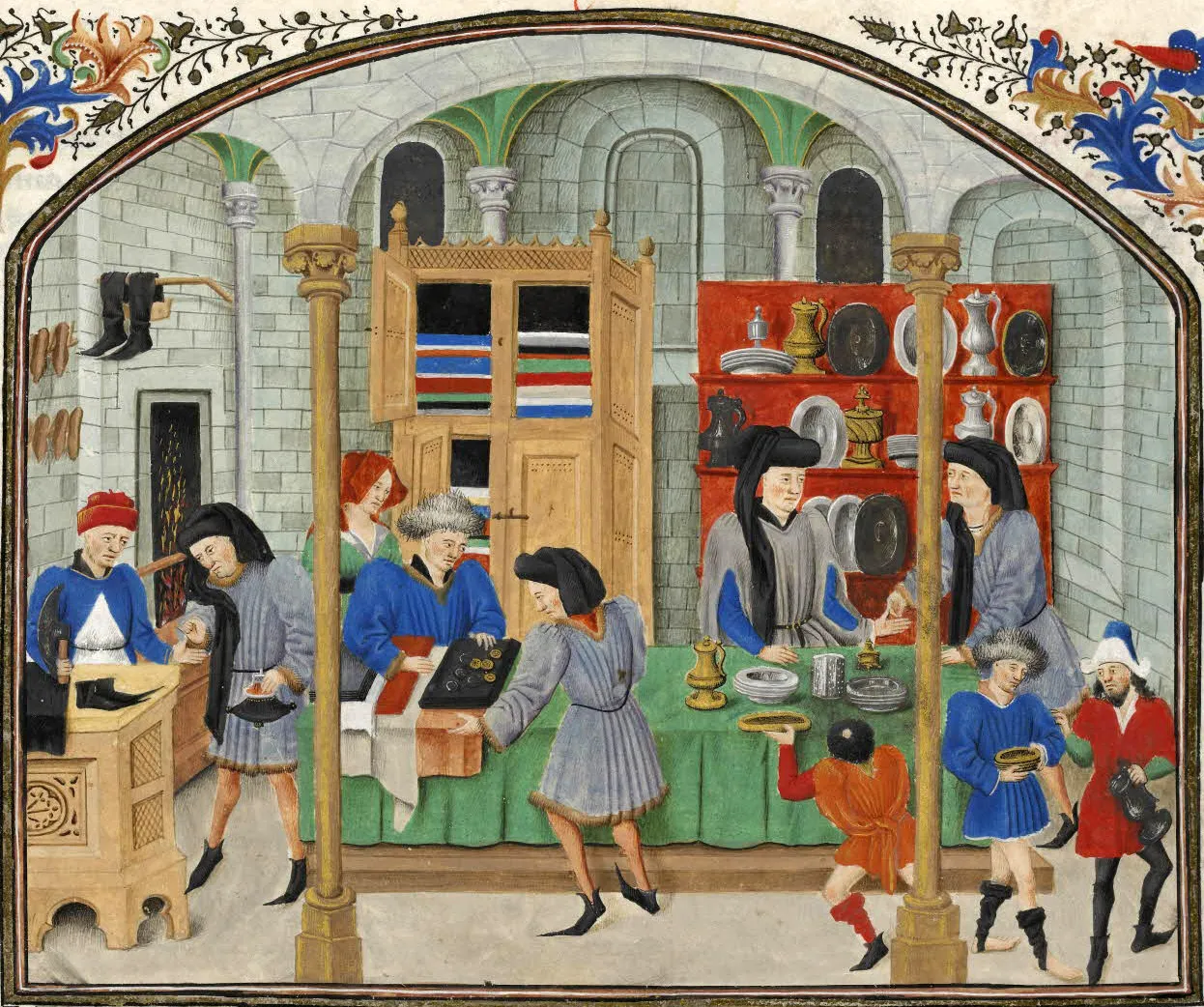
"Medieval market" by Nicole Oresme, translation of Aristotle's Ethics, Politics, and Economics, Rouen (France), Municipal library, Ms. 927, fol. 145 / Wikimedia Commons.
During the Middle Ages, towns across Europe experienced remarkable growth and change. Between the 11th and 14th centuries, medieval towns became centers of commerce and daily life, transforming the social and economic landscape. The rise of markets and trade fairs led to the emergence of a new merchant middle class, which challenged traditional social hierarchies dominated by nobles and clergy.
One key factor in the growth of medieval towns was the revival of trade. After centuries of warfare and decline following the fall of Rome, stability slowly returned to Europe. By the 1000s, safer roads and increased agricultural output allowed people to travel and exchange goods. Towns like Bruges in Flanders and Florence in Italy became bustling centers where merchants sold wool, cloth, spices, and other valuable products. Archaeological finds from London’s Cheapside market, such as imported pottery and coins, show how international trade expanded during this era.
Markets and annual trade fairs were essential features of medieval town life. Weekly markets provided places for local people to buy and sell food, clothing, and tools. Large trade fairs, like the famous Champagne Fairs in France, attracted merchants from across Europe for weeks at a time. These events brought not only goods but also entertainment, news, and cultural exchange. Written records from the 12th and 13th centuries describe how towns gained charters—official documents granting rights to hold markets and govern themselves. This gave townspeople more independence from feudal lords.
The growth of towns led to the development of a new social group: the bourgeoisie, or merchant middle class. Unlike peasants who worked the land or nobles who owned it, merchants and artisans earned their living through trade and skilled labor. Many joined guilds, organizations that set standards for crafts and protected members’ interests. Guild records from cities like Paris document how bakers, weavers, and blacksmiths regulated prices and quality. Over time, the success of merchants helped towns gain wealth and influence, sometimes even challenging the authority of kings and nobles.
The rise of medieval towns and the merchant class changed European society. Towns became vibrant centers of economic activity, culture, and innovation. The increased movement of goods and people helped spread new ideas and technologies, paving the way for the later Renaissance. Medieval towns show how geography, trade, and human ambition can shape history.
This growth of towns connects to broader themes in world history, such as the impact of economic change and how societies adapt to new opportunities.
Interesting Fact: The city of Lübeck in northern Germany was so successful in trade that it became known as the "Queen of the Hanseatic League," a powerful group of trading towns in medieval Europe.
Comprehension quiz (8 questions)
1. Which town is in Flanders?
2. What did medieval towns often receive?
3. Which fair was famous in France?
4. Why did trade increase after 1000 CE?
5. What was a key effect of guilds?
6. How did townspeople get independence?
7. Lübeck was called 'Queen of Hanseatic League.' True or false?
8. What does 'hierarchy' mean?
Perfect for the way you teach
- Build comprehension skills
- Auto-graded quiz
- Differentiated reading
- Read together at home
- Improve fluency
- Quiet reading time
- Reading curriculum support
- Independent practice
- Track Lexile growth