Medieval Weapons
Interactive passage with audio narration, comprehension questions, and printable PDF.
By completing this purchase you agree to our Terms of Use and Privacy Policy. Your subscription renews automatically until you cancel. You can cancel anytime from your account settings. All sales are final and non-refundable. Digital content is available for download in your account immediately upon purchase.
What's included
Medieval Weapons preview and details
About this printable Medieval Weapons reading passage (Grades 5-8)
Sample passage and quiz from Medieval Weapons
Reading passage and comprehension quiz preview
Medieval Weapons
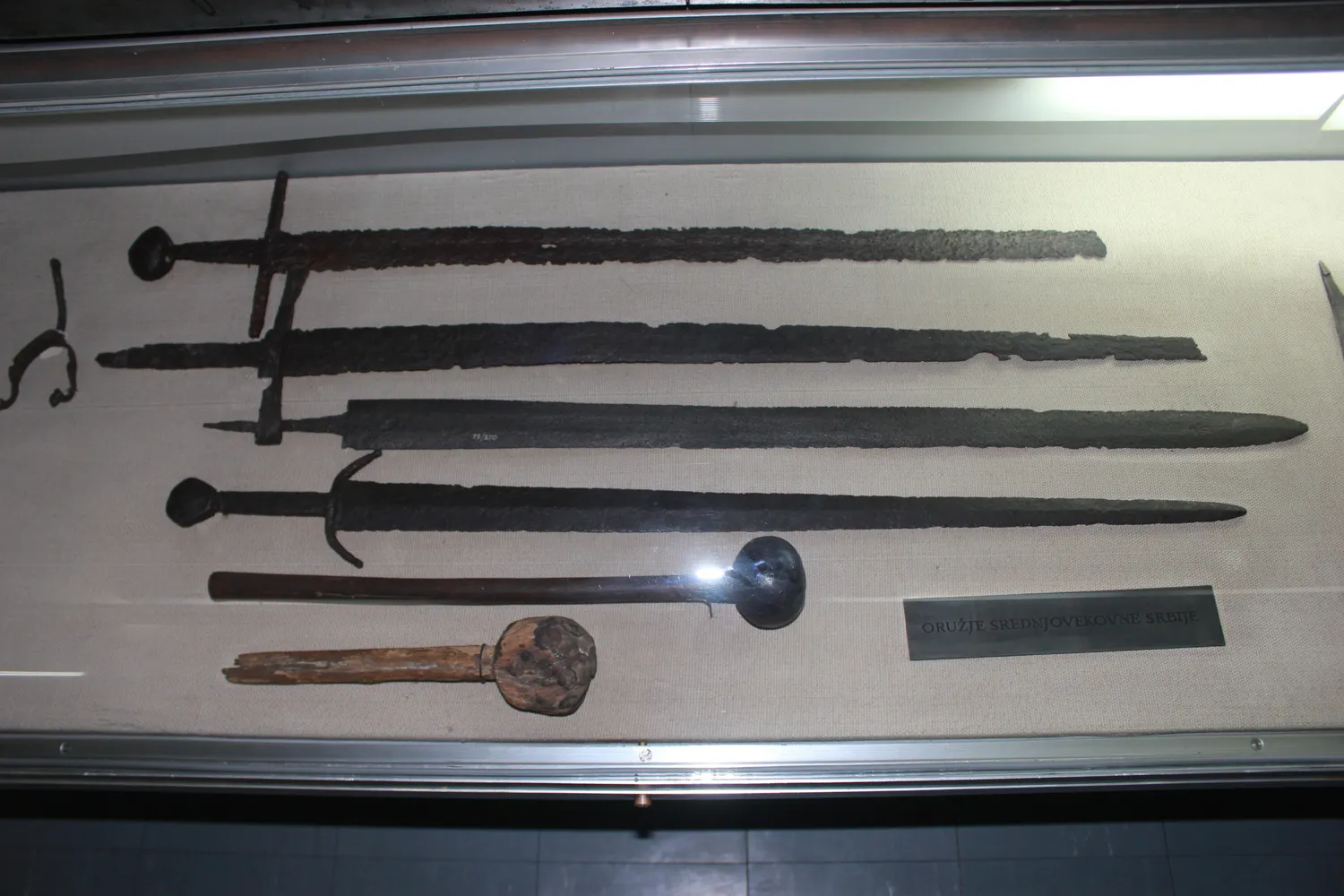
"Serbian Medieval swords and weapons" by Pink Flojd / Wikimedia Commons.
During the Middle Ages, knights and soldiers relied on a variety of weapons and armor to survive in battle. The development of military technology shaped the way wars were fought and influenced the lives of people across Europe and beyond. Archaeological discoveries and historical records help us understand how these tools changed over time and what they reveal about medieval society.
The most famous medieval weapon was the sword. Swords had double-edged blades and were often made of high-quality steel, such as the swords found in the River Thames near London, dating from the 12th century. Knights valued their swords not just for their effectiveness but also as symbols of honor. Another essential weapon was the lance, a long wooden pole with a metal tip, used by knights during cavalry charges. In the 12th and 13th centuries, lances were featured in tournaments and battles, such as those described in the Bayeux Tapestry, which depicts the Norman Conquest of England in 1066.
Ranged weapons played a significant role in sieges and open battles. The longbow, made famous by English archers at the Battle of Agincourt in 1415, could shoot arrows over great distances and penetrate armor. The crossbow, developed earlier in the 10th and 11th centuries, was easier to use and required less training than the longbow. Both weapons contributed to changes in military strategy and reduced the dominance of heavily armored knights on the battlefield. Written accounts from the period, such as the chronicle of Jean Froissart, describe how crossbowmen and longbowmen shaped victory or defeat.
Armor also evolved over time. Early medieval warriors often wore chainmail, a type of flexible armor made from thousands of interlocking metal rings. By the 14th and 15th centuries, plate armor became more common, offering better protection against arrows and swords. Surviving examples from castles and museums, like the Gothic plate armor of 15th-century Germany, show how advanced these designs became. However, producing armor was expensive. Only wealthy nobles or knights could afford full suits of plate armor, which could cost as much as a small house. Most common soldiers wore simpler protection, such as padded jackets or partial chainmail.
The cost and quality of weapons and armor reflected a person's status in medieval society. Knights, who belonged to the noble class, used the best equipment, while foot soldiers had to make do with what they could afford. The spread of new weapons like the crossbow and longbow also changed the balance of power, making warfare more dangerous and unpredictable for everyone. Over time, the need for better protection and more effective weapons led to technological innovation and social change throughout Europe.
Understanding medieval weapons and armor helps us appreciate how military technology influenced society, politics, and daily life in the Middle Ages. These tools were more than just instruments of war—they were a reflection of the values, skills, and resources of the people who used them.
Interesting Fact: Some knights decorated their armor and swords with family crests or symbols, making each set unique and personal.
Comprehension quiz (8 questions)
1. Which weapon was famous at Agincourt?
2. What did knights use for protection in the 14th century?
3. What material was chainmail made of?
4. Why did the crossbow change battles?
5. How did armor show social status?
6. What is a chronicle?
7. Plate armor was more protective than chainmail.
8. What is a lance?
Perfect for the way you teach
- Build comprehension skills
- Auto-graded quiz
- Differentiated reading
- Read together at home
- Improve fluency
- Quiet reading time
- Reading curriculum support
- Independent practice
- Track Lexile growth