Norman Conquest (1066)
Interactive passage with audio narration, comprehension questions, and printable PDF.
By completing this purchase you agree to our Terms of Use and Privacy Policy. Your subscription renews automatically until you cancel. You can cancel anytime from your account settings. All sales are final and non-refundable. Digital content is available for download in your account immediately upon purchase.
What's included
Norman Conquest (1066) preview and details
About this printable Norman Conquest (1066) reading passage (Grades 5-8)
Sample passage and quiz from Norman Conquest (1066)
Reading passage and comprehension quiz preview
Norman Conquest (1066)
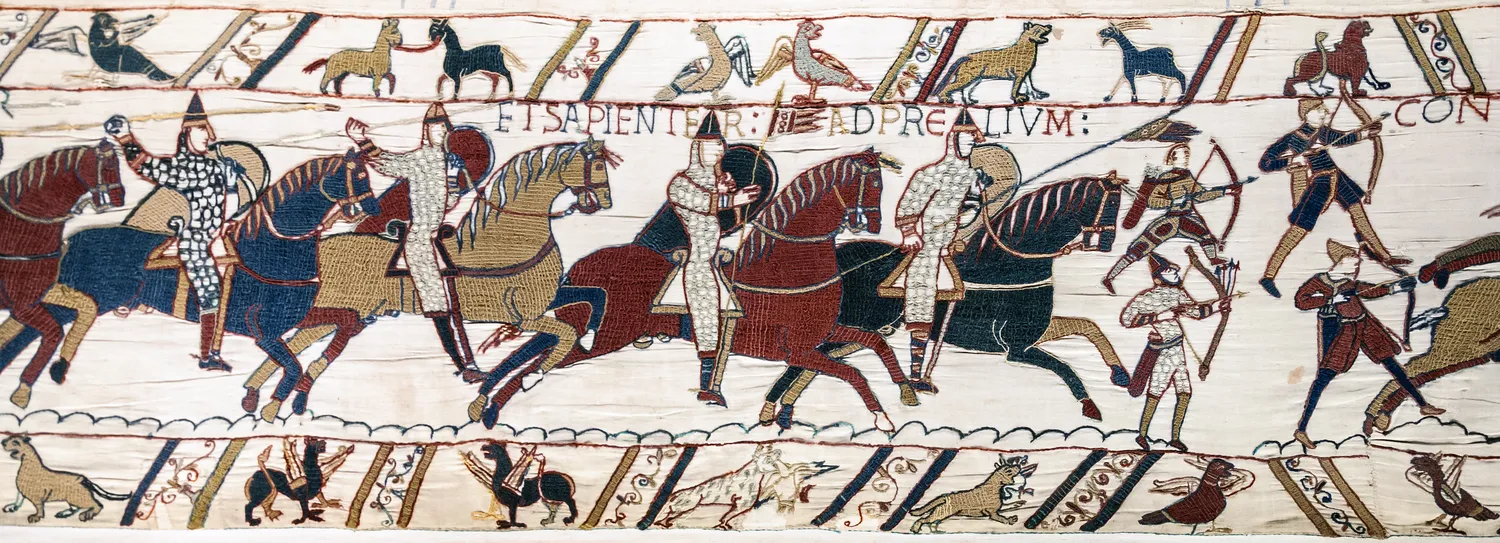
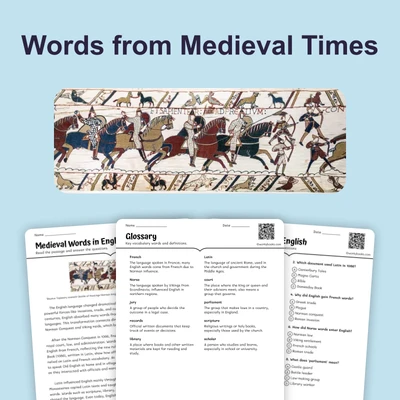
"Bayeux Tapestry scene51 Battle of Hastings Norman knights and archers" by Myrabella / Wikimedia Commons.
The Norman Conquest of England in 1066 marked a turning point in European history. In that year, William, Duke of Normandy—known as William the Conqueror—led an army across the English Channel and invaded England. The events of 1066 reshaped government, society, and daily life in England, leaving a legacy that can still be seen today.
In early 1066, the English king Edward the Confessor died without a direct heir. Several men claimed the throne, but Harold Godwinson, the most powerful English noble, was crowned king. William of Normandy argued that Edward had promised him the crown years earlier. Determined to claim what he saw as his right, William prepared for invasion. He gathered a force of knights, archers, and foot soldiers, supported by ships built for crossing the Channel. William’s army landed at Pevensey in southern England on September 28, 1066. This bold move set the stage for the historic Battle of Hastings.
The Battle of Hastings took place on October 14, 1066, near the present-day town of Battle. William’s Norman army faced King Harold’s Anglo-Saxon forces. According to the Bayeux Tapestry—an embroidered cloth nearly 70 meters long that tells the story of the invasion—both sides fought fiercely. The Normans used cavalry and archers to break the English shield wall. After hours of combat, King Harold was killed, reportedly by an arrow to the eye. With Harold’s death, the English defense collapsed, and William won a decisive victory. This victory allowed William to be crowned King of England on Christmas Day, 1066, at Westminster Abbey.
The impact of the Norman Conquest was profound. William introduced the feudal system to England, granting land to his Norman supporters in exchange for loyalty and military service. This created a new social hierarchy, with Norman nobles at the top and Anglo-Saxon peasants at the bottom. The Normans also built castles across the country, including the Tower of London, to control the land and its people. The English language changed as thousands of Norman French words entered daily speech. The Domesday Book, a detailed survey completed in 1086, recorded land and resources throughout England, showing how society and property ownership had changed. The conquest also brought new laws, customs, and connections to continental Europe.
Over time, the blending of Norman and Anglo-Saxon cultures created a unique English identity. The Norman Conquest shifted England’s focus toward Europe, transforming its law, language, and government. Today, historians study archaeological evidence and sources like the Bayeux Tapestry to better understand this pivotal era.
The story of the Norman Conquest connects to larger themes in world history, such as migration, conflict, and cultural change.
Interesting Fact: The Bayeux Tapestry, one of the most famous primary sources from the Middle Ages, not only depicts the Battle of Hastings but also includes images of Halley’s Comet, which appeared in 1066 and was seen as an omen.
Comprehension quiz (8 questions)
1. Who led the Norman Conquest?
2. When was the Battle of Hastings?
3. What document recorded land ownership in 1086?
4. What was a result of the Norman victory?
5. How did the Normans control England?
6. What is shown on the Bayeux Tapestry?
7. The Norman Conquest happened in 1066. True or false?
8. What does 'hierarchy' mean?
Perfect for the way you teach
- Build comprehension skills
- Auto-graded quiz
- Differentiated reading
- Read together at home
- Improve fluency
- Quiet reading time
- Reading curriculum support
- Independent practice
- Track Lexile growth