Romanesque Architecture
Interactive passage with audio narration, comprehension questions, and printable PDF.
By completing this purchase you agree to our Terms of Use and Privacy Policy. Your subscription renews automatically until you cancel. You can cancel anytime from your account settings. All sales are final and non-refundable. Digital content is available for download in your account immediately upon purchase.
What's included
Romanesque Architecture preview and details
About this printable Romanesque Architecture reading passage (Grades 5-8)
Sample passage and quiz from Romanesque Architecture
Reading passage and comprehension quiz preview
Romanesque Architecture
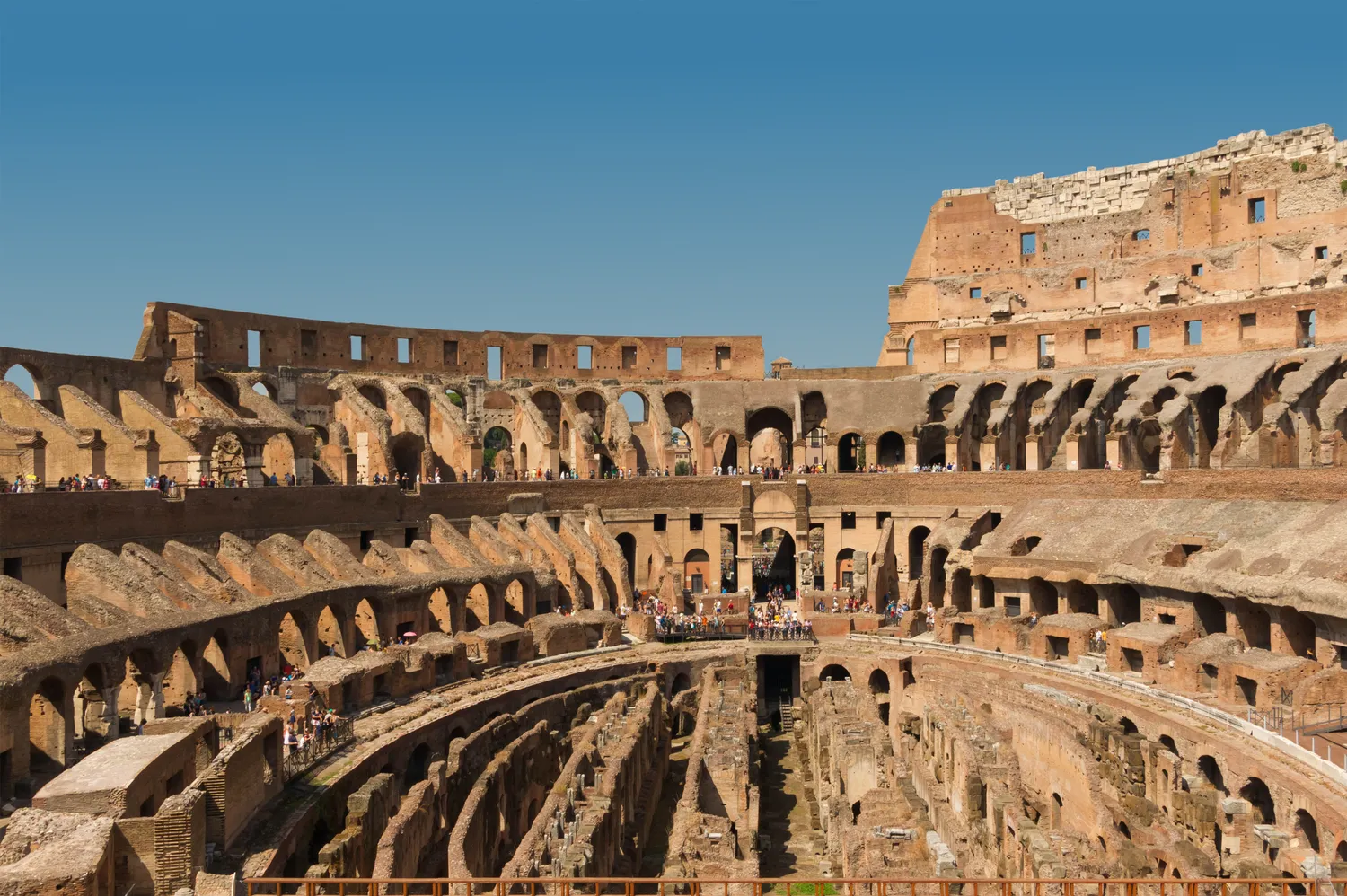
"Colosseo Rome inside" by Jebulon / Wikimedia Commons.
Romanesque architecture was a style of building that spread across Europe between 1000 and 1200 CE. This architectural style is known for its rounded arches, thick stone walls, barrel-shaped vaults, small windows, and heavy, solid structures. Romanesque buildings were mainly used for churches and monasteries, reflecting both the religious devotion and social organization of the Middle Ages.
The development of Romanesque architecture was shaped by geography and history. After centuries of instability, Europe became more peaceful and prosperous, which allowed communities to build larger and more permanent stone structures. Builders drew inspiration from the ruins of ancient Roman buildings and adapted these ideas to suit local needs and new construction techniques. For example, the use of rounded arches and barrel vaults was borrowed from Roman engineering, but Romanesque architects made walls much thicker to support the weight of heavy stone ceilings. These innovations made buildings strong and fire-resistant.
Some of the most famous Romanesque buildings still stand today, offering evidence of this era’s skill. The Abbey of Cluny in France, constructed beginning in 910 CE and expanded through the 12th century, became one of the largest and most influential monasteries in Europe. Its massive stone walls, rounded arches, and richly carved doorways inspired other churches and monasteries throughout the region. Another example is Durham Cathedral in England, built between 1093 and 1133 CE. Archaeological studies show its thick pillars and stone vaults were advanced for their time, allowing for higher and wider interior spaces.
Romanesque architecture had a strong impact on medieval society. The style’s solid, fortress-like appearance made people feel protected and safe during uncertain times. The buildings were decorated with sculptures and carvings that taught religious stories to those who could not read. Because windows were small, interiors were dim, creating a sense of mystery and awe. Building such massive structures required many workers, which strengthened local economies and created new jobs for craftspeople and masons. Over time, Romanesque architecture influenced the later Gothic style, which developed taller buildings with pointed arches and larger windows.
Romanesque architecture connects to broader themes in world history, such as technological change, religious life, and the growth of towns and social classes in medieval Europe.
Interesting Fact: Some Romanesque churches included hidden passages and small rooms within their thick walls, possibly used for storage or as safe places during attacks.
Comprehension quiz (8 questions)
1. When did Romanesque architecture flourish?
2. Which building is a Romanesque example?
3. What shape were Romanesque arches?
4. Why were Romanesque walls thick?
5. What effect did small windows have?
6. How did Romanesque buildings affect society?
7. Romanesque architecture inspired Gothic style. True or false?
8. What is a vault?
Perfect for the way you teach
- Build comprehension skills
- Auto-graded quiz
- Differentiated reading
- Read together at home
- Improve fluency
- Quiet reading time
- Reading curriculum support
- Independent practice
- Track Lexile growth