This learning resource is available in interactive and printable formats. The interactive worksheet can be played online and assigned to students. The Printable PDF version can be downloaded and printed for completion by hand.
This comprehensive history reading passage examines the rivalry and mutual respect between Richard the Lionheart and Saladin during the Third Crusade. It covers the major battles, the leaders’ strategies, and the cultural context of the Middle Ages. Students will analyze how geography, social hierarchy, and religious beliefs affected the conflict, while reflecting on primary sources and change over time. With a glossary, differentiated text, Spanish translations, multiple-choice quiz, and graphic organizers, this resource supports CA HSS 7.2 and CCSS RI.6-8.1-4. Designed for history classrooms seeking rigorous, standards-aligned content, it also includes read aloud audio and a Spanish version for accessibility.
CONTENT PREVIEW
Expand content preview
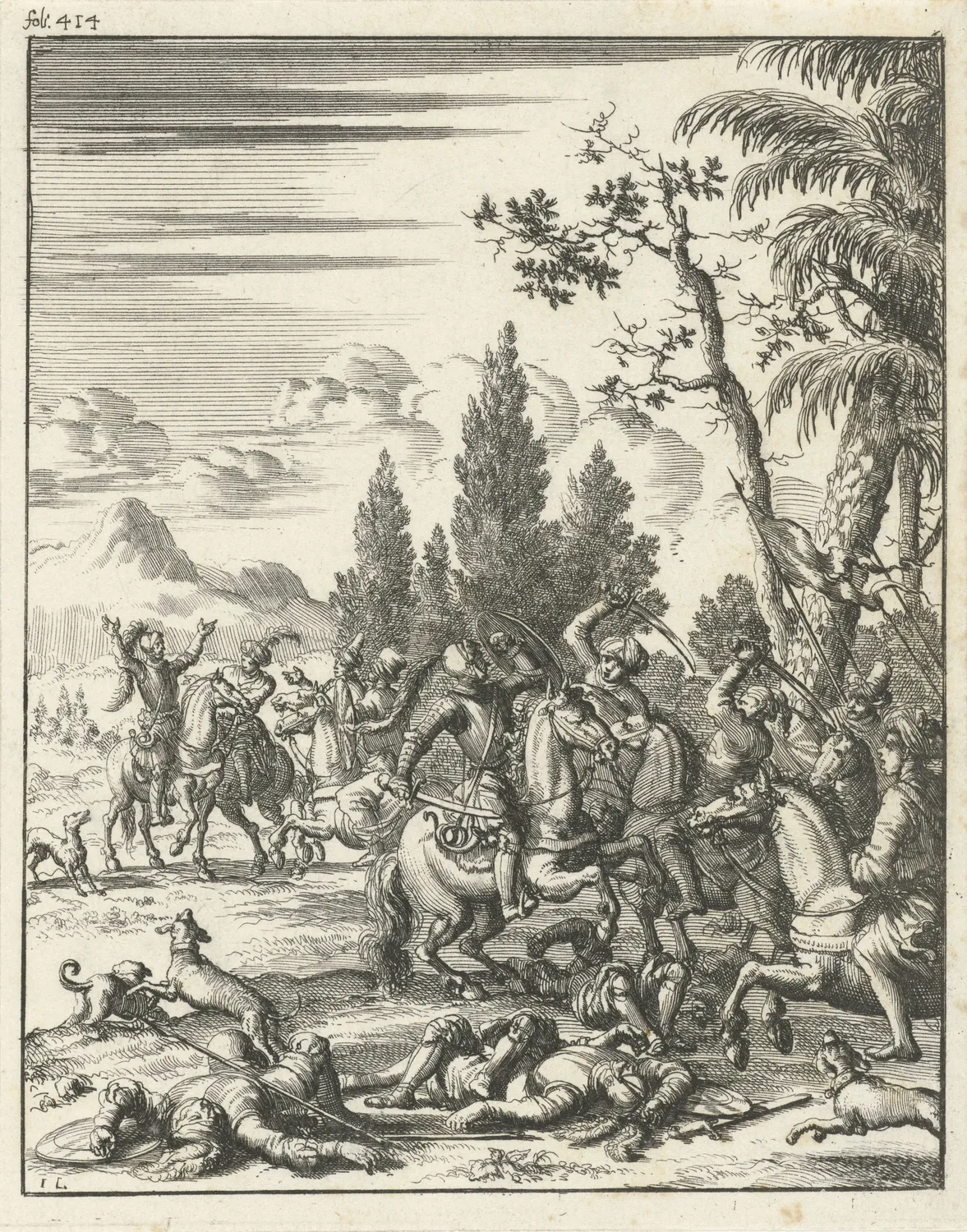
Cavalry battle between Richard the Lionheart and Saladin by Rijksmuseum Wikimedia Commons
The Third Crusade (1189-1192) brought two of the medieval world’s most famous leaders into direct conflict: Richard the Lionheart of England and Saladin, the Sultan of Egypt and Syria. Both figures became legendary not only for their military skill, but also for their unique relationship, marked by both rivalry and mutual respect.
In the late twelfth century, control over Jerusalem and the Holy Land was a central focus for Christians and Muslims. After Saladin captured Jerusalem in 1187, Christian rulers called for a new crusade. Richard I, known as "the Lionheart" for his bravery, led armies from England and Europe to reclaim the city. Saladin, respected as a wise and just ruler, united Muslim forces under his command. Their conflict unfolded across the harsh terrain of the eastern Mediterranean, affecting thousands of knights, soldiers, and civilians.
Major battles such as the Siege of Acre (1189-1191) and the Battle of Arsuf (1191) demonstrated both leaders’ abilities. At Acre, Richard’s forces endured months of hardship before the city surrendered. Chroniclers describe how Richard, despite illness, led his men personally. After the victory, he negotiated the release of prisoners with Saladin, who also showed mercy to captives. At Arsuf, Richard’s tactical decisions helped the Crusaders defeat Saladin’s army, but Saladin skillfully regrouped and prevented further losses.
Although they fought fiercely, Richard and Saladin recognized each other’s chivalry—a code of honor common among knights and noble leaders. Primary sources, such as letters and eyewitness accounts, tell how Saladin sent his own doctor to treat Richard when he fell ill and returned a lost horse to the English king. Some accounts, though debated by historians, claim the two exchanged gifts and even discussed peace terms directly. These gestures show that, despite war, respect could cross religious and cultural boundaries.
The rivalry between Richard and Saladin shaped the outcome of the Third Crusade. While Richard won several battles, he never recaptured Jerusalem. Instead, the treaty they agreed to in 1192 allowed Christian pilgrims to visit the city safely, even though it remained under Muslim control. This compromise reflected the realities of war and the leaders’ understanding of each other’s strengths. Over time, their story became a symbol of both conflict and coexistence in world history.
The encounter between Richard and Saladin highlights how leaders can influence the course of history, not only through battle but also through diplomacy and respect. Their actions during the Third Crusade remind us that history is shaped by individuals, geography, and the choices people make in challenging times.
Interesting Fact: Chroniclers from both Christian and Muslim sides admired Richard and Saladin, making them legendary figures in both Western and Middle Eastern traditions.
Who was Saladin?
Sultan of Egypt and SyriaKing of FranceEnglish knightCrusader chronicler
Which city did Saladin capture in 1187?
ParisJerusalemAcreLondon
Which battle did Richard win in 1191?
Battle of HastingsBattle of ArsufBattle of ToursBattle of Poitiers
Why did Richard start the Third Crusade?
To conquer FranceTo recapture JerusalemTo find treasureFor trade
What showed respect between Richard and Saladin?
They exchanged giftsThey ignored each otherThey refused to talkThey destroyed cities
What did the 1192 treaty allow?
Christian pilgrims visit JerusalemChristians control JerusalemMuslim armies leave EgyptRichard becomes king
Richard and Saladin never respected each other. True or false?
TrueFalse
What is chivalry?
Code of honor for knightsType of weaponA city in EuropeA religious building
Perfect For:
👩🏫 Teachers
• Reading comprehension practice
• Auto-graded assessments
• Literacy skill development
👨👩👧👦 Parents
• Reading practice at home
• Comprehension improvement
• Educational reading time
🏠 Homeschoolers
• Reading curriculum support
• Independent reading practice
• Progress monitoring
Reading Features:
📖
Reading Passage
Engaging fiction or nonfiction text
❓
Comprehension Quiz
Auto-graded questions
📊
Instant Feedback
Immediate results and scoring
📄
Printable Version
Download for offline reading
🔊
Read Aloud
Voice-over with word highlighting
Reviews & Ratings
No reviews yet. Be the first to share your experience!
Related Content
Middle Ages Legacy
This history reading passage examines the lasting legacy of the Middle Ages, including the development of universities, ...
Early Middle Ages
This comprehensive reading passage explores the Early Middle Ages (500-1000 CE), a transformative period in European his...
High Middle Ages
This detailed world history reading passage explores the High Middle Ages (1000-1300 CE), a transformative era in Europe...
What Were the Middle Ages?
This engaging world history reading passage introduces students to the Middle Ages, the period in European history betwe...
Late Middle Ages
This rigorous world history reading passage explores the Late Middle Ages (1300-1500 CE), a time marked by the devastati...
Dark Ages
This passage offers a rigorous, engaging examination of why the early Middle Ages are often called the 'Dark Ages.' Stud...
Life in Middle Ages
This rigorous history reading passage explores life in Europe during the Middle Ages, focusing on the structure of feuda...
Medieval Islamic World
This rigorous reading passage delves into the Medieval Islamic World's golden age, when a vast civilization stretched fr...
Islamic Golden Age
This history reading passage explores the Islamic Golden Age, a period from the 8th to 14th centuries marked by outstand...
Medieval to Modern Transition
This engaging world history reading passage explores the dramatic transformation from the Middle Ages to the modern era,...
Medieval Words in English
This engaging history reading passage examines the evolution of the English language during the Middle Ages, focusing on...
Age of Exploration Begins
This engaging history reading passage explores the Age of Exploration, a turning point in world history when European po...
Italian City-States
This passage explores the rise and significance of the Italian city-states—Venice, Florence, and Genoa—during the Middle...
Attila the Hun
This engaging world history reading passage examines Attila the Hun, a powerful and feared ruler during the Middle Ages....
Medieval Guilds
This engaging world history reading passage explores the important role of guilds—worker groups that shaped the economy ...
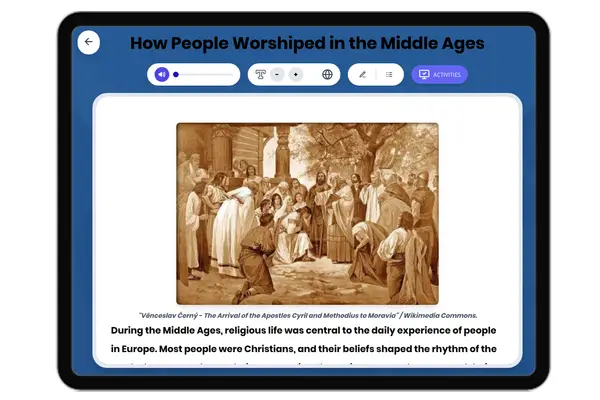
Medieval Christian Worship
This detailed passage examines how people worshiped during the Middle Ages, focusing on essential religious practices su...
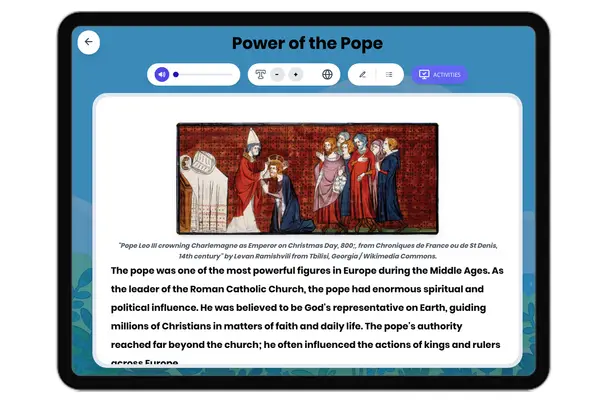
Power of the Pope
This history reading passage examines the power of the pope during the Middle Ages, focusing on his role as spiritual le...
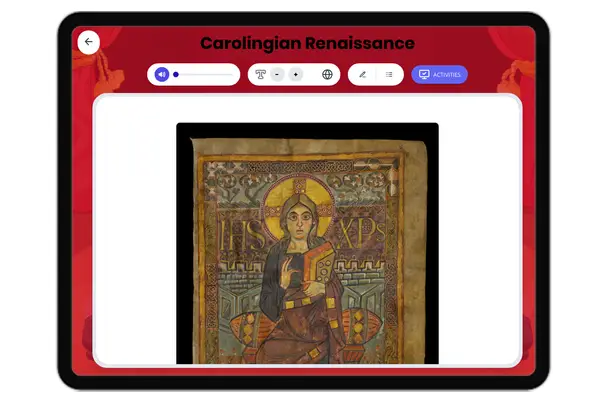
Carolingian Renaissance
This engaging world history passage explores how Charlemagne, ruler of the Franks, transformed education and learning in...
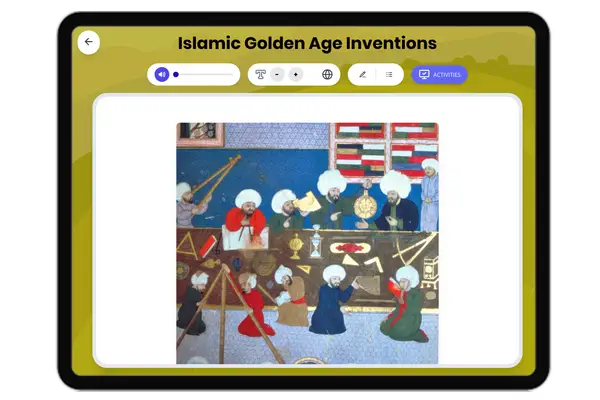
Islamic Golden Age Inventions
This world history reading passage explores the remarkable inventions and scientific advances made in the medieval Islam...
Medieval Agricultural Innovations
This history reading passage explores how farming inventions like the heavy plow, three-field system, and horse collar r...