Three Estates Medieval
Interactive passage with audio narration, comprehension questions, and printable PDF.
By completing this purchase you agree to our Terms of Use and Privacy Policy. Your subscription renews automatically until you cancel. You can cancel anytime from your account settings. All sales are final and non-refundable. Digital content is available for download in your account immediately upon purchase.
What's included
Three Estates Medieval preview and details
About this printable Three Estates Medieval reading passage (Grades 5-8)
Sample passage and quiz from Three Estates Medieval
Reading passage and comprehension quiz preview
Three Estates Medieval Society
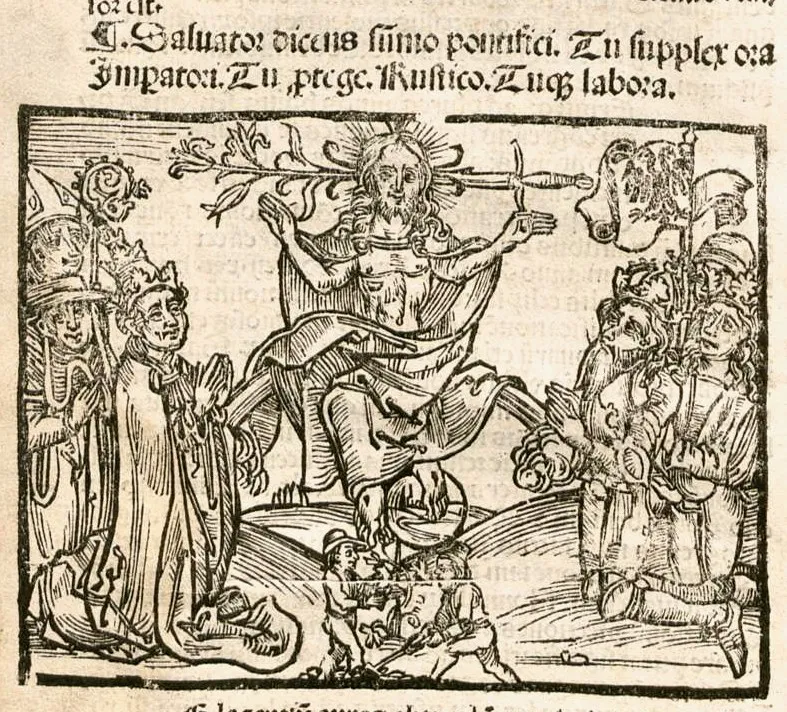
Medieval Europe was organized by a social structure known as the Three Estates. This system divided people into three main groups: the clergy, who prayed; the nobles, who fought; and the peasants, who worked. The Three Estates shaped daily life, power, and opportunities throughout the Middle Ages, especially between the 9th and 15th centuries.
The first estate, the clergy, included priests, bishops, monks, and nuns. They were responsible for spiritual matters and ran the churches and monasteries. The Roman Catholic Church was extremely powerful in medieval Europe. For example, Pope Urban II called for the First Crusade in 1095, showing how the clergy could influence major events. Monasteries became centers of learning and preserved ancient texts, which is evident from manuscripts found in places like the Abbey of Monte Cassino in Italy. The clergy played a large role in education and wrote important documents that shaped beliefs and laws.
The second estate, the nobles, included kings, lords, and knights. Their main duty was to protect the land and people. Nobles owned large estates and lived in castles, while knights trained for combat and followed a code known as chivalry. The Domesday Book of 1086, ordered by William the Conqueror in England, is a primary source that records the land and wealth held by nobles. Knights, such as those who fought at the Battle of Hastings in 1066, were essential in defending kingdoms and enforcing the ruler’s authority. Nobles helped govern by collecting taxes and overseeing justice in their regions.
The third estate, the peasants, was the largest group. Most peasants were serfs, who worked the land for nobles in exchange for protection. Their lives were closely tied to the land, which shaped their daily routines. Archaeological evidence from medieval villages shows simple homes and farming tools. Peasants grew crops, raised animals, and paid taxes or rent to their lord. They had little political power but were crucial to the medieval economy. Over time, some peasants gained freedoms, especially after the Black Death in the 14th century reduced the population and increased demand for labor.
The Three Estates created a strict hierarchy that affected every aspect of medieval life. Though social positions were generally inherited, there were rare cases of change, such as Joan of Arc, a peasant girl who became a military leader in France in the early 1400s. Despite some changes, the estate system showed continuity for hundreds of years. Geography also played a role: regions with rich farmland or powerful churches often had stronger estate structures. The Three Estates shaped European society, influencing politics, religion, and culture well into the modern era.
This system of estates connects to broader themes in world history, such as the relationship between social class, power, and daily life.
Interesting Fact: In some medieval towns, festivals allowed peasants to dress as nobles or clergy for a day, briefly reversing the social order and showing how deeply the Three Estates shaped people’s identities.
Comprehension quiz (8 questions)
1. Who made up the First Estate?
2. What did peasants mostly do?
3. Who called for the First Crusade?
4. Why were the nobles important?
5. What effect did the Black Death have on peasants?
6. Which estate often preserved ancient texts?
7. The estate system rarely changed.
8. What does 'hierarchy' mean?
Perfect for the way you teach
- Build comprehension skills
- Auto-graded quiz
- Differentiated reading
- Read together at home
- Improve fluency
- Quiet reading time
- Reading curriculum support
- Independent practice
- Track Lexile growth